
Have you ever wondered how Earth can feel both familiar and a bit mysterious at the same time? Our planet isn’t just a smooth, perfect ball, it has a unique shape with tiny quirks that catch our eye. Imagine this: there’s a little gap of about 27 miles from one side to the other. That small change tells a fascinating story about how Earth spins and gently bulges because of its rotation. In this post, we'll break down these numbers and show you why understanding Earth’s diameter is more awe-inspiring than it first appears.
Earth’s Diameter: Equatorial, Polar, and Mean Measurements
Have you ever wondered how we measure our planet’s size? Scientists look at Earth in three different ways. They first measure across the middle (the equator) and find that our planet is about 12,756 kilometers (or roughly 7,926 miles) wide.
Because Earth spins, it isn’t a perfect ball. When measured from the top to bottom (through the poles), it comes out to about 12,714 kilometers (around 7,900 miles). That little difference of 43 kilometers (or 27 miles) shows Earth bulges a bit around the middle, which is why we say it has an oblate spheroid shape (a squished sphere).
Using these two numbers, scientists work out an average diameter of about 12,742 kilometers (close to 7,917.5 miles). NASA also found that from the center to the equator is 6,378 kilometers (about 3,963 miles), while the distance to the poles is 6,356 kilometers (around 3,950 miles). These careful measurements help experts make sure our global maps and satellite systems are spot on.
Isn’t it amazing how every kilometer and mile tells a part of Earth’s story? This attention to detail not only deepens our understanding of the planet but also supports things like mapping, aerospace plans, and our overall grasp of the natural forces at work.
Earth’s Diameter Variation from Oblate Spheroid Shape

At first glance, Earth might seem like a perfect ball, but it's actually a bit squished at the poles and fatter around the middle. This shape, known as an oblate spheroid, happens because our planet spins. That spin creates a push outwards along the equator. In fact, Earth’s equatorial radius is about 22 kilometers (roughly 14 miles) larger than its polar radius. This extra width comes from what we call the equatorial bulge, which means that Earth’s diameter can vary slightly depending on where you measure it.
When you look closer at Earth’s oval shape, it’s clear that our planet isn’t as simple as it appears. These small differences in diameter affect more than just how we measure Earth, they even influence gravity (the force that pulls everything toward the ground) and the shape of the surface. For example, areas near the equator experience a touch less gravitational pull because the mass spreads out a bit. This is one of the reasons space launch sites are often near the equator, taking advantage of the extra speed from Earth's rotation. It's pretty amazing how something as subtle as this can have such big effects on our world.
2. diameter of earth: Exact size inspires awe
Long ago, early scientists were amazed by the huge size of our planet. They used very simple tools and clever ideas to figure out how wide Earth might be. By watching the sun's shadows (the dark spots on the ground when the sun is out) and measuring angles, they used basic shapes and math to make their estimates. For instance, around 250 B.C., Eratosthenes looked at the shadows in two different cities to work out Earth’s size with amazing accuracy.
Some of the key breakthroughs in understanding Earth’s size include:
- Aristotle’s work, which came up with a rough measure of about 45,500 miles (73,225 km) for Earth’s circumference.
- Eratosthenes’ trigonometric method around 250 B.C. that reached nearly 1% accuracy.
- Later techniques using triangulation and telescopic observations in the 17th and 18th centuries.
- Early geodetic surveys that helped create more precise maps.
These innovative methods marked a big leap forward. Aristotle’s early guess opened the door, while Eratosthenes’ careful observations showed how close scientists could get to modern measurements. Later, as telescopes improved and triangulation techniques developed, scientists could fine-tune their ideas even more. Each step built on the previous ones and reminds us that human curiosity and smart thinking can lead to amazing discoveries even with very simple tools.
Modern Geodetic Techniques Determining Earth’s Diameter

New technology has completely changed how we measure the size of our planet. Scientists now use tools like satellite laser ranging (SLR) to send strong beams of light to satellites and time how long it takes for the reflection to return. This simple idea lets them measure distances with precision down to a few millimeters. GPS is another handy tool that collects signals from satellites and watches small shifts in distances on Earth’s surface. Together, these modern methods give us an ever-clearer picture of our planet’s slightly squished shape.
Another exciting tool is Very Long Baseline Interferometry (VLBI). Imagine linking together radio telescopes that are really far apart; that’s what VLBI does. It captures tiny delays in radio waves from far-off space objects, which helps scientists get even more detailed insights into Earth’s properties. These advanced tools let researchers tell the difference between the size of the Earth at the equator and at the poles more accurately than ever. Think about it like this: a single laser pulse might show a tiny change in Earth’s curve, proving that even small differences matter. Each of these techniques works together to give us a solid, trustworthy way to understand our world.
Converting the Diameter of Earth between Kilometers, Miles, and Meters
We’ve already gone over Earth’s size, so here’s a quick tip: one kilometer comes out to about 0.621371 miles, and it also equals 1,000 meters. It’s a simple conversion that helps put things in perspective.
Below is an easy-to-read table showing the different measurements for Earth’s planet size:
| Unit | Equatorial Diameter | Polar Diameter | Mean Diameter |
|---|---|---|---|
| Kilometers | 12,756 km | 12,714 km | 12,742 km |
| Miles | 7,926 miles | 7,900 miles | 7,917.5 miles |
| Meters | 12,756,000 m | 12,714,000 m | 12,742,000 m |
Applications of Earth’s Diameter: Space Launches and Global Scale Determination
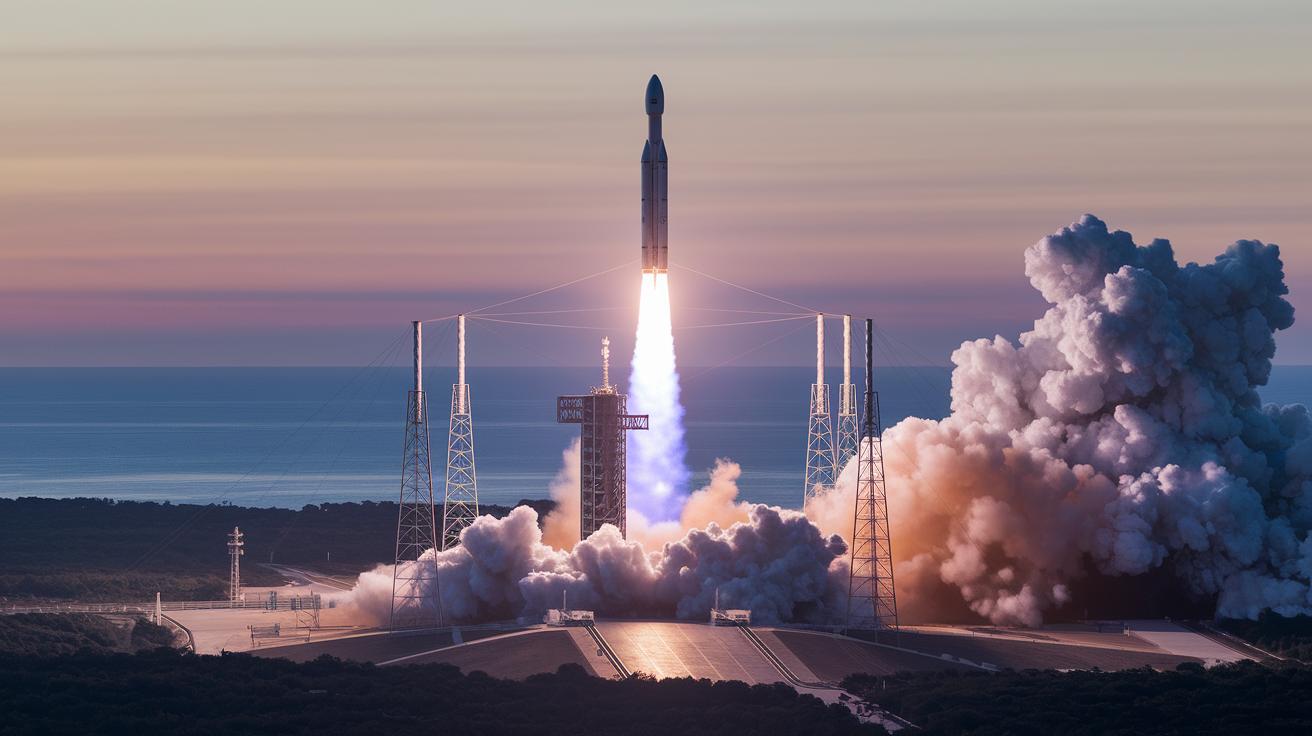
Earth isn’t a perfect ball. In fact, it bulges a little at the equator, and that extra width gives rockets a useful boost. When a rocket takes off near the equator, it can use the planet’s spin to gain extra speed, kind of like getting a little extra push on a swing. This extra push means rockets need less fuel, which makes each launch more efficient.
Knowing Earth’s exact size is crucial for more than just rocket science. Accurate measurements form the backbone of our mapping grids and help keep GPS systems working right. They even play a big part in weather forecasts and climate studies and help scientists keep track of changes in our planet. Every precise number helps in setting up tools on satellites and making sure these instruments are well-calibrated.
Scientists rely on these measurements, too, to improve models that predict natural events and study how our planet works. By combining accurate data with advanced technology, experts can fine-tune everything from space travel to understanding the many details of Earth’s surface.
Final Words
In the action, we examined Earth's fascinating dimensions, from its equatorial stretch to the subtle difference in polar measurements. We saw how ancient estimates and modern tools come together to reveal the diameter of earth with clear, everyday comparisons.
We explored conversion tips to switch between kilometers, miles, and meters, and even reviewed how Earth’s shape guides space launches and mapping. These insights make science a part of our daily conversation and inspire us to keep asking questions and learning more.
FAQ
What is the Earth’s diameter in kilometers?
The Earth’s diameter is about 12,742 kilometers on average, with an equatorial span of roughly 12,756 km and a polar measure near 12,714 km.
What is the Earth’s diameter in miles?
The Earth’s diameter is around 7,917.5 miles on average, with the equatorial measure close to 7,926 miles and the polar measure near 7,900 miles.
How is the Earth’s circumference measured?
The Earth’s circumference is determined by blending ancient geometry with modern satellite tools, arriving at about 40,075 kilometers around the equator while accounting for its slightly flattened shape.
How do Earth diameter measurements convert to different units?
The Earth’s mean diameter converts to about 12,742 km, 7,917.5 miles, 12,742,000 meters, and roughly 41,762,000 feet, which is approximately 1.3 x 10^16 nanometers.
What would happen if the Sun was 1 inch closer to Earth?
Shifting the Sun 1 inch closer wouldn’t noticeably affect Earth’s climate or gravity, since the change is insignificant compared to the roughly 93 million miles separating them.
What is the hottest planet?
Venus is the hottest planet, as its dense, heat-trapping atmosphere leads to surface temperatures higher than those on Mercury, despite its greater distance from the Sun.
What is the coldest planet?
Uranus is considered the coldest among the eight major planets, with its atmospheric temperatures dropping well below freezing in its frigid environment.
How does Earth’s size compare with other solar system bodies?
Earth’s diameter is larger than that of Mars and the Moon yet much smaller than Jupiter’s, highlighting the diverse sizes of planets and moons within our solar system.