
Have you ever stopped to think about how one machine can hold both hope and heartbreak? The Challenger space shuttle was more than just a craft, it carried the weight of big dreams to push past limits and spark change in space travel. Over nine successful missions, it helped us see the sky in brand-new ways, even though one tragic flight taught us some hard lessons. In this post, we talk about how its wins and losses still guide our ideas about safety and fresh innovations in exploring space.
Challenger Missions and Tragic Disaster Overview
The space shuttle challenger was a real trailblazer in space travel, completing nine successful missions from April 1983 to October 1985. It sent out important satellites like the Tracking and Data Relay Satellite (a tool that helps send and collect data) and even helped make history by carrying the first American female astronaut and the first Black astronaut. Each flight was filled with dreams and the promise of new scientific discoveries, inspiring many people along the way.
But the tenth mission, known as STS-51L, turned into one of the worst events in space history. On January 28, 1986, just 73 seconds after leaving Kennedy Space Center, the shuttle broke apart mid-flight. A small leak in the joint of a solid rocket booster (rockets that give extra push at liftoff) let hot gases escape and damage the external fuel tank. This small problem started a chain reaction that sadly led to the loss of seven astronauts, a tragedy made even worse by harsh winter weather.
Every moment of that fateful flight is carefully recorded by experts. These detailed records help engineers understand what went wrong so they can improve safety protocols (steps to keep things safe) and risk management in future missions. Even the best machines can run into big problems when conditions are extreme. By studying each phase of the flight, scientists and historians continue to learn important lessons that shape the future of space exploration.
Development and Technical Background of Space Shuttle Challenger

Before its first flight delay, engineers unearthed design challenges that hinted at the vulnerabilities which would later cost so much.
Challenger's construction kicked off in November 1975, and Lockheed Martin began testing its structure on April 2, 1978. The team envisioned it as a reusable spaceship with solid rocket boosters (rockets that can be used again) and an external tank that held its main fuel. Although the first launch was set for January 20, 1983, early technical setbacks pushed the date to April 4, 1983.
The shuttle quickly made history with its bold missions. For example, in June 1983, STS-7 carried Sally Ride as the first American woman in space, a moment that opened doors for so many. Then, in November 1983, STS-8 featured Guion Bluford, the first Black astronaut, showing everyone that the space program was all about breaking new ground.
But the very design that allowed these historic achievements also brought risks. Challenger used reusable solid rocket boosters that depended on O-rings (rubber seals used to prevent leaks) to keep parts connected safely. When the weather turned really cold, these O-rings could lose their flexibility, which meant that hot gases might damage the booster joints.
Later investigations pointed out that even a tiny flaw in the O-rings could trigger a chain reaction of failures in the harsh environment of space flight. This analysis really underscored how crucial every small part is when you're reaching for the stars.
Crew Profiles and Personal Stories of Challenger Astronauts
Commander Francis R. "Dick" Scobee was born on May 19, 1939. He was a solid leader who always stayed cool under pressure. With more than 6,500 flight hours under his belt, he not only flew the shuttle but also carried the dreams of an entire nation. His calm and steady approach left a mark on his crew and families, reminding us why so many people get excited about space.
Pilot Michael J. Smith, born on April 30, 1945, was a top-notch test pilot with 4,300 flying hours. His hands-on skills shone in every mission, and he had this amazing ability to handle tricky problems in mid-air. Watching Michael work was like having a front-row seat to a masterclass in focus and technical skill.
The crew’s mission specialists brought extra spark to the team. Judith A. Resnik, born on April 5, 1949, broke barriers as the second American woman in space. Her sharp scientific mind and pioneering spirit helped open doors for future generations of women in science. Ronald E. McNair, born on October 21, 1950, earned a Ph.D. in Physics and shared his deep knowledge with the shuttle crew, inspiring countless students along the way. Ellison S. Onizuka, born on June 24, 1946, brought a wealth of experience having flown on previous missions, providing both expertise and comfort to his teammates.
Payload specialist Gregory B. Jarvis, born on August 24, 1944, was picked for his strong technical skills to collect valuable data during flights. And then there was Sharon Christa McAuliffe, born on September 2, 1948, who was chosen from over 11,000 applicants to be the first teacher in space. Her selection brought the wonder of space right into classrooms and homes, connecting education with the vastness of the cosmos.
Each of these remarkable stories weaves a narrative of courage, hope, and the unending quest for knowledge, a reminder that every great journey starts with a single brave step.
Explosion Event Analysis: O-Ring Malfunction and Booster Failure

On January 28, freezing weather played a huge role in the shuttle's failure. The cold made the SRB rubber rings stiff, so they couldn't seal properly. Think of it like a door seal that goes brittle on a frosty night and fails to keep the cozy warmth inside, this is what happened to the O-rings, leaving a weak spot.
Weeks before the launch, internal memos warned about these seals, but the launch still went on. These warnings were more than small issues; they were signs of a serious problem. As hot gases squeezed through the damaged O-ring, they started eroding the booster joint quickly. This breach let the gas hit the outer tank and caused the shuttle to break apart fast.
Engineers had studied rubber and knew it could become fragile in the cold. Simply put, imagine a rubber band that snaps when it's too chilly, this was the fate of the O-ring. The rising pressure and the weakened seal pushed the system beyond safe limits.
Moreover, risk assessments didn’t fully account for how cold could weaken the materials. This combination of oversights led directly to the severe mechanical breakdown during the launch. The lessons learned from this event stress the importance of checking every tiny part under all weather conditions, especially when safety is at stake.
Official Investigation: Launch Disaster Investigation and Findings
Right after the tragic loss of the Challenger, a full-blown investigation kicked off. In February 1986, the Rogers Commission was set up to carefully look at every factor that led to the accident. They discovered that the O-rings, those small rubber seals that keep hot gases in check, failed because the cold weather made them brittle. This breakdown allowed dangerous hot gases to seep into key areas. It was a strong reminder that even the tiniest parts can cause huge problems.
The inquiry also uncovered big communication and management issues inside NASA. During congressional hearings, officials revealed that early warnings about the problems with the O-rings in low temperatures had been ignored. This showed a serious lapse in risk assessment, a gap that ultimately jeopardized the mission’s safety.
When the commission released its report in June 1986, they didn’t just point out what went wrong. They urged a complete overhaul of how solid rocket booster joints are designed and called for major internal changes. They stressed the need for better engineering reviews and stronger communication links. Every suggestion, whether it was about technical fixes or changes in culture, aimed to boost safety for all future missions. This investigation became a turning point, teaching us valuable lessons about managing risks in space travel.
NASA Reforms and Safety Protocol Overhaul After Challenger
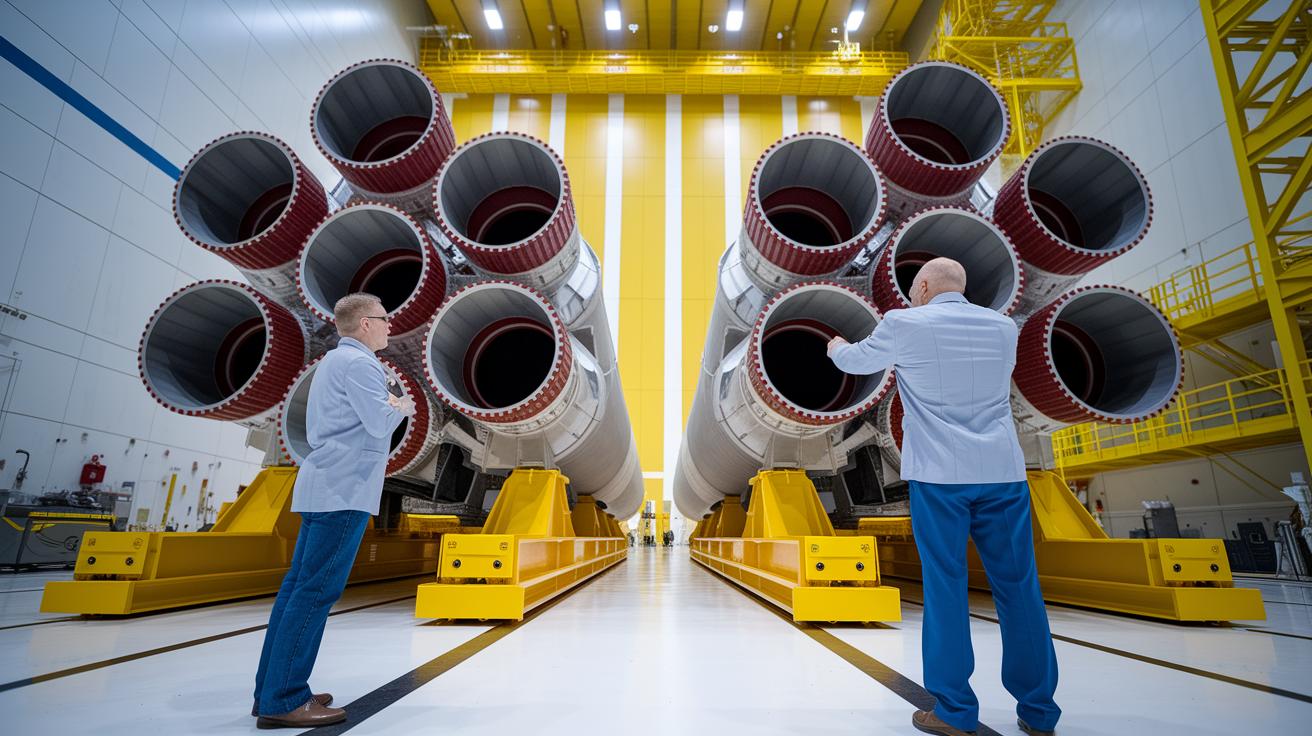
After the Challenger tragedy, NASA quickly moved to improve safety and change how they worked. They stopped all shuttle flights for nearly three years so that engineers and policy makers could rebuild their risk management systems. For example, they replaced the old brittle O-ring design with new metal lip seals in the solid rocket boosters, making them much safer.
NASA also set up special review boards that looked at every part in detail, almost like checking off items on a list. They believed that even the tiniest part can have a huge impact. This idea led to a complete overhaul of their pre-flight reviews, ensuring each mission received careful and open-minded checks.
The changes didn’t stop there. NASA worked hard to improve its inner culture too. They set clearer lines of authority and added stronger whistle-blower protections, all to boost safety and rebuild trust with the public and the space community. Every shuttle program change now follows these stricter risk management rules, guiding NASA to keep learning and getting even safer.
Public Reaction, Media Coverage, and Memorial Tributes for Challenger
When the Challenger broke apart, the whole country was struck with deep sadness. People across the nation tuned in to live TV and watched in real time as the shuttle fell apart, sharing in a moment of collective grief. It’s hard not to feel the shock when a joyful launch turns into heartbreak.
Eyewitnesses still recall the moment vividly, and old footage shows the raw emotions of those who watched the event live. These memories serve as a lasting reminder of that fateful day. Communities came together to honor every crew member, including the teacher chosen for space, whose dedication inspired students across the country.
Every year, tribute events are held at Arlington National Cemetery and at the Houston space center. These gatherings include:
- Live news reports and detailed breakdowns
- Archival footage displays from launch sites
- Annual commemorative events that celebrate the crew’s legacy
These public memorials and heartfelt tributes ensure that the Challenger crew lives on in our collective memory, reminding us of their bravery and the hope they brought to the world.
Legacy and Impact of the Challenger Disaster on Space Exploration

The Challenger tragedy changed space exploration forever. It made NASA and everyone in the aerospace world put safety engineering (the careful planning to keep things safe) at the center of every mission. This event is now a key part of aerospace classes around the world. Imagine a design review where even a tiny seal can decide a mission’s fate, it really shows how important each little detail is.
Lessons learned from this disaster have shaped programs like the International Space Station. Changes in technical reviews and risk assessments now guide every launch, making sure future missions are safer. Schools even updated their training materials so that a moment of deep loss became a chance to learn. It reminds us all that every flight starts with strict safety checks.
The legacy of Challenger still sparks debates about risk and reward in space travel. It remains a powerful example of why every component, no matter how small, plays a role in our journey to explore the stars.
Final Words
In the action of exploring the space shuttle challenger story, we traced its early achievements, tragic loss, technical breakdown, and the courageous astronauts whose lives mattered so deeply. We examined the exact moments leading to the explosion, the official inquiry, and the sweeping changes that reshaped space safety protocols. The narrative also touched on public mourning and the lasting impact on future space travel. All these elements remind us that even in the face of heartache, progress comes through careful reflection and a collective determination to move forward with hope.
FAQ
What is the Space Shuttle Challenger model?
The Space Shuttle Challenger model was built as part of NASA’s fleet with reusable solid rocket boosters and an external tank. It flew several missions before the tragic STS-51L flight.
What is the Space Shuttle Columbia?
The Space Shuttle Columbia was another orbiter in NASA’s fleet. It completed many missions over the years until it was lost during reentry, highlighting unique risks in spaceflight.
What is the Space Shuttle Challenger disaster?
The Challenger disaster involved the loss of the orbiter and seven crew members during mission STS-51L. A faulty O-ring in cold weather allowed hot gases to breach a critical joint, leading to a catastrophic breakup.
Who comprised the Space Shuttle Challenger crew?
The Challenger crew included seven astronauts, such as teacher Christa McAuliffe and experienced flyers like Dick Scobee and Ronald McNair. Their diverse backgrounds inspired many during their mission.
What happened to the Space Shuttle Challenger bodies?
After the explosion, the remains of the Challenger astronauts were recovered from the debris. Recovery teams handled the process with care, ensuring respect for the fallen and thorough investigation.
What was the Space Shuttle Columbia disaster?
The Columbia disaster occurred in 2003 when damage to the orbiter’s thermal protection during launch led to its breakup during reentry, resulting in the loss of all seven crew members and sparking major safety reforms.
What are Space Shuttle disasters?
Space Shuttle disasters include the Challenger and Columbia tragedies. These events brought to light serious safety flaws in spaceflight operations and led to extensive changes in NASA’s engineering and risk management practices.
What does the term “space shuttle explosion 2003” refer to?
The term refers to the breakup of the Columbia orbiter during reentry in 2003. Damage sustained during launch allowed superheated gases to cause the structure to fail, leading to a fatal incident.
Were the bodies of the Challenger astronauts found?
Yes, emergency recovery teams located and retrieved the bodies of the Challenger astronauts from the debris after the explosion, following a careful and respectful process that aided the investigation.
What were the last words of the Challenger crew?
The final communication from the Challenger crew included routine updates, and no definitive set of last words was confirmed as the tragic sequence proceeded too rapidly for planned farewells.
Did NASA pay the families of the Challenger astronauts?
NASA provided financial settlements and support services to the families of the Challenger astronauts after the tragedy, aiming to help them cope with the sudden loss and assist in their transition.
What was the condition of the Columbia astronauts’ bodies?
Investigations revealed that the bodies of the Columbia astronauts were heavily damaged by extreme heat and forces during reentry, which complicated recovery and identification efforts during the emergency response.