
An attenuated P. falciparum malaria vaccine arrested in the late liver stage showed 89% protection in a tiny human trial of nine participants. That’s striking: current licensed vaccines give only modest, short-lived protection, and new approaches are desperately needed. By halting parasites before they enter the blood, liver-stage vaccines can teach the immune system to neutralize infection early. The result is promising but preliminary: nine people is not enough to judge safety, durability, or performance across age groups and geographies. Larger, controlled trials will determine whether this approach can deliver a durable, broadly protective malaria vaccine.
Malaria vaccine: 89% protection in an early trial

An attenuated P. falciparum malaria vaccine arrested in the late liver stage showed 89% protection in a tiny human trial of nine participants. That's striking: current licensed vaccines give only modest, short-lived protection, and new approaches are desperately needed. By halting parasites before they enter the blood, liver-stage vaccines can teach the immune system to neutralize infection early. The result is promising but preliminary: nine people is not enough to judge safety, durability, or performance across age groups and geographies. Larger, controlled trials will determine whether this approach can deliver a durable, broadly protective malaria vaccine.
Why weight loss often doesn't last: an epigenetic memory

New research helps explain the familiar 'yo-yo' effect of dieting: obesity leaves lasting epigenetic marks in fat tissue that change gene transcription and harm adipocyte function. Those molecular changes – DNA methylation and chromatin modifications – can persist even after weight loss, making cells less efficient at storing fat and regulating metabolism. The result is a biological push toward regaining weight: altered adipocytes, appetite signals, and energy expenditure all conspire to restore prior body weight. Understanding this gives scientists targets for therapies and suggests weight-management strategies should focus on durable metabolic change rather than short-term calorie cutting. Reversing epigenetic marks remains a research priority.
Whole-brain single-cell RNA imaging delivers stunning maps

A new whole-brain, single-cell RNA imaging technique is delivering breathtaking maps of gene activity across entire brains. Applied to mice, rats, guinea pigs and even human tissue, the method resolves RNA expression at cellular resolution while preserving spatial context – a major step beyond bulk or small-area single-cell assays. The result is a comprehensive atlas of cell types, states and regional gene programs, useful for studying development, circuitry and disease. Such whole-brain maps accelerate discovery of cell-specific pathology in conditions like Alzheimer's, epilepsy and psychiatric disorders, and create rich datasets for target discovery and modeling. Expect rapid uptake by neuroscience labs worldwide.
Lipoprotein(a): new drugs cut levels by ~80%

Two trials report dramatic reductions in lipoprotein(a) – a genetically driven particle that promotes atherosclerosis and aortic valve stenosis – reductions of about 80% using Muvalaplin or Zerlasiran. Lp(a) is largely unaffected by diet or exercise and has long lacked effective therapies, so an 80% drop is potentially transformative. Muvalaplin inhibits Lp(a) formation; Zerlasiran is an siRNA targeting apolipoprotein(a). Crucially, we don't yet know whether lowering Lp(a) will cut heart attacks, strokes or valve disease – outcome trials are needed. If they succeed, targeted Lp(a) therapy could become a standard intervention for patients with high genetic Lp(a) risk.
Achondroplasia: FGFR inhibitor roughly doubles growth rate

In achondroplasia – the common genetic form of short stature caused by activating FGFR3 mutations – a phase 2 trial of an FGFR inhibitor in children aged 3-11 roughly doubled their rate of growth. Blocking FGFR3 relaxes the molecular brake on chondrocyte proliferation in growth plates, enabling longer bones to lengthen faster. The treatment had some adverse effects, but none serious enough to stop therapy in the trial. That suggests a potentially meaningful disease-modifying option, though long-term safety, functional outcomes and effects on complications like spinal stenosis need careful study. Phase 3 trials and regulatory review will determine its clinical role.
Crohn's disease: Mirikizumab posts positive phase 3 results
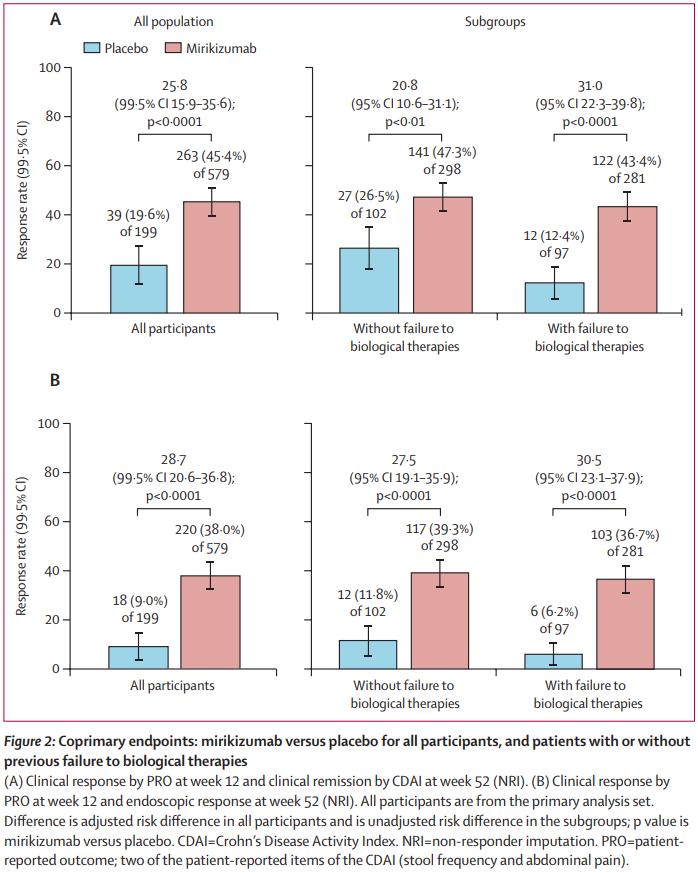
A positive phase 3 trial of mirikizumab – an antibody that blocks the p19 subunit of interleukin-23 – adds another biologic option for Crohn's disease. Mirikizumab is already approved for ulcerative colitis; if regulators clear it for Crohn's, it will widen choices beyond anti-TNFs, integrin blockers and JAK inhibitors. Targeting IL-23 p19 can reduce intestinal inflammation for patients who haven't responded to other therapies. Safety, comparative effectiveness and positioning in treatment algorithms will shape uptake, but more options are welcome for a condition with variable responses. The result may change how clinicians sequence therapies for moderate-to-severe Crohn's.
53,000-sample plasma proteomics study finds new drug targets

The largest plasma proteomics study to date analyzed samples from 53,026 patients and uncovered new drug targets and diagnostic biomarkers. Scaling proteomic profiling to tens of thousands improves statistical power to link circulating proteins with disease, treatment response and prognosis. The team identified proteins that point to previously unrecognized biology and candidates that could become blood tests for early diagnosis or monitoring. Translating hits into drugs still requires validation, mechanistic work and clinical trials, but this resource will accelerate target discovery and precision diagnostics. Expect researchers and industry to mine the dataset for conditions ranging from cardiovascular disease to cancer and neurodegeneration.
Liability-threshold model: polygenic burden can cause rare disease

A refined 'liability threshold' model explains why rare genetic diseases sometimes arise without a single causal mutation: many common variants, rare variants and environmental factors contribute to a cumulative risk that crosses a disease threshold. This work shows that a high polygenic burden can push someone to develop a condition even in the absence of an obvious monogenic cause, which helps explain why many patients remain undiagnosed by standard gene tests. The findings underscore the importance of polygenic scores and integrated risk models in genetic medicine, but deploying them clinically will require careful validation, diversity in datasets and thoughtful counseling.