
Have you ever wondered what it takes for a young woman to shatter limits and journey into space? At just 26, Valentina Tereshkova left her simple farm life behind to board the Vostok 6 spaceship (a type of space rocket that carried people into space).
She faced many challenges, yet her brave spirit led her into a world few had ever seen. Imagine the thrill as she circled Earth 48 times, each orbit rewriting history and defying old beliefs. Her journey reminds us that one courageous move can open up new worlds, inspiring others to follow their own dreams into the unknown.
Valentina Tereshkova: Profile of the First Woman in Space
At just 26, a woman from a small farm took off into space, circling our planet 48 times and changing history as we knew it. Born in 1937 near Moscow on a modest farm, Tereshkova overcame early struggles to become one of the first female astronauts. Growing up during tough times, she later became a symbol of how women could make a mark in space travel.
At 26, she flew the Vostok 6 spacecraft on June 16, 1963. With the nickname "Chaika," she spent nearly three days orbiting the Earth, running simple experiments on living things (like testing if our bodies handle space the same way) and keeping her ship running smoothly. When a problem popped up during her return, she fixed it by hand and landed safely with just a parachute, a daring move that proved her skill. At the same time, another mission with Valery Bykovsky on Vostok 5 (called "Yastreb") was happening, highlighting the intense space race between world powers.
Her daring journey was celebrated back in the Soviet Union and even sparked talks in the United States about inviting more women to join space programs. Her bold leap into the unknown not only changed views about women's roles in science but also set an inspiring standard as humanity reaches for the stars. Her legacy still lights the way for future explorers eager to venture out into the vast expanse of space.
Early Life and Skydiving Roots of the First Woman in Space

She was born in a modest part of the Yaroslavl region, where life wasn’t always easy. Growing up with little money, she had to leave school at 16 to work in a textile factory. That early struggle taught her the value of hard work and built a fierce determination within her.
At 22, she took a bold leap into something many had never tried before by joining a local parachute club. Can you imagine jumping out of a plane when hardly anyone expected you to? She completed more than 160 jumps, blending real physical courage with sharp technical skills. This wasn’t just about defying gravity, it was about defying expectations.
Her skydiving skills did more than just thrill the crowds. They caught the eye of Soviet space recruiters, who were looking for fresh and fearless talent. In an era when many thought women should only play safe, her daring record became a shining example of what could be achieved with grit and bravery.
Here are five important early milestones that launched her journey to space:
- Left school at 16 to work in a textile factory, learning life’s tough lessons.
- Joined a parachute club at 22, venturing into a field where few women went.
- Completed over 160 parachute jumps, proving her strength and skill.
- Overcame societal doubts by excelling in a challenging and dangerous sport.
- Captured the attention of space program recruiters with her outstanding performance.
Selection and Training for Vostok 6: The Road to the First Woman in Space
In early 1962, Tereshkova was chosen from a pool of 400 applicants to join a very select group of five women in the Soviet space program. Her strong record as a parachute jumper, excellent physical fitness, and humble working-class background made her stand out at a time when very few women were even considered for space travel. They also noted certain natural traits that made her a perfect match for the grueling challenges of spaceflight. This bold decision set her on a path that would soon capture the world's imagination.
Candidate Selection Criteria
Tereshkova’s journey started with a clear set of rules. Out of hundreds of hopefuls, only a few were picked because they showed exceptional skills. Her numerous parachute jumps proved her bravery and her ability to handle extreme situations. Plus, her real-life experience from a working-class upbringing demonstrated true determination and resilience. This rare mix of strengths was just what the Soviet space program needed to break new ground.
Rigorous Cosmonaut Training Regimen
After her selection, Tereshkova entered a rigorous training program. She faced challenging centrifuge tests (machines that spin to simulate the heavy forces during launch) that pushed her limits. Simulator flights helped her learn how to control spacecraft systems and navigate in a weightless environment. She also took part in survival drills designed for emergency landings. With each step of the process, she built up her technical know-how and mental toughness, preparing her for the historic Vostok 6 mission.
Vostok 6 Mission Details of the First Woman in Space

Valentina Tereshkova made history with her Vostok 6 flight, setting records and proving early space technology could do amazing things. During her journey, she handled a tricky problem with the spacecraft’s return to Earth by making careful adjustments by hand. This mission happened at the same time as Vostok 5, flown by Valery Bykovsky, showing that space travel was evolving quickly with two humans orbiting at once.
Have you ever thought about how daring it was to fly in space back then? Not only did she pilot a spacecraft in orbit, but her fast and skilled fixes during the landing showed a level of manual flight control that was rare at the time.
| Metric | Details |
|---|---|
| Launch Date | June 16, 1963 |
| Age | 26 |
| Spacecraft | Vostok 6 (“Chaika”) |
| Duration | ~71 hours |
| Orbits | 48 |
| Experiments | Biological tests & systems management |
| Descent Challenge | Manual correction of reentry glitch |
| Landing | Solo parachute touchdown |
This detailed look at her flight mixes clear technical points and the bigger picture of the space race. It shows us how her mission not only pushed technology to its limits but also changed what people thought was possible in space travel.
Impact of the First Woman in Space on Gender Equality and Space Policy
When Valentina Tereshkova blasted into space, it shook up old ideas about who should be in charge of space travel. Her journey made people rethink gender roles and sparked changes in space policies both in the Soviet Union and around the world.
Her incredible flight got attention everywhere. In the Soviet Union, she was celebrated as a top hero and even became a member of the Supreme Soviet. Over in the United States, her mission led to talks about the need to include more women in space programs. Can you imagine how her brave leap not only battled gravity but also broke old rules?
As more space agencies took notice, they began opening up crewed missions to women. Tereshkova’s success reminded everyone that skill and determination are far more important than outdated ideas. Her legacy is clear in the rising number of women who now play a big role in space exploration.
Her mission inspired many to question old social norms and dream big. Today, we see her impact in every new breakthrough in space, proving that anyone with talent and drive can help shape our future in the stars.
Legacy and Enduring Influence of the First Woman in Space
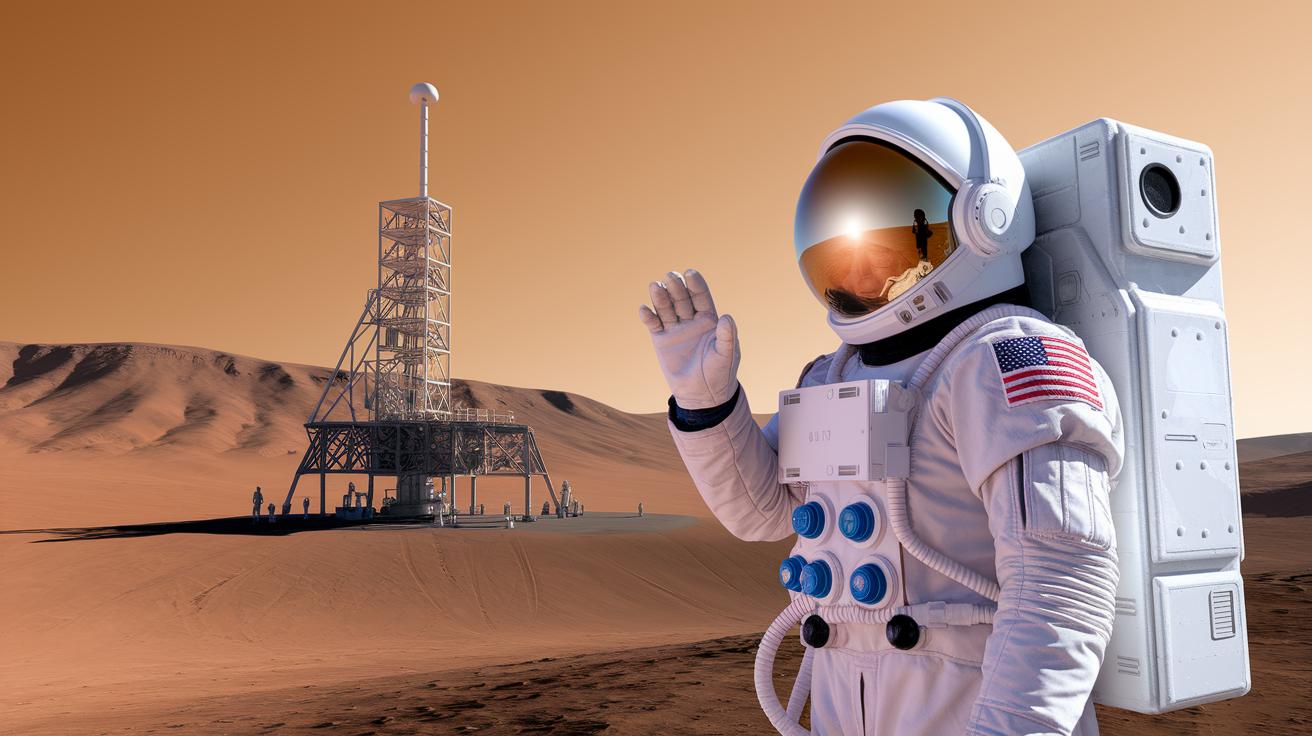
At 70, she was ready to head off to Mars, showing that age is just a number when it comes to chasing dreams.
Her groundbreaking journey on Vostok 6 changed everything. She achieved so many things after that historic flight that people still talk about today. For example, she earned an honorary engineering doctorate and studied at the Zhukovsky Air Force Academy (an elite school for aviation), proving she was much more than just a daring pilot.
Her marriage to fellow cosmonaut Andrian Nikolaev added an extra layer of inspiration to her life story. It was like two stars coming together, blending personal destiny with a shared passion for space exploration.
After leaving space, she stepped into the world of politics, forging a path as a true trailblazer. And then, in a bold move at age 70, she declared she’d take a one-way trip to Mars if given the chance! That spark of adventure still fires up the imaginations of space fans everywhere.
Her life is a shining example of modern exploration. By breaking barriers in a time when very few women were in space, she opened doors for generations of future pioneers. Her lasting impact reminds us all that if we mix determination with courage, there’s no limit to what we can achieve.
Final Words
In the action, we followed the remarkable journey of the first woman in space, Valentina Tereshkova. Her rise from humble beginnings to mastering parachuting and rigorous training paved her way to a record-setting mission aboard Vostok 6. We saw her orbital feats, hands-on experiments, and lasting impact on space policy and gender equality. This story shows how everyday determination can spark extraordinary change. It leaves us with hope and a reminder that science has a way of touching every part of our lives.
FAQ
Who is the first woman in space according to history?
The first woman in space is Valentina Tereshkova. Her mission aboard Vostok 6 in 1963 completed 48 orbits during nearly three days, marking a historic milestone.
Who was the first American woman in space?
The first American woman in space is Sally Ride. She traveled aboard the space shuttle Challenger in 1983, marking a breakthrough for U.S. space exploration.
What happened to the first woman in space, and is she still living?
The first woman in space, Valentina Tereshkova, is still alive today. Her groundbreaking flight remains an inspiration, and she has continued to contribute to her country’s space efforts.
Has any woman landed on the moon?
No woman has landed on the moon yet. Future lunar missions include plans for female astronauts, but to date, no woman has walked on the lunar surface.
Who is the second woman to go to space?
The second woman in space is Svetlana Savitskaya. She became a cosmonaut in 1982, building on the path that Valentina Tereshkova helped create.
When did the first American woman travel to space?
The first American woman in space, Sally Ride, embarked on her mission in 1983 aboard the space shuttle Challenger, marking a key moment in U.S. space history.
Is the NASA 100 tampons story true?
The NASA 100 tampons story is a myth. There is no credible evidence from official records or astronaut accounts to support this claim.
What distinguishes Valentina Tereshkova from other female astronauts?
Valentina Tereshkova stood out through her exceptional parachuting experience and working-class background, which helped her excel during the rigorous cosmonaut training for her historic flight.
How do the contributions of Sally Ride and Valentina Tereshkova differ in space exploration?
Sally Ride broke ground as the first American woman in space, while Valentina Tereshkova became the world’s first female in orbit. Each played a pivotal role in advancing their nation’s presence in space.