
Ever wonder how new materials are made? Recently, scientists have cracked the code in polymer science. These polymers are tiny building blocks (chain-like molecules) that can now be snapped together to create tougher, more flexible products for healthcare, electronics, and even space travel.
Picture it like putting together a custom puzzle where every piece fits just right. This breakthrough lets researchers adjust strength and heat resistance in ways we never thought possible. In truth, these innovations are paving the way for custom materials that tackle everyday challenges.
Advanced Polymer Science Breakthroughs in Material Synthesis
On February 4, 2025, scientists made exciting progress in creating custom polymers with new precise techniques. They now connect basic building blocks called monomers into big compounds that can be adjusted for strength, heat resistance, and flexibility. This means materials are becoming more suited for areas like healthcare, environmental projects, electronics, and even space travel.
New methods using cyclodextrin-based dendrimers and deuterated chemical preparation are changing the field. Cyclodextrin-based dendrimers help build structures that work well in medical implants and tough industrial coatings. Deuterated chemicals, which replace normal hydrogen with a heavier kind, help researchers track changes during testing and keep results consistent. Fun fact: before becoming a famous scientist, Marie Curie once carried around test tubes with radioactive materials, unaware of the risks that would later define her work.
Top polymer labs now rely on tools such as LC-MS, GC-MS, and NMR. LC-MS separates and pinpoints ingredients in mixtures, GC-MS picks up tiny, fast-evaporating substances, and NMR (a tool that shows the detailed structure of molecules) clarifies how polymers are built. Together, these instruments ensure that new linking methods are not only smart but also backed by solid data.
Innovative formulation techniques continue to open up fresh possibilities for advanced materials. Researchers are exploring modern macromolecule research, breakthrough co-molecule formulation, and creative co-polymer construction to pave the way for the next generation of polymer materials.
State‐of‐the‐Art Chain Fabrication Methods in Polymer Science
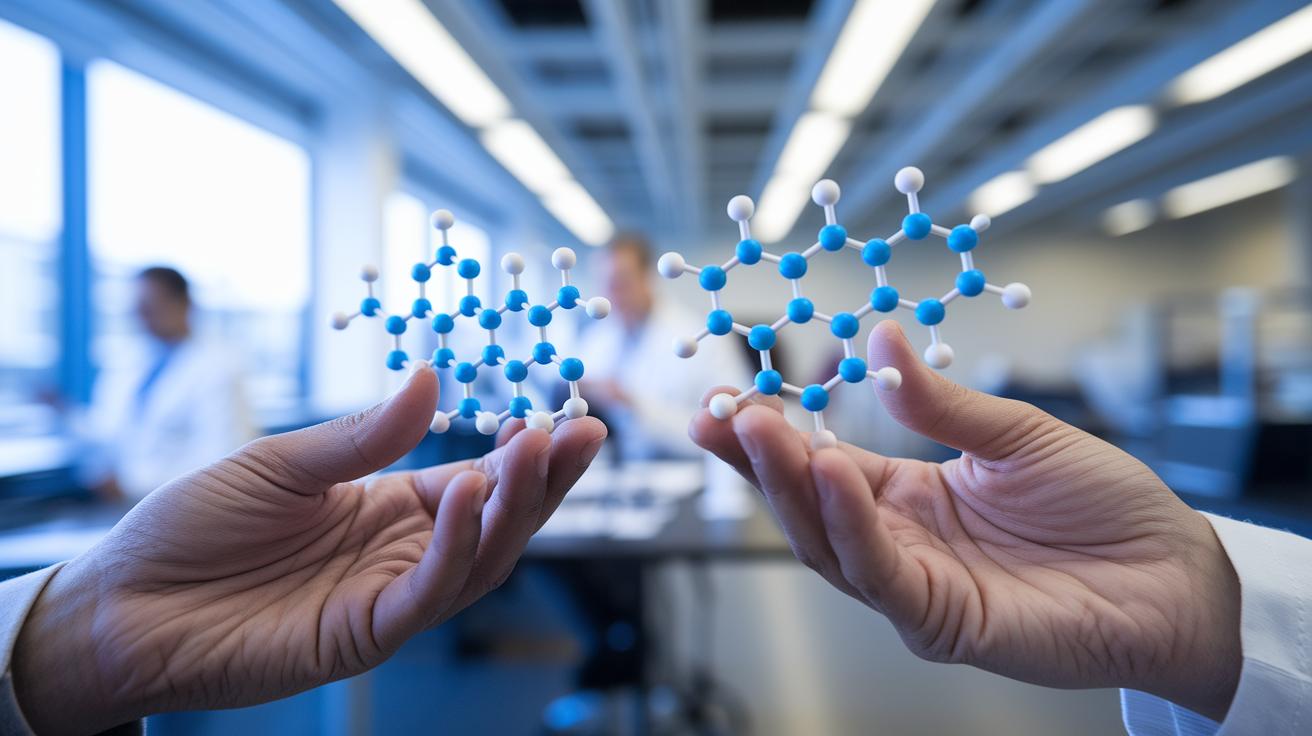
Polymerization is the process where small units, called monomers, join together to form long chains. There are two main ways this happens: chain-growth and step-growth. In chain-growth polymerization, which is also known as addition polymerization, monomers with double bonds react using free radicals, anions, or cations (charged particles). It’s a bit like adding beads one by one to the end of a string, each new bead snaps into place quickly, forming strong yet flexible materials.
On the other hand, step-growth, or condensation polymerization, works a little differently. Here, monomers that have two reactive ends link up and, in the process, kick out small molecules like water or methanol. Think of it as piecing together a jigsaw puzzle where each connection lets go of a tiny bit of waste. This method builds up large, interlocking networks that are very stable under heat and pressure.
| Method | Reaction Mechanism | Byproduct | Representative Polymers |
|---|---|---|---|
| Chain-Growth (Addition) | Uses free radicals, anions, or cations to react with monomers that have double bonds | None | Polyethylene, Polystyrene |
| Step-Growth (Condensation) | Joins bifunctional monomers while releasing small molecules | Water or methanol | Polyesters, Polyamides |
Both techniques have been refined over time, boosting the conversion of monomers and improving the structure of the final polymer. Their unique processes have led to innovative material designs that help meet modern industrial and biomedical challenges.
Controlled Polymerization Techniques Driving Precision Synthesis
Reversible Addition-Fragmentation Chain Transfer (RAFT)
RAFT uses a special chain transfer agent that acts like a guide while monomers join together to form long chains. It lets researchers control how long the chain gets and the way it’s shaped. So, if you're thinking about a chain of beads where every bead is just the right size, that’s the idea here. For example, when making materials to carry drugs in the body, having evenly sized chains can really help the material work well. And when you have polymers with parts that like water and parts that don’t, RAFT makes it easier for scientists to balance everything perfectly. This balance allows the molecules to arrange themselves in smart ways, which is a big win for applications in nanotechnology and smart materials.
Atom Transfer Radical Polymerization (ATRP)
ATRP is a clever method that uses a metal and a special ligand working together like a switch to start and pause polymer growth. The metal-ligand team passes electrons back and forth, which makes the chain grow slowly and steadily. This steady control means the final polymer has a very clear molecular weight and a uniform size. Imagine needing a thin, even coating on a surface, ATRP can help create those neat, brush-like polymer layers that stick reliably. Scientists also use ATRP to build block copolymers and star-shaped molecules that are ideal for drug delivery and responsive materials. With this method, every step of the process is fine-tuned so the polymer turns out exactly as needed.
By using both RAFT and ATRP, researchers can create materials that assemble themselves into clear, precise patterns. These self-assembled structures meet the exacting demands of modern material design, helping to drive innovations in technology and healthcare.
Innovative Composite Formation and Smart Polymer Case Studies

Have you ever wondered how science can transform everyday materials? Polymer science is mixing smart building blocks (monomers, which are tiny chemical pieces that join together) with cutting-edge alloy engineering to create materials that are not only tough but also clever. Researchers are developing composites that heal little cracks on their own and adjust as they age, making them last longer and perform better. For instance, self-healing polymers automatically fix small breaks when stress appears, which is perfect for coating surfaces and even for strengthening roads to reduce costly repairs.
Another breakthrough is biodegradable polylactic acid (PLA). In today’s healthcare, PLA is used in precise medical sutures and implants. It naturally breaks down after doing its job, which means fewer complications after surgery and a smaller impact on the environment. Meanwhile, the clever joining of monomers is also helping to create conductive polymers, essential for innovations like flexible electronics. These polymers are the foundation for OLED displays and solar panels, paving the way to slimmer, more energy-efficient gadgets.
Carbon-fiber-reinforced polymers (CFRP) are also making a huge impact, especially in aerospace. Thanks to their lightweight nature combined with great strength, these composites are helping aircraft become more fuel-efficient and safer. In short, these real-world examples show how smart composite formation is leading to materials that advance industries from healthcare to aerospace.
| Innovation | Key Feature | Industry Application |
|---|---|---|
| Self-Healing Polymers | Repairs itself to extend life | Coatings and infrastructure |
| Biodegradable PLA | Breaks down naturally post-use | Medical sutures and implants |
| Conductive Polymers | Efficient electrical flow | OLEDs and solar panels |
| Carbon-Fiber-Reinforced Polymers | Lightweight and strong | Aerospace |
These case studies show how advanced polymer methods create smart, sustainable materials. By blending clever science with everyday practicality, we’re pushing the limits of what materials can do in our modern world.
Advanced Analytical Characterization Techniques in Polymer Research
Liquid Chromatography-Mass Spectrometry (LC-MS)
Liquid Chromatography-Mass Spectrometry (LC-MS) is a main tool in polymer labs that breaks down tough mixtures into individual parts so scientists can check their mass. It’s a bit like sorting colorful beads before counting them. This technique is especially useful for studying mixtures of small building blocks and short chains. By spotting even the tiniest pieces in a polymer sample, LC-MS helps ensure that every part of a reaction is happening just as planned.
Gas Chromatography-Mass Spectrometry (GC-MS)
Gas Chromatography-Mass Spectrometry (GC-MS) is used to look at small molecules that can easily evaporate. Think of it as catching the delicate scent of a flower carried by the breeze. In this method, gas chromatography first sorts the fast-moving molecules, and then mass spectrometry measures their mass. This detailed check helps confirm the purity of the material’s basic ingredients. If anything looks off in the sample, GC-MS signals that it might be time to adjust the recipe.
Nuclear Magnetic Resonance (NMR) & High-Resolution Mass Spectrometry (HRMS)
NMR and HRMS work together like a dynamic duo to reveal how a polymer is built. NMR acts like a radio, tuning into the signals from atoms to show how they connect in long chains. This helps scientists understand the order of the parts in the polymer. HRMS adds to the process by giving very precise measurements of a molecule’s weight, which is key to making sure every batch meets high standards. Together, they build trust in both the structure and performance of innovative polymer materials.
Sustainable and Industrial Applications of Novel Polymer Materials

Recent work has cleaned up older studies by linking known sustainable polymer uses with fresh ideas. New environmental tests show that biodegradable and recycled polymers not only ease the load on landfills but also cut down overall waste in a clear, measurable way. Think about it like this: a material that naturally breaks apart and returns to the earth while still performing well is quickly turning sustainable manufacturing on its head.
In labs around the world, tougher tests are teaching us how these materials behave in real-life situations. Scientists are also revamping tests for conductive polymers (special plastics that can carry electricity) used in electronics, which is paving the way for more energy-savvy wearable tech. Meanwhile, clever new ways to reduce waste in packaging and building are mixing in advanced recycling methods, making eco-friendly benefits even stronger.
Scalability, Quality Assurance, and Future Trends in Polymer Material Synthesis
Scalable polymer synthesis helps bring exciting lab discoveries into full-scale production. Custom polymer services, like those that work with cyclodextrin-based dendrimers (molecules built from sugar rings) and deuterated chemicals (chemicals where some hydrogen is swapped with a heavier version), show that processes can easily move from a small lab to a factory setting. Scientists carefully check reaction conditions, the amount of catalysts (substances that speed up reactions), and purification steps. With these quality checks in place, every batch meets strict standards.
Using standardized processes also means fewer surprises, making results more predictable every time. This method not only streamlines production but also cuts down on the time and effort needed to shift from experiments to manufacturing. In truth, it lays a solid foundation for keeping quality consistent, no matter how much material is produced.
Developing a smart scaling strategy is key to improving production workflows. Researchers now use prediction models and simulation platforms, tools that help forecast how a reaction might behave, to tweak experiments as they happen. This means they can adjust things like catalyst performance and reaction speed right on the fly. Want to dive deeper? Check out these recent technological advances.
New trends continue to spark innovation in material science. Advanced automation techniques and smart sensors now watch reactions on a large scale, gathering important data to fine-tune processes. By pairing thorough quality control with clever computer tools, scientists are paving the way for sustainable, high-performance polymer production that reliably turns lab ideas into long-term industrial success.
Final Words
In the action of exploring polymer science, we witnessed chain fabrication methods, controlled polymerization techniques, and innovative composite formation. We also looked at detailed analytical tools that keep these breakthroughs robust. The discussion showed how sustainable applications and thoughtful scale-up processes are shaping output. The article underlines advanced polymer science: breakthrough innovations in material synthesis that blend cutting-edge research with practical benefits. Stay inspired by these achievements, and let your curiosity continue sparking further understanding of science in everyday life.
FAQ
Frequently Asked Questions
Q: What does the Advanced polymer science breakthrough innovations in material synthesis PDF include?
A: The PDF explains new methods for joining small molecules into strong, flexible materials. It details custom polymer creation and testing processes that benefit healthcare, electronics, and aerospace.
Q: What breakthroughs were achieved in advanced polymer science synthesis in 2022?
A: The 2022 innovations focused on custom polymer building and precise testing methods. They improved material strength, thermal stability, and flexibility for products in biomedical and industrial fields.
Q: What emerging technologies are influencing material science?
A: Emerging technologies blend novel synthesis techniques and smart testing tools to produce polymers with enhanced strength and flexibility. These approaches drive improvements in medical devices, electronics, and other advanced applications.
Q: What counts as new materials in advanced polymer science?
A: New materials refer to the latest polymers and composites designed with tailored strength and flexible properties. They are engineered for improved performance in industries like aviation, healthcare, and sustainable packaging.
Q: What does Materials 2025 refer to in polymer science?
A: Materials 2025 points to forward-thinking polymer designs and scalable production methods. It incorporates predictive models and advanced testing to create high-performance compounds for future technological applications.
Q: How is new material technology changing polymer research?
A: New material technology uses modern synthesis and precise control methods to create better polymers. These techniques lead to improved stability, durability, and performance for a range of industrial and healthcare applications.