
Have you ever thought that a simple experiment might change how we see the world? Long ago, scientists used everyday tools to test ideas about gravity, electricity, light, and life. Their smart tests not only changed our view of nature but also sparked new ways to think that still help us today.
In this post, we look at bold experiments that stretched the limits of science and continue to fill us with awe. Get ready to see how hands-on tests turned common questions into lasting insights.
Charting Epic Experiments That Redefined Scientific Understanding
Epic experiments helped us see the world in a new light. These tests sparked fresh ideas about nature and laid the groundwork for the scientific theories we use today. Think about it: researchers once used very basic tools to measure things that seemed impossible to measure, turning simple concepts into breakthroughs that still inspire us.
Over time, curious scientists designed clever experiments that pushed the limits of what we thought we knew. Their careful methods and creative setups connected important clues, opening up entirely new fields of study. It just goes to show that clear observation and a bit of imagination can completely change our view of science.
| Experiment | Year(s) |
|---|---|
| Cavendish’s Earth-Mass Torsion Balance Experiment | 1798 |
| Franklin and Volta’s Electricity Investigations | 1752–1800 |
| Michelson–Morley Speed of Light Inquiry | 1887 |
| Mendel’s Pea-Plant Genetics Trial | 1865–1866 |
| Rutherford’s Gold Foil Atomic Structure Test | 1909 |
| Pasteur’s Germ Theory Validation | 1860s |
Working in small labs with ingenious ideas, these experiments reshaped how we think about gravity, electricity, light, genetics, atoms, and germs. Their lasting impact reminds us that even straightforward tests can lead to huge shifts in scientific understanding, paving the way for the incredible innovations we enjoy today.
Cavendish’s Earth‐Mass Experiment: An Epic Trial That Redefined Physics
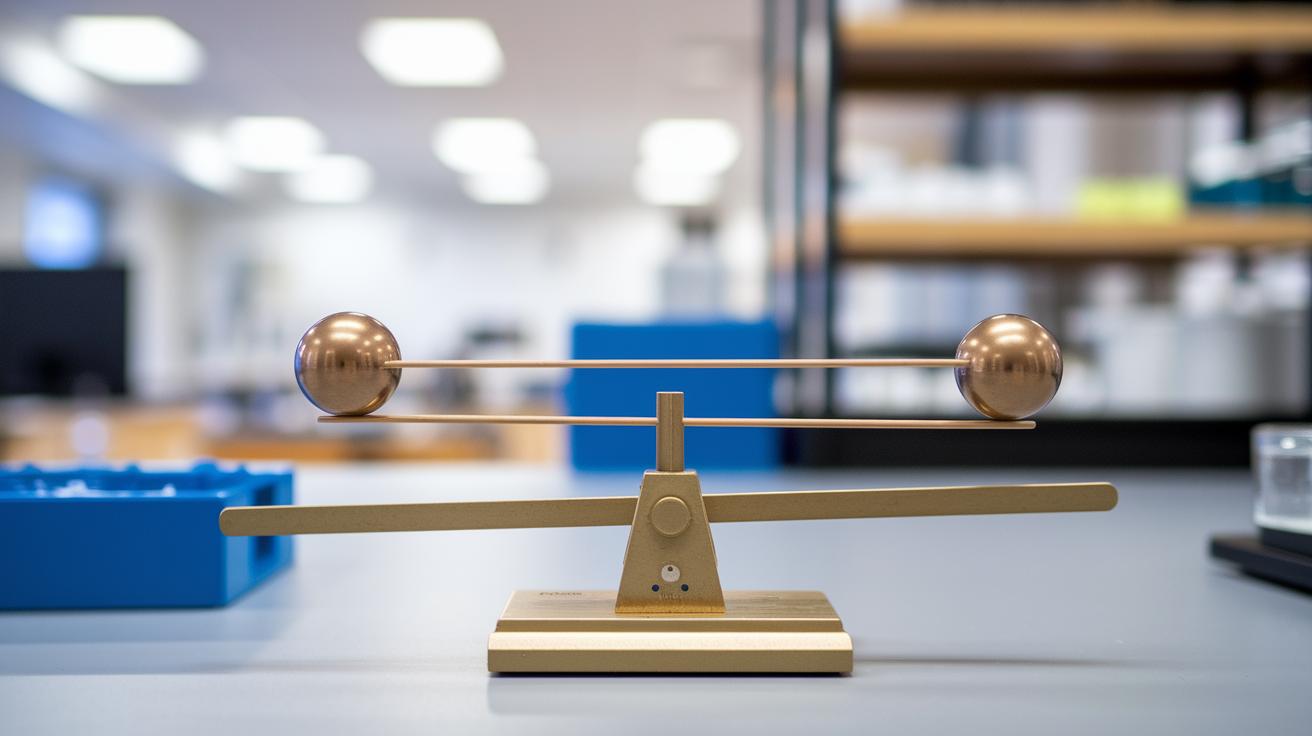
In 1798, Henry Cavendish set out on an extraordinary mission that many thought was impossible, measuring our planet's weight using just a torsion balance (an instrument that detects very small twists). In a modest lab, he built an experiment to capture the tiny force of gravity that keeps everything held together. He was testing Newton’s ideas, and honestly, it was a bold move at a time when even measuring nature’s pull felt like a tough puzzle to solve. Imagine it as deciphering a secret code from the universe.
For his setup, Cavendish used a lightweight rod suspended by a thin fiber, with small lead spheres at each end. Nearby, larger lead balls provided a gentle nudge by gravity, making the rod twist ever so slightly. He carefully recorded these little movements like clues. By measuring the twist, he could work backwards to calculate the gravitational constant (a number that tells us how strong gravity is) and even figure out Earth’s mass. It was as if every tiny turn of the fiber quietly revealed a secret about our planet’s weight.
Thanks to his steady and detailed work, Cavendish produced very accurate results that backed up Newton’s gravity theory. His experiment changed the way scientists measure physical forces and set a high standard for precision in physics. This breakthrough opened the door for future researchers to explore the hidden forces around us, gradually reshaping our understanding of the universe one calculation at a time.
For more on pivotal experiments in scientific breakthroughs, visit https://buzzyandclever.com?p=
Epic Electricity Experiments That Redefined Scientific Understanding
Electricity changed the way we look at our world. Early scientists played with lightning and static shocks to understand a mysterious force. Benjamin Franklin even flew a kite and used a Leyden jar test (an early type of battery) to show that lightning was a form of electricity. This clever trick made people realize that hidden forces in nature could be measured and used. It opened up a whole new world of questions and experiments in labs everywhere.
| Year | Scientist | Experiment | Impact |
|---|---|---|---|
| 1752 | Benjamin Franklin | Kite and Leyden Jar test | Linked lightning to electricity |
| 1800 | Alessandro Volta | Voltaic pile creation | First steady current source |
| 1831 | Michael Faraday | Electromagnetic induction demonstration | Foundation of motors and generators |
| 1879 | Thomas Edison | Electric light bulb test | Practical electric lighting |
These breakthroughs completely changed how we think about electricity. What looked like random bursts soon turned into steady energy we could use every day. Faraday showed us that moving magnets can create electricity, a discovery that led to motors and generators. Volta gave us a steady current with his battery-like invention, and Edison turned theory into the practical light bulbs that brightened our homes and streets. It’s amazing how these early experiments still light up our lives today.
Michelson–Morley’s Epic Investigation: Redefining Light’s Behavior

In 1887, scientists believed in the aether hypothesis, a simple idea that light needed an invisible medium to travel through space. Michelson and Morley set out to see if light's speed changed as the Earth moved through this unseen substance. They guessed that if the aether existed, light might take different speeds on different paths.
To test their idea, they built an interferometer. This device splits a beam of light into two parts and then brings them back together to look for tiny timing differences. They watched the overlapping light patterns very carefully, hoping to see even a slight shift, like expecting little ripples on a frozen pond and finding it completely still. And sure enough, nothing changed.
This surprising result took a big wrench out of the old ideas about how light moves. With no evidence of the aether, the experiment suggested that light always travels at the same constant speed, no matter how the Earth moves. This unexpected finding laid the groundwork for Einstein’s theory of special relativity and completely changed physics. Michelson and Morley’s work still stands as a key moment in our modern understanding of light.
Mendel’s Epic Genetics Trials: Peas That Redefined Biology
Gregor Mendel picked pea plants that showed clear differences, like the shape of the seeds and the color of the flowers. He controlled the process by carefully moving pollen from one plant to another so that only the combinations he chose took part. His easy-to-follow yet careful experiment helped him see how traits were passed from parents to their children without any extra factors getting in the way.
When he looked at the results of his planned crosses, Mendel found that one trait appeared about three times more often than the other. This steady pattern led him to figure out that each parent gives one of two key parts (what we now call genes), and these parts mix independently in the next generation. His work gave us the first clear rules for how traits are inherited.
Even though not many people noticed his work when he was alive, Mendel’s experiments later changed biology in a big way. When his findings were rediscovered in 1900, they kick-started a new era in genetic research and laid the foundation for modern genetics. Today, his discoveries still help scientists learn more about the genetic basis of traits in plants, animals, and humans.
Rutherford’s Epic Gold Foil Study: Redefining Atomic Structure

In 1909, Ernest Rutherford set up a clever experiment. He used a very thin sheet of gold foil and fired a stream of alpha particles (tiny, positively charged particles from helium atoms) at it. Scientists expected these particles to pass through easily because of the plum-pudding model, which pictured atoms as electrons spread out in a smoothly positive cloud.
But the results were surprising. Most alpha particles went straight through, while some changed direction sharply and a few even bounced back. It was like driving on a smooth road and suddenly hitting unexpected bumps. This odd behavior showed that atoms have a small, dense center instead of a fuzzy spread, that center is now known as the nucleus.
This breakthrough completely changed how we think about atoms. By proving the nuclear model, Rutherford’s experiment replaced the old idea and sparked more research into tiny, mysterious quantum details. These insights still shape our modern understanding of the building blocks of matter.
Final Words
In the action, we explored key trials, from measuring Earth’s mass with Cavendish’s torsion balance to witnessing electricity's early experiments, from Michelson–Morley’s puzzling light behavior to Mendel’s pea-plant crosses and Rutherford’s particle scattering. Each piece showcased how these epic experiments that redefined scientific understanding stirred progress in physics, biology, and beyond.
The blend of historical trials and clear, everyday insights reminds us that even long-ago tests continue to shape our daily grasp of science. There's a bright road ahead for curious minds!
FAQ
What does the phrase “epic experiments that redefined scientific understanding” refer to?
The phrase highlights landmark experiments like Cavendish’s earth-mass test and Franklin’s electricity trials, which shifted our view of physics and biology and paved the way for modern science.
What are some famous science experiments that changed the world, and which discovery has had the greatest impact?
Famous experiments, such as Mendel’s genetics trials and Pasteur’s germ theory tests, have changed the world by providing clear insights into inheritance and disease prevention, deeply influencing our everyday lives.
What physics experiments are popular for high school students, both in class and at home?
High school experiments often include recreations of tests like Cavendish’s torsion balance and Michelson–Morley’s light investigation, which help students grasp fundamental physics principles through hands-on activities.
What is an example of a scientific experiment?
An example is Mendel’s pea-plant crosses, where careful breeding and trait counting revealed clear patterns in inheritance, forming a basis for modern genetics.
What is considered the biggest scientific experiment ever?
The term can vary, but historic trials—such as Michelson–Morley’s light speed inquiry—stand out for their unique scale and role in challenging old ideas, inspiring large-scale modern projects.
What is the most beautiful experiment in science?
Many find Mendel’s pea-plant trials beautiful because they show complex genetic principles with simple, natural observations, revealing nature’s underlying order in an elegant way.