
Have you ever wondered what it's like to push past Earth's boundaries? In 1963, Valentina Tereshkova did just that when she became the first woman to journey into space. She orbited our planet so quickly, it was almost like taking a fast domestic trip. Sure, she faced a few technical hiccups (minor problems with the equipment), but nothing stopped her spirit. Her bold flight shows us that we can always aim higher and rethink what we know is possible. It really makes you want to explore new horizons.
Valentina Tereshkova: First Woman in Space and Historic Orbital Flight
Valentina Tereshkova made history when she took off into space. On June 16, 1963, she rode aboard Vostok 6 and became the very first woman to journey beyond Earth. In just over 70 hours, she orbited our planet 48 times, sparking a new chapter in how we understand space travel.
But her mission was more than just a flight. Imagine performing experiments with plants and animals (small living things) in the vastness of space, all while capturing breathtaking photos and video of our planet. At one point, a glitch in the guidance system tried to lead her astray, but she quickly fixed it to keep the mission on track. Even when a serious design flaw during reentry was kept under wraps for 30 years, her quick thinking and technical know-how ensured a safe return.
Her story is a powerful mix of pioneer spirit and determination. As the first woman in space, she broke barriers in science and opened up new opportunities for gender equality in aerospace. Tereshkova’s journey continues to inspire curiosity and courage, reminding us that one bold step can light the spark for endless exploration around the world.
Tereshkova’s Early Life: Path to Becoming the First Woman in Space
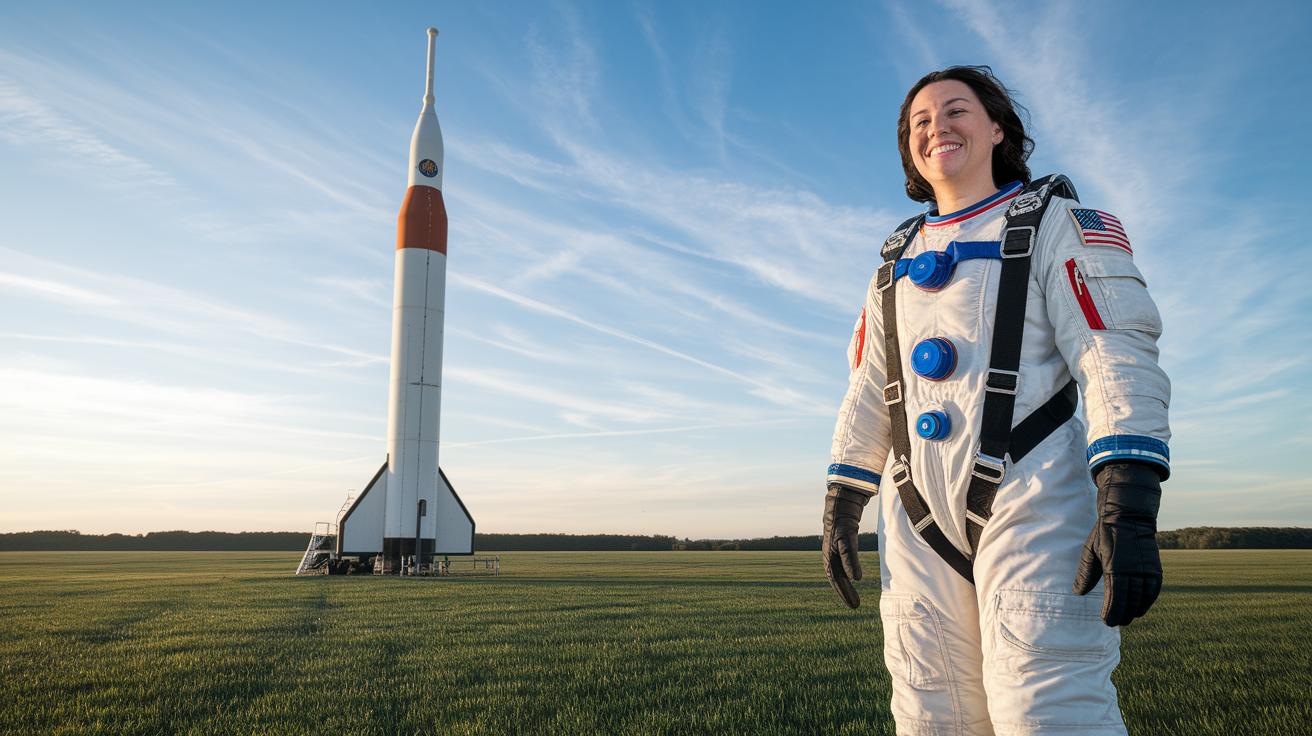
Born in 1937 in the Yaroslavl region to a modest farming family, she steered away from the ordinary route of working in a textile factory by diving headfirst into skydiving. At just 22, she was already leaping from planes, a clear sign of the bold spirit that would guide her along her future path.
By taking on the challenge of skydiving, she set the stage for a life among the stars. Inspired by Yuri Gagarin’s groundbreaking flight in 1961, she jumped at the chance and volunteered for cosmonaut training in early 1962.
Out of more than 400 applicants, she was picked as a trailblazing female astronaut. Her top-notch skydiving skills, working-class background, and her father’s wartime heroism, along with a few unique criteria, set her apart. This moment became a key turning point in her story, cementing her status as the first woman in space.
Her journey not only made her a pioneer of the Soviet space program but also redefined what it meant to be a groundbreaking female astronaut. Her deep passion and unwavering determination continue to shine through, with a legacy that lives on as a constant reminder of her historic achievement.
Vostok 6 Mission: The First Woman in Space’s Orbital Achievements
Vostok 6 came with smart changes in its guidance system. Engineers updated the control panel so that the pilot could easily step in when needed. Tereshkova’s quick fix during the flight showed that even a simple adjustment can make a big difference. It’s like steering a boat in rough waters, when the automatic system slipped, her hands-on move set the course right.
During the flight, the team also added improved tools to keep a close eye on onboard experiments. These upgrades meant they could track instruments and even living specimens more carefully, setting up future spacecraft to combine tech and human judgment beautifully. One expert even pointed out that her actions proved how human insight can work hand in hand with technology.
| Innovation | Impact |
|---|---|
| Responsive Guidance System | Enabled quick manual corrections during flight |
| Enhanced Monitoring Tools | Improved tracking of experiments and onboard life |
Her decisive moves and these refined systems helped craft the safety rules and design for crewed space vehicles in the years that followed.
Soviet-Era Cosmonaut Milestone: How the First Woman in Space Overcame Challenges

Back during the Cold War, when the world was in a heated space race, Tereshkova’s mission sparked very different reactions. American news outlets often doubted her ability by asking if a woman could really handle the rigors of spaceflight, while Soviet stories brushed her role off as just a political show.
Her journey turned into an example of how the same event can be colored by different cultural views. One U.S. reporter even speculated about a woman’s readiness for such a challenge, and a Soviet correspondent pointed out how her flight carried deep symbolic value for national pride. Isn’t it intriguing how one mission can tell two very different stories?
Legacy of the First Woman in Space: Shaping Space Exploration and Gender Equality
After taking that groundbreaking trip into space, Tereshkova changed both how we explore space and how we think about women in science and government. She even received an honorary engineering degree from the Zhukovsky Air Force Academy, a nod to her sharp technical mind and determination. While working as a respected leader in the Soviet government, she pushed for policies that meant more women could join politics and science.
Her historic flight set the stage for women to step into STEM (science, technology, engineering, and mathematics) roles, sparking a global shift where space agencies now welcome female astronauts. Tereshkova’s story still fires up young people everywhere, showing them that a career in science and technology is well within reach.
Her incredible achievements remind us that by challenging old ideas and breaking the mold, we can open doors for generations to come. With her blend of courage and persistence, she bridged the gap between gender equality and the future of exploration. In truth, her journey shows us that real progress in exploring space helps us all move forward.
Trailblazing Cosmic Explorer: The First Woman in Space’s Influence on Future Pioneers

In 1963, Valentina Tereshkova became the first woman to fly in space. Her journey wasn’t just a win for women; it opened the door for many brave explorers. Her daring flight set the stage for others like Sally Ride, who became the first American woman in space in 1983. Valentina showed us that anyone can reach for the stars when they believe in themselves.
Her story goes deeper than just a historic flight. On her 70th birthday, Valentina said she’d even take a one-way trip to Mars (the red planet), proving her passion for discovery was as strong as ever. That fearless remark still inspires young minds today, sparking programs that encourage learning and exploration. Every new space mission reminds us that reaching new heights isn’t just about science, it’s also about inspiring future pioneers to explore the unknown and push the limits of what’s possible.
Final Words
In the action, we saw the first woman in space break new ground. Valentina Tereshkova’s historic Vostok 6 flight showed her skill in managing technical challenges and gender barriers. Her early life, daring flight, and lasting legacy remind us how a single mission can change our view of science. Her journey inspires us to keep exploring and questioning the limits of what’s possible. Today, her story sparks hope for many future innovators.
FAQ
Who was the first woman in space?
The first woman in space is Valentina Tereshkova. She flew on Vostok 6 in 1963, orbited Earth 48 times, and performed key experiments during her historic mission.
Were any women ever on the moon?
The first woman to walk on the moon has yet to be seen as no female astronaut has landed or walked on the lunar surface.
Who was the first American woman in space?
The first American woman in space is Sally Ride. She flew aboard the Space Shuttle in 1983, marking a significant milestone for U.S. women in space exploration.
Is Sunita Williams the first woman in space?
Sunita Williams is a famous astronaut, but she is not the first woman in space. That title goes to Soviet cosmonaut Valentina Tereshkova, who made her flight in 1963.
From which country did the first woman in space come?
The first woman in space, Valentina Tereshkova, came from the Soviet Union, representing a major breakthrough in early space exploration.
When was Valentina Tereshkova born and has she passed away?
Valentina Tereshkova was born in 1937 in the Yaroslavl region. She is still alive and continues to be celebrated as an icon of space history.
What happened during Valentina Tereshkova’s space mission?
Valentina Tereshkova’s mission on Vostok 6 lasted over 70 hours, during which she orbited Earth 48 times, conducted experiments, and manually corrected course errors to ensure a safe return.
How have pioneers like Tereshkova, Ride, Savitskaya, Chawla, Jemison, and Sharman influenced space exploration?
Their groundbreaking achievements paved the way for future missions, helped expand roles for women in space, and continue to inspire new generations in the field of space exploration.

