Have you ever thought about how the latest tech might transform your next doctor visit? Healthcare is changing quickly with smart machines, online doctor visits, and cool virtual tools. These advances mean tests and treatments can be done faster and more clearly. Research shows that robots, safe data sharing, and digital health tools really work. These changes are not just ideas, they are making patient care feel more personal, smooth, and smart.
Navigating Comprehensive Healthcare Tech Trends
Healthcare technology is changing how patients get care. New ideas backed by solid data show us that digital medicine is on the rise, and hospitals are adding more technology every day. By looking at market numbers and adoption rates, we can see that better tests, treatments, and daily care are coming soon. Today, eight big trends are leading the way, promising smarter and smoother care.
- By 2026, we expect smart machines (AI) to play a bigger role in helping with tests and daily operations.
- Doctors and hospitals might use more robots soon, and the robotics market in healthcare could reach $12.7 billion by 2025.
- By 2025, blockchain (a secure way to store and share information) should protect more than half of all health apps.
- Virtual reality (VR, a way to experience new worlds) in healthcare may be worth over $4 billion by 2024.
- Telemedicine (seeing your doctor through video calls) is growing fast, which means more people can get care.
- Connections through the Internet of Medical Things (IoMT, smart devices that share health data) are growing quickly, which helps with patient monitoring.
- Big-data platforms (systems that handle huge amounts of information) are now used to help doctors make quick and better decisions.
- New digital medicine ideas keep pushing hospitals to use more technology, leading to more exact care and better daily operations.
These trends not only show lots of growth but also bring fresh ways to make care more personal, quick, and smart for every patient.
AI and Machine Learning Diagnostics Driving Healthcare Tech Trends

Medicine is being changed by artificial intelligence. We now have smart tools that scan images and review electronic health records (health information from patient files) to catch problems early. Deep-learning models (advanced computer programs that learn from data) help spot tiny issues in X-rays and skin scans. And with AI-powered virtual assistants handling common questions and managing appointment routing, healthcare professionals can focus on the more complicated cases, leading to customized treatment plans and better overall care.
Machine learning is also making a big impact by streamlining how healthcare works and predicting patient needs. When combined with natural language processing (a way for computers to understand text), it sifts through mountains of research and clinical notes. This speeds up drug discovery and shortens the time between research and treatment. Computer-vision tools, an exciting part of machine learning, check images in fields like dermatology and radiology, highlighting issues that might need more attention. Plus, predictive analytics (using past data to forecast trends) helps doctors plan timely interventions, making care more proactive and efficient.
Big Data Health Analysis in Modern Healthcare Tech Trends
Big data is changing healthcare by mixing huge amounts of information from digital patient records, DNA details (genomic data), and wearables. This blend helps us predict health trends, spot possible disease outbreaks, and figure out who might come back to the hospital. Many health systems now use smart tools with real-time screens that show big-picture trends, fine-tune clinical tests, and decide where to use resources best.
Think about it like this: by combining hints from your genes with everyday lifestyle data from a wearable, doctors can notice tiny health signs. This means they can step in early and tailor treatments just for you.
| Data Source | Analytic Application | Clinical Benefit |
|---|---|---|
| Electronic Health Records | Trend Analysis | Early Disease Detection |
| Genomic Data | Risk Stratification | Personalized Treatment |
| Wearable Device Data | Real-Time Monitoring | Enhanced Chronic Care |
Big data analytics is making treatment more personal and effective. By driving smarter, data-driven choices, it helps doctors deliver better care every day.
Telehealth Evolution Shaping Healthcare Tech Trends

Video visits are now a big help in reducing travel and other expenses. Lots of people are choosing virtual consultations, and since 2020, telehealth visits have jumped by 50%. This change means patients don't need to drive far to see their doctors. It's a quick and cost-saving way to get care, with video calls becoming a normal part of our healthcare routine.
Remote monitoring is also changing how we handle long-term conditions. Simple devices can check your blood pressure, blood sugar, and oxygen levels in real time, so doctors always know how you're doing. These smart tools send alerts right away, letting your care team adjust treatments before small issues turn into bigger ones.
New telehealth platforms are coming soon to shake up healthcare. They will include features like AI triage (computer helpers that check your symptoms) and virtual health assistants to guide you and set up appointments accurately. The aim is to make remote checkups as trustworthy as in-person visits, so you get smooth, personalized care from the comfort of your own home.
Smart Wearables and IoMT in Healthcare Tech Trends
Wearable devices are changing how we get healthcare by letting patients and doctors check important health details every day. These smart gadgets keep track of your heart rate, sleep patterns, and even your ECG signals (a record of your heart’s electrical activity) in real time. They connect the data from your home sensor straight to your doctor’s dashboard, making it easier to get the care you need. It’s a neat way for patients to have more control over their health as they go about their daily routine.
New biosensor technology is taking things to the next level. Modern patches and sensors not only measure important signs like your vital statistics but also watch for movement and can even alert someone if you fall. They pick up subtle changes in your body fluids, like sweat or interstitial fluid (the liquid between your cells), which helps doctors adjust treatments as soon as they notice something off. This makes your care feel much more personal and proactive.
- ECG patch – records the electrical rhythm of your heart
- Glucose monitor – tracks your blood sugar levels
- Sleep tracker – monitors how well you sleep at night
- Fall detection sensor – sends alerts when you fall
- Biosensor patch – checks for key body markers in sweat or skin fluid
Advanced Clinical Robotics and Imaging in Healthcare Tech Trends
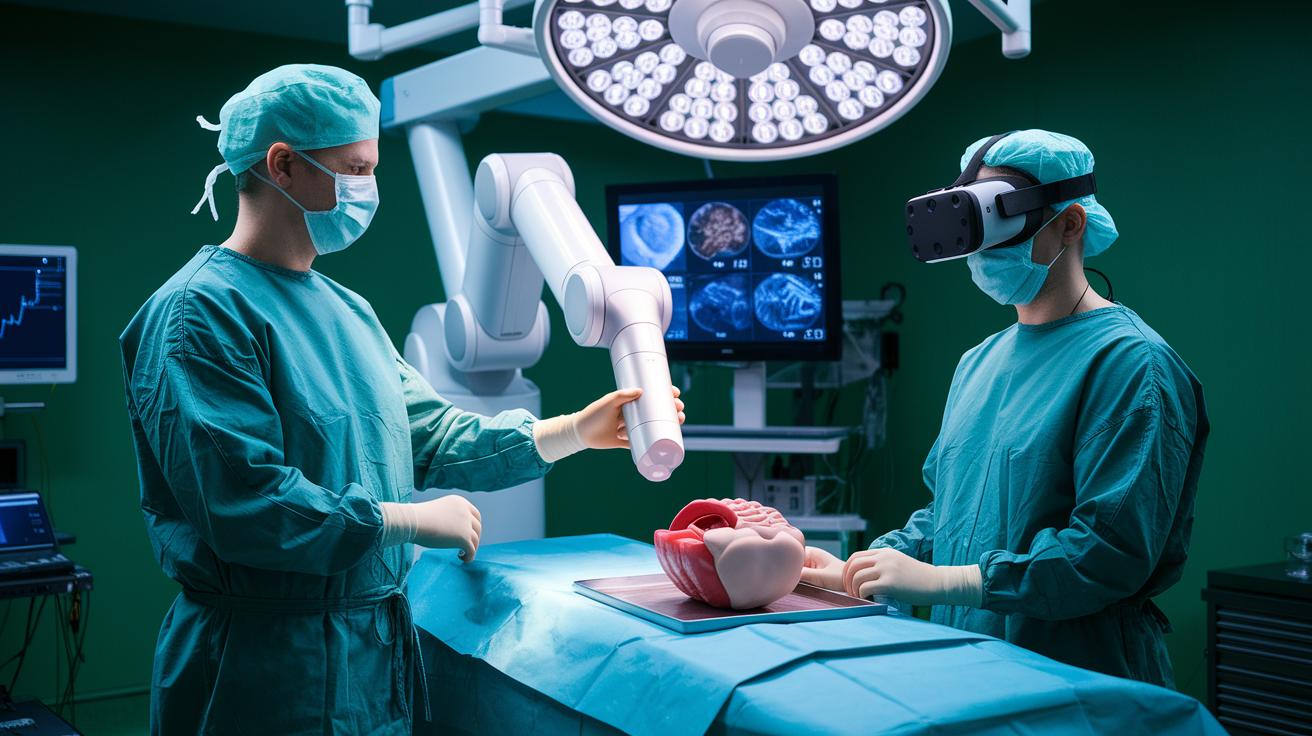
Robotic and imaging breakthroughs are changing how doctors perform surgery. Today, robots can handle tasks like coronary bypasses and tumor removals with pinpoint accuracy, which helps patients get better faster and with fewer risks. Surgeons also use 3D-printed organ models (accurate replicas created from scans) for careful planning before an operation. During surgery, augmented reality (AR, which adds digital details to the real view) helps guide their hand, and virtual reality (VR, a digital simulation of a real environment) lets residents practice procedures safely. All these tools work together to make treatments more precise and effective.
- Case Study 1: A robot helped with a coronary bypass by making very careful moves along tiny blood vessels. This cut down on the time the surgery took and reduced the risks after the procedure.
- Case Study 2: In a tumor removal surgery, AR helped the doctor tell apart healthy tissue from abnormal tissue in real time. This led to a careful removal process and better patient results.
- Case Study 3: One hospital combined VR training with 3D-printed organ models so that surgical residents could practice tough procedures. This hands-on rehearsal increased their skills before they even entered the operating room.
For more on these exciting updates, check out the latest medical technology breakthroughs.
Virtual and Augmented Reality in Healthcare Tech Trends Education
VR and AR are changing the way medical professionals train. Surgeons and clinicians now practice in digital operating rooms where haptic feedback (a feature that lets you feel digital touch) makes everything feel real. They can try complicated procedures over and over until every move is just right. It's like doing a rehearsal on a digital stage where every gesture counts.
New virtual worlds are also on the rise. These spaces mix VR, AR, and AI (artificial intelligence, or smart computer programs) to create environments where doctors can work together from different places. In these virtual clinics, specialists connect in real time to share ideas and refine treatment plans. This blend of technology not only makes training more effective but also boosts patient care by helping clinicians keep their skills sharp.
Cyber Protection Strategies in Healthcare Tech Trends

Healthcare organizations are increasingly at risk from online attacks. Hackers and ransomware are now aiming for sensitive patient details, so providers are working hard to protect their networks. Many medical centers are meeting privacy rules like HIPAA (a US law to protect patient information) and GDPR (a European rule for data protection) while reinforcing their IT systems against unwanted breaches.
Today, hybrid cloud setups are becoming popular. They blend cost efficiency with strong security, making it possible to run operations smoothly without overspending. At the same time, tools like blockchain (a secure way to record transactions) help create unchangeable logs that bring clear, reliable record keeping.
Upgrading electronic health records not only makes patient data easier to access for authorized users but also adds better security measures to keep that data private. With cyber challenges evolving fast, healthcare providers must mix the latest IT solutions with proven security practices.
- Zero-trust networks: Check every access request with no assumptions.
- Blockchain logging: Keep records unchangeable and secure.
- Hybrid cloud systems: Offer cost savings while delivering strong protection.
- Enhanced electronic health records: Improve access controls and include continuous monitoring.
Precision Medicine and Nano-Tech in Healthcare Tech Trends
Every day, healthcare is getting a bit smarter thanks to precision medicine. Doctors now look at a patient's genes, lifestyle, and even the environment when planning treatments, so care fits each person perfectly. Custom devices that tweak treatments based on subtle body signals are starting to pop up, replacing old one-size-fits-all methods with personalized strategies that really work.
Nano-medicine is also shaking things up. Tiny sensors made from materials like graphene and silver can spot early signs of breast cancer, making tests quicker and less invasive. And cool gadgets like lab-on-a-chip pack all the power of complex diagnostics into something you can hold in your hand. These mini marvels hint at a future where our medical tests are both super powerful and easy to use every day.
Future-Proofing Healthcare Tech Trends with Emerging Innovations
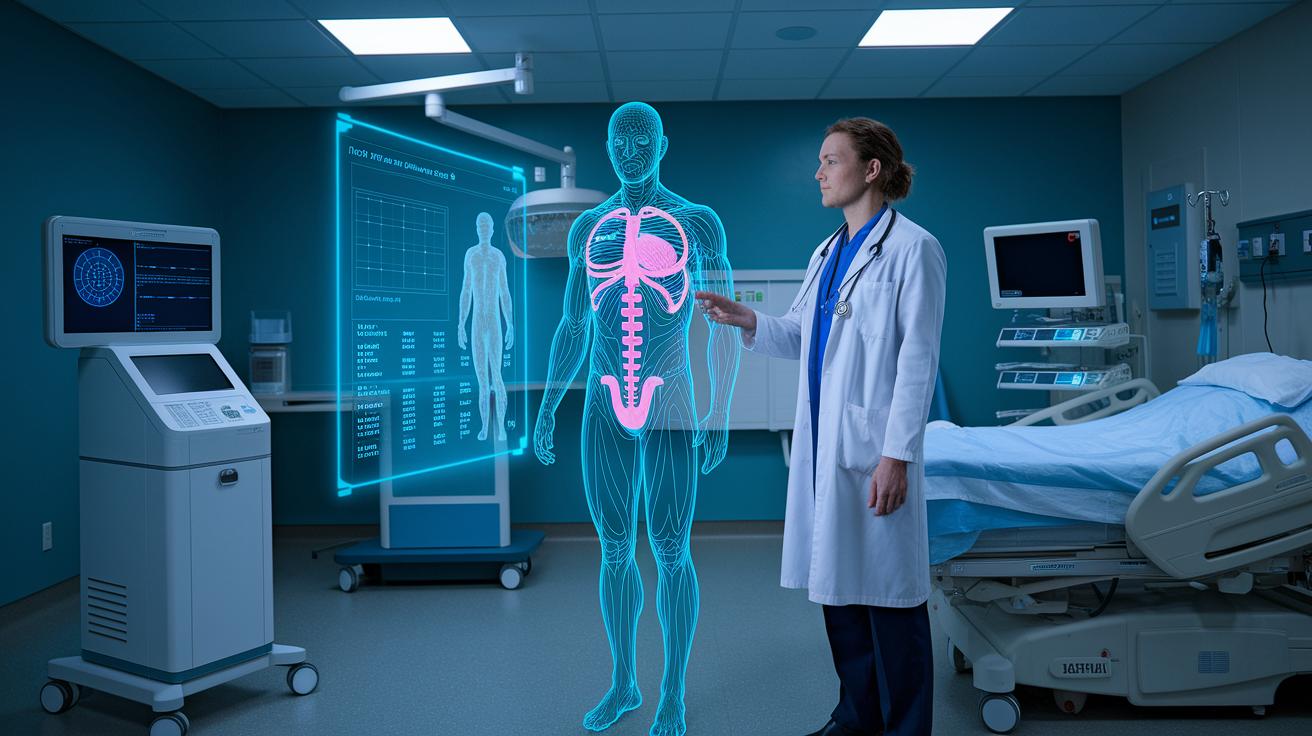
The world of healthcare is changing fast, with new tech bringing personalized care and smart IT solutions together in exciting ways. One cool example is digital-twin prototypes (virtual models of patients) that help doctors adjust treatments and spot problems before they happen. In this fast-changing scene, technology and medicine are teaming up to create devices and systems that offer care as unique as you are. But even with these advances speeding up, we still face some big challenges, such as getting different systems to talk to each other, keeping costs down, and making sure everyone gets enough training.
Recent work on connected network systems shows great promise by helping data flow smoothly between various platforms. New policies are also starting to change how telehealth and AI work get paid for, which further boosts these improvements. To really make the most of these smart healthcare technologies, providers need to tackle these challenges:
- Establishing uniform standards: Teams of tech experts and clinicians can work together to create shared rules that help different systems work well together.
- Workforce training enhancements: Regular digital training can help staff learn how to use the new tools easily.
- Managing cost barriers: Smart investments from both public and private groups, along with incentive programs, can ease the financial load of adding new systems.
- Adapting policy frameworks: Flexible rules and new ways of paying for care can support long-term success for these innovative solutions.
Final Words
In the action, we explored a range of innovations from AI diagnostics and big data analytics to pioneering telehealth and wearable sensors. We looked at smart robotics, immersive training with VR/AR, and robust cyber protection tactics that push healthcare tech trends forward.
Every section highlighted how emerging technologies contribute to smarter, more secure patient care. It’s exciting to see such progress, and it’s clear that these healthcare tech trends will continue to transform day-to-day health management for the better.
FAQ
What do healthcare tech trends in 2023, 2026, and the top five trends in health care indicate?
These trends show a boost in AI diagnostics, telehealth expansion, smart wearables, big-data use, and robotic procedures, all working to improve patient care and system efficiency.
What is meant by “healthcare tech trends pdf”?
This refers to downloadable reports outlining current healthcare technology trends, including market growth, new innovations, and detailed insights into digital medicine advancements.
What are some examples of healthcare technology and new healthcare technology?
Examples include AI-assisted diagnostics, telehealth platforms, wearable monitoring devices, and blockchain-secured systems, each improving the way care is delivered and data is managed.
What do technology in healthcare scholarly articles typically cover?
Scholarly articles discuss topics like AI in medical imaging, big-data analytics, and remote monitoring systems, offering evidence-based insights that support and validate new practices in care.
What trends in tech and healthcare are currently being followed?
Current trends include the rise of AI solutions, expansion of telehealth services, increased use of wearable sensors, and greater reliance on data-driven decision making in clinical settings.
What are the top three trends in healthcare administration?
They include enhanced digital record systems, AI-driven analytics for efficient operations, and advanced telehealth services, all aimed at reducing costs while improving patient service.
What emerging technologies in healthcare are making an impact?
Emerging technologies include machine learning for faster diagnoses, blockchain for secure data exchange, smart wearables for real-time monitoring, and VR/AR tools for training and patient therapy.
What do the 4 P’s in healthcare stand for?
They refer to predictive practices (foreseeing health risks), preventive strategies (reducing illness), personalized treatment (tailoring care), and participatory engagement (involving patients in decisions).