Have you ever wondered if machines could soon outdo humans in spotting diseases early? These days, AI (artificial intelligence, smart computer systems) is teaming up with doctors to catch health issues as they happen. Think of it like having a friend who never sleeps, always ready to spot a hidden sign. With tech growing faster than ever, new ways of early diagnosis are shaking up the old rules. Today we'll dive into how AI is driving breakthroughs in medical checks, making care quicker and more tailored to each person.
AI-Driven Diagnostic Innovation: Overview of Breakthroughs
AI is changing how doctors and researchers use data to catch diseases early. In 2024, the world’s AI healthcare market was valued at $16.61 billion, and experts now predict it could grow to over $630 billion by 2033. This shows just how quickly digital tools are becoming a key part of healthcare.
AI systems look over patient symptoms with smart checkers to suggest treatments that fit each person. Sometimes even a simple symptom report can trigger an alert, much like chatting with a helpful digital guide. It’s pretty amazing when you think about it, there was a time when noticing subtle clues in patient data took days, but now AI can pick them up in moments.
Web-based solutions have already proven their worth. Tools like Buoy Health helped millions by sorting COVID-19 symptoms quickly when every minute mattered. At the same time, deep-learning imaging tools (advanced computer programs that learn from data) check tumor genetics and how aggressive they might be. They turn complex radiology details into clear signals that guide treatment decisions. One standout example is Enlitic’s radiology suite, which improves cancer assessments by efficiently analyzing image details.
AI-powered natural language processing also takes over clinical documentation. By cutting down on the time doctors spend on charting, these systems help reduce burnout and let physicians focus more on patient care. From fast symptom checks to detailed reviews of scans, this technology is set to keep pushing diagnostic breakthroughs, making medical interventions more reliable and timely.
All these AI methods aren’t just about boosting efficiency, they’re reshaping how we make diagnostic decisions. This change is opening doors for even deeper explorations into computer-driven health checks and fresh ways of understanding medicine.
Automated Imaging Solutions in AI Diagnostics
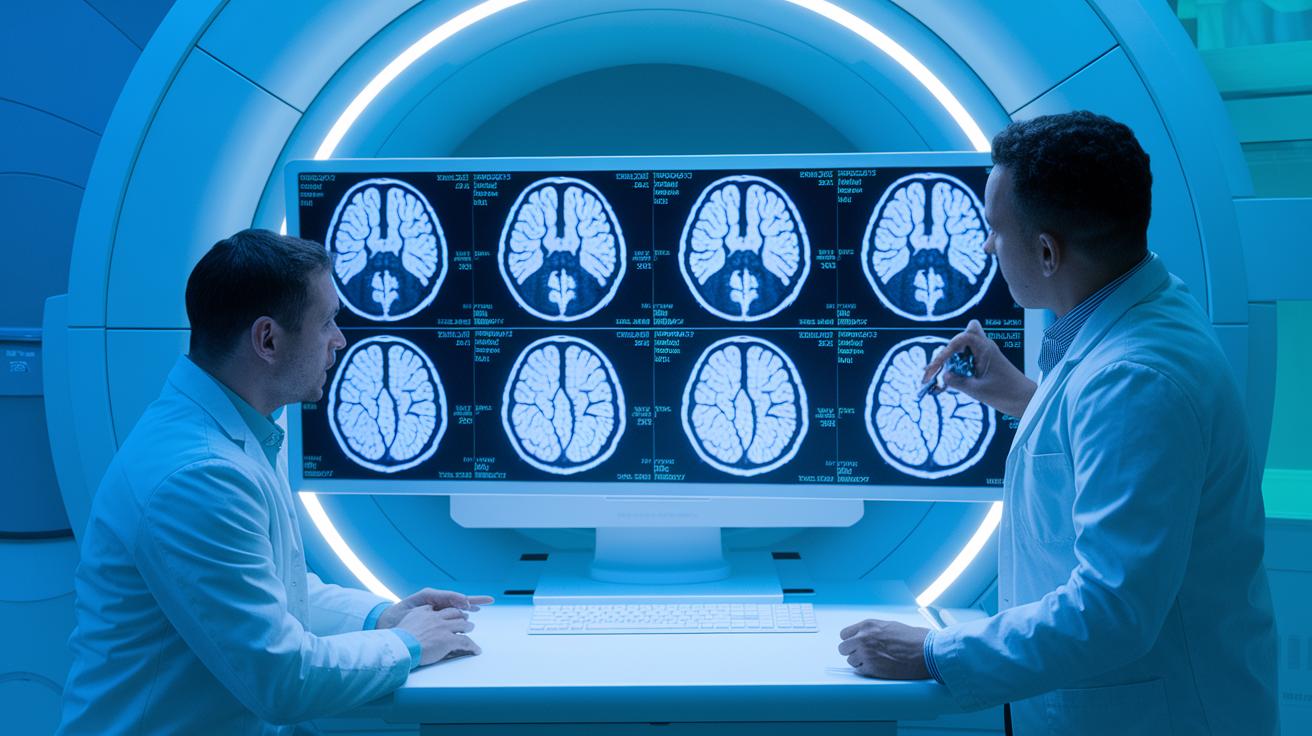
AI-driven imaging tools are now really good at picking up tiny hints of disease. They use a technique called automated segmentation (where the computer neatly draws lines around key areas on a scan) to make images much clearer, almost like tracing a beloved shape. Have you ever seen a drawing recreated with such precision? In recent trials, these tools have sharpened image clarity so well that early signs of illness stood out with much greater confidence.
Next, there’s the use of reconstruction pipelines. This process takes different slices from a scan and rebuilds them into one clear picture, much like putting together a puzzle where each piece adds its own important detail. It gives doctors a thorough view that can help catch problems early when treatment might be more effective.
Then, deep-learning networks step in to add extra insight. They examine things like the shape of a tumor and tiny genetic markers (small parts in a cell's DNA that help identify traits) to tell normal tissues apart from abnormal ones. This tissue characterization helps doctors see the fine differences between tissues, which means they can plan treatments more precisely. It’s amazing how noticing these small details can make such a big impact!
Finally, consider what Enlitic’s radiology algorithms do. These smart tools have boosted detection accuracy, increasing the sensitivity and specificity by over 10% in head-and-neck cancer tests. By combining automated segmentation, reconstruction pipelines, and tissue characterization, doctors get a complete and reliable picture that leads to earlier and more confident decisions in care.
AI-Powered Predictive Analytics Flourish: Proactive Patient Risk Analysis
Smart computer models review patients’ medical records and data collected from devices like fitness bands to spot early risks for illnesses such as diabetes, heart disease, or stroke. This new approach helps doctors catch issues early, instead of waiting until symptoms become severe.
AI-powered smartwatches and trackers collect important signals like changes in heart rate and sleep patterns. These devices send key data into large health studies, which helps researchers understand trends in community health. Real-time dashboards then alert care teams when patient numbers dip, cutting the need for intensive care transfers by up to 15 percent in early tests.
Using smart computer learning (which means machines improve their skills by learning from data), these systems sort patients into risk groups. This lets medical teams focus on early warning signs and take action before conditions get worse. Imagine a wearable that constantly monitors your heartbeat, picking up tiny changes that might signal a problem.
This switch from waiting for problems to appear to actively spotting health issues represents a big leap in patient care. Continuous monitoring and live data reviews give care teams the power to step in quickly, keeping patients safe. With these advances, computer learning is changing how we do diagnostics, making healthcare smarter and more forward-thinking every day.
AI-Powered Biomarker Discovery and Genomic Insights

AI is changing the way we spot early signs of illness. It quickly sorts through huge collections of chemical compounds, almost like flipping through a giant picture book to pick out clues. This smart system can even spot potential new medicines, speeding up early research and making clinical trials run smoother. For instance, a scientist might say, "Check this out, I saw a candidate drug by comparing it to compounds from old remedies!"
Machine learning, a type of AI that learns from data, gathers details from our genes, daily routines, and past health records. This helps doctors design treatment plans that fit each person perfectly. It’s like tailoring a suit for someone where every stitch is just right.
Advanced sequencing tools look closely at our DNA to find early markers for diseases like Alzheimer’s and Parkinson’s. They can even spot warning signs up to five years before symptoms pop up. Imagine a clever system that catches a problem before it even starts!
Below is a simple breakdown:
| Application | Outcome |
|---|---|
| Drug Candidate Prediction | Faster early-stage research |
| Integrating Gene, Lifestyle, and Health Data | Custom treatment plans |
| Next-Gen DNA Sequencing | Early detection of brain-related issues |
This blend of gene exploration and new methods to spot health markers is really pushing modern medicine forward. It’s a big leap in how we understand diseases and find new ways to treat them.
Case Studies: Real-World Applications of AI Diagnostics
Recent clinical trials show that brain-computer interface systems powered by AI are making a big difference. In some tests, these smart systems helped 8 patients with ALS (a disease that affects nerve cells) speak again and gave stroke survivors better control over their movements. One clinician remarked, "This technology brings voices back and helps patients reconnect with their loved ones."
Imagine a stroke survivor who couldn’t move their hand anymore. Thanks to a brain-computer interface, they learned to control a digital cursor just by thinking. It turned a difficult situation into a bright moment of hope.
Challenges and Future Directions in AI Diagnostics

Organizations like the WHO remind us that medical AI must protect privacy, be fair, and respect patient rights. Think of it as a careful doctor who double-checks every detail, an AI system should be smart and unbiased.
Regulators are changing their approach, too. In 2023, the FDA advised that adaptive AI software must prove it works well in the real world with a wide range of patients. It’s kind of like updating your favorite recipe so that everybody can enjoy it.
On the tech side, next-generation wearables are set to shake things up in patient monitoring. Imagine a tiny sensor inside you that can alert doctors if sepsis starts to develop. These AI-powered devices, now in phase II trials, could mean getting help just when every minute counts.
At the same time, fresh educational programs are emerging to train new experts in health AI. Universities are now offering hybrid degrees with special tracks in things like digital scan development and bioinformatics leadership (using computers to understand biological data). It’s a blend of old-school techniques and futuristic tools aimed at making diagnostic medicine even better.
All these changes, from updated regulations and innovative devices to inspiring academic paths, point to a future where diagnostic medicine is not only smarter but also more ethical and responsive.
Final Words
In the action, the post unpacked AI’s role in transforming imaging, predictive analysis, genomic insights, and real-world case studies. We saw AI improve early cancer detection, streamline patient risk evaluations, and personalize treatments. Small-scale successes grew into a robust system tackling diagnostic challenges while facing ethical questions head-on. Through these insights, we've seen how AI is driving medical breakthroughs in diagnostics, setting the stage for a healthier future. It’s an exciting field that's opening up new possibilities every day.
FAQ
What are some examples of using AI in the medical field?
The examples of AI in the medical field include automated imaging for early cancer detection, smart symptom checkers for COVID-19, risk prediction models, and clinical documentation tools powered by natural language processing.
What are the benefits of artificial intelligence in healthcare, including a list of key benefits?
The benefits include improved diagnostic accuracy, faster review times, personalized treatment options, early risk prediction, enhanced patient monitoring, reduced documentation burdens, efficient drug candidate screening, better imaging solutions, increased screening sensitivity, and improved overall outcomes.
What are the main applications of AI in healthcare?
The primary applications involve image-analysis for diagnostics, automated clinical documentation, predictive risk modeling, biomarker discovery through genomic data, treatment personalization, and AI-powered patient triage systems.
How does AI impact medical diagnosis?
AI impacts medical diagnosis by analyzing imaging data and patient symptoms, flagging abnormal results, and integrating multiple data sources, which leads to faster, more accurate diagnoses and more effective treatment planning.
What are the pros and cons of AI in healthcare?
The pros include faster diagnoses, personalized treatment plans, and improved efficiency, while the cons involve concerns over privacy, the need to address bias in algorithms, and the challenges of evolving regulatory guidance.
What are some notable AI projects in healthcare?
Notable projects include symptom-checking systems like Buoy Health, radiology tools from Enlitic that improve tumor detection, AI-driven brain-computer interfaces that assist speech restoration, and smart devices that boost medication adherence.
Where can I access a PDF on artificial intelligence in healthcare?
You can access a PDF on artificial intelligence in healthcare through academic databases, reputable medical websites, and official healthcare research portals that offer detailed market analyses and study reports.