
Have you ever thought about how a small discovery in a lab could change everything? New scientific findings often spark fresh ideas that can shift how we work and live, much like how electricity once transformed our daily routines. In this post, we dive into how these little breakthroughs encourage us to rethink problems and come up with creative solutions. Even the tiniest insight in science can kickstart big changes across different fields, proving that sometimes all it takes is one bright idea to light the way forward.
Scientific Breakthroughs as Innovation Catalysts: Key Mechanisms
Scientific breakthroughs are like little sparks that challenge what we thought was set in stone and open new paths for thinking. They change our view of the world much like the early discovery of electricity or vaccines changed our everyday lives. Imagine a researcher in a lab making a tiny discovery that eventually reshapes an entire industry, that’s the wonder behind breakthrough innovation.
These breakthroughs boost innovation in several ways. First, they expand our knowledge, helping us see challenges and opportunities in a new light. Next, they inspire progress by spreading fresh methods and ideas across different fields. They also build a solid base for future innovations, much like early computer advancements led to the electronics we use today. Finally, they create new market opportunities as society adapts to these exciting discoveries. For example, the changes in society detailed in the Impact of Scientific Breakthroughs on Society page show how these ideas ripple through communities and industries.
These advances quickly make a real difference. New products and services pop up when ideas mix across old boundaries, leading to fast improvements and practical uses. Just as electricity and modern medicine once revolutionized daily life, these innovative solutions show us the exciting power of science to change our world.
Historical Paradigm Shifts from Scientific Breakthroughs
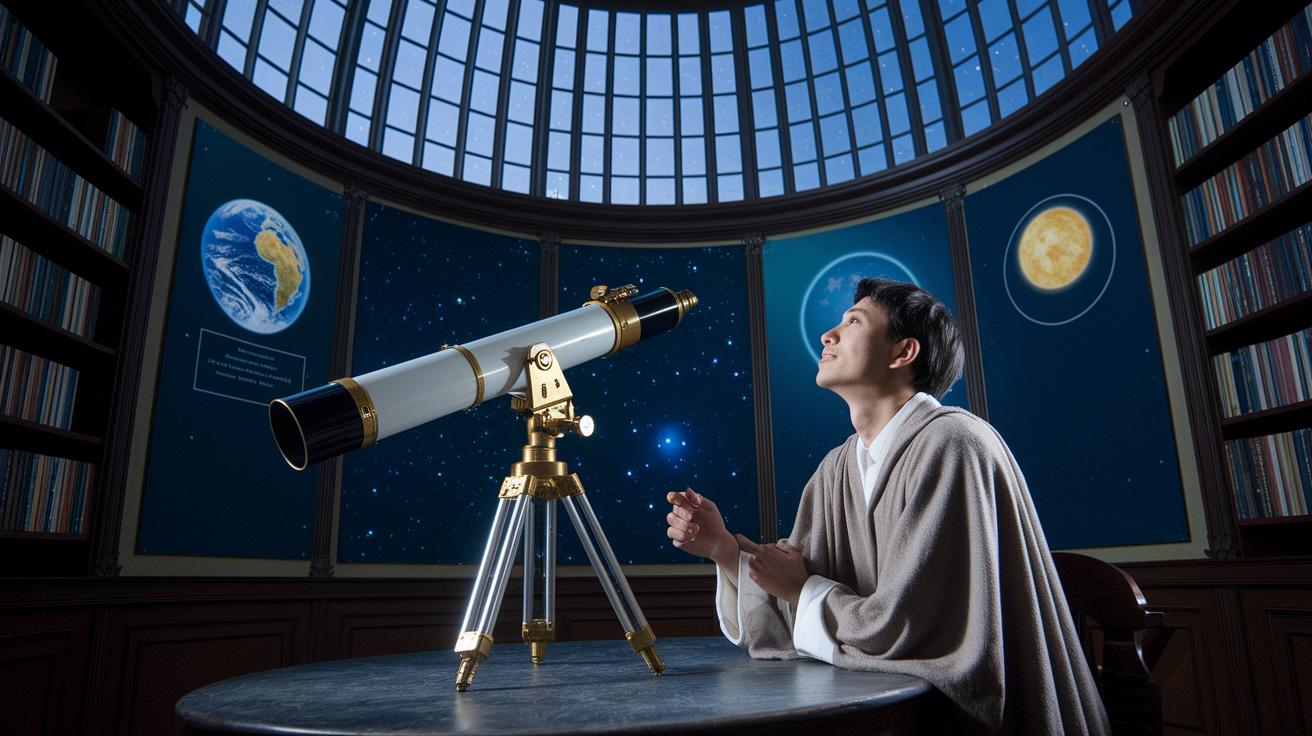
Every now and then, a brilliant discovery reshapes how we see the world. Back in 1543, Copernicus suggested that Earth goes around the Sun, making us rethink our place in the sky and changing navigation forever. Just imagine looking up at the stars and wondering if everything you knew might be wrong, that curiosity sparked centuries of new ideas.
Then came the Industrial Revolution between 1760 and 1840, when hand-made work turned into machine-driven production. Early factories buzzed with the sound of machines that slowly replaced old craft methods. In 1947, the invention of the transistor set the stage for modern electronics, leading to computers and smart devices that are part of our everyday lives.
In 1953, scientists uncovered the DNA double helix, a twisty ladder-like structure, which opened an entire field of biology and medicine. This simple structure has since guided breakthroughs in how we understand health and life. Finally, in 1983, the standardization of internet protocols launched the digital age, connecting people and ideas in new and exciting ways.
| Discovery | Year | Innovation Impact |
|---|---|---|
| Copernican Revolution | 1543 | Changed how we see the cosmos and improved navigation |
| Industrial Revolution | 1760–1840 | Introduced machine-driven manufacturing and mass production |
| Transistor Invention | 1947 | Laid the foundation for modern electronics and computing |
| DNA Double Helix | 1953 | Opened new paths in biology and medicine |
| Internet Protocol Standardization | 1983 | Started the digital age and changed global communication |
These groundbreaking moments remind us that one idea can ripple through society, sparking creativity and inventions that change our lives for the better. Isn't it amazing how science never stops surprising us?
Case Studies: Pioneering Discoveries Influencing Emerging Industries
CRISPR Revolution
CRISPR gene editing emerged around 2012 and turned biology on its head. This amazing discovery let scientists change genes with pinpoint accuracy using tools that work like tiny scissors cutting DNA. What started as simple lab work quickly became essential for biotech companies exploring new ways to treat illnesses. Imagine early experiments that paved the way for treatments many once thought impossible. In just a few years, basic research grew into an industry where new medicines precisely target genetic diseases. This journey shows how small, steady steps can lead to huge changes in healthcare.
Deep Learning Breakthrough
Around the same time, deep learning made its mark on tech and business. In 2012, key studies introduced smart algorithms that let computers learn from big piles of data. Soon enough, these techniques brought life to things we see every day, like virtual assistants with clear, synthetic voices and cars that can detect their surroundings. It's hard not to be impressed when you think about how these ideas, which once lived only in academic journals, now power smart speakers and self-driving cars. These breakthroughs prove that even ideas born in a quiet classroom can transform into innovations that change the way we live.
Research Transformation Drivers: Experimental Breakthroughs and Methodological Evolution

Back in the mid-2000s, scientists started to notice that experiments were hard to repeat over and over. A widely read paper in 2005 pointed out that research often leaned toward positive results. This got people talking about why we should also share tests that ended without a big win. One researcher even said, "Imagine realizing that a negative result can teach you just as much as a positive one." It was a real eye-opener that encouraged scientists to rethink how they plan and share their experiments.
New ways of thinking about funding and reviews have emerged. Instead of funding a single project, some now suggest backing individual researchers over several years. This gives them the freedom to try new methods at their own pace. At the same time, the idea of red teaming is also taking hold in labs. In red teaming, experts take a step back and challenge the usual ideas, kind of like a friendly debate asking, "Could there be another explanation?"
These changes in funding and evaluation are expected to boost how quickly new breakthroughs happen. With more freedom for creative experiments and a focus on learning from every result, research becomes stronger and more trusted. Overall, the research community seems ready for faster innovation, driven by open conversations and careful self-review.
Next-Generation Advances: Emerging Research Outcomes and Innovation Trajectories
Quantum computing is one of the coolest tech breakthroughs coming our way. Back in 2019, Google showed us that quantum processors can solve tricky problems way faster than our everyday computers. Imagine dealing with puzzles in materials science, logistics (how we move things), or cryptography (secret codes) in just seconds. It’s like watching a race where the quantum computer leaves old tech in the dust. In a breakthrough moment, quantum computations zoomed past traditional speeds, hinting at a future where even the toughest challenges could be solved almost instantly.
Scientists are also making promising progress with clean-energy materials. Did you know that perovskite solar cells hit a 25% efficiency mark in 2021? That’s capturing the attention of renewable energy fans everywhere. As these new materials get cheaper and last longer, they could spark a big shift toward greener and smarter energy solutions. Imagine a world where energy flows more smoothly and sustainably, pretty exciting, right? Keep an eye on Science Breakthroughs 2025, where experts predict even more game-changing discoveries in energy.
Biotech is another area where we’re seeing some pretty amazing changes. The rapid development of mRNA vaccines in 2020 completely changed how we think about finding cures and treatments. With new techniques moving fast in the biotech world, personalized medicine and precision treatments are stepping closer from dreams to everyday tools. These advances could help us battle new diseases more quickly and push our medical tools to be even better for everyone.
Research Ecosystems Shaping Science-Driven Progress

Science thrives when a mix of ideas comes together, sparking new breakthroughs. Incubators and accelerator programs act like friendly helpers that take ideas from the lab and turn them into real-world solutions. Think of it like planting a seed and watching it grow into a strong, vibrant tree, nurtured by care, ideas truly blossom.
Across the globe, research centers bring experts from different fields together, much like puzzle pieces that fit perfectly. When these minds unite, they offer fresh outlooks and clever solutions that can tackle tough problems in new ways.
Government grants and smart policies add extra support to this mix. They work like a steady stream of resources, ensuring that ideas get the care they need to mature. Every bit of support strengthens the system, helping innovative research transform into practical advancements that make a real difference in our lives.
Final Words
In the action, our discussion revealed how breakthroughs have driven shifts from historical shifts to novel applications across biotech and artificial intelligence. We explored key drivers that reshaped research practices and spurred fresh markets, with case studies like CRISPR and deep learning providing clear real-world examples. These insights show how scientific breakthroughs shape innovation within daily life, reinforcing that each discovery fuels further curiosity and sparks practical change. It’s a reminder that ongoing exploration sparks enduring progress for all curious minds.
FAQ
Scientific discoveries that changed the world
Scientific discoveries that changed the world refer to breakthroughs that shifted our view of nature and sparked new technologies, from early astronomy to modern genetics, propelling human progress and reshaping society.
Top 10 scientific discoveries 2025
Top 10 scientific discoveries in 2025 highlight cutting-edge research projects set to redefine technology and improve daily life, offering fresh insights that could spur new industries and advance our understanding of the natural world.
Scientific breakthroughs 2026
Scientific breakthroughs in 2026 signal anticipated advances that will introduce novel techniques and innovations, fueling further research and providing the foundation for transformative applications across several fields.
Scientific breakthroughs in 2025
Scientific breakthroughs in 2025 are expected to open new areas of study and technology by converting theoretical insights into practical tools, thus helping to improve efficiency and impact a range of industries.
5 most important scientific discoveries
The five most important scientific discoveries mark turning points that reshaped how we understand our world, led to groundbreaking technologies, and continue to influence research and industry innovation today.
Scientific innovation examples
Scientific innovation examples include key breakthroughs that translate research into real-world applications, such as advancements in gene editing, artificial intelligence, and renewable energy, which drive progress across different sectors.
Scientific breakthrough examples
Scientific breakthrough examples demonstrate moments where new findings rapidly shifted technology and thinking—for instance, uncovering the DNA structure or making strides in quantum computing have led to lasting changes in science.
Latest scientific breakthrough
The latest scientific breakthrough refers to a current discovery that is already influencing research trends and technology, offering fresh ideas that could soon translate into practical solutions and new market opportunities.
How do scientific discoveries contribute to technological innovation?
Scientific discoveries contribute to technological innovation by providing fresh insights that guide engineers and researchers. These revelations often lead to new design principles, efficient solutions, and better technologies.
How do scientific ideas inspire innovation and what is the role of science in innovation?
Scientific ideas inspire innovation by sparking creative thinking and challenging old methods, while science plays a role in innovation by offering proven evidence and critical theories that guide the development of new technologies.