
Have you ever wondered why some ideas lead to breakthroughs that change everything? New discoveries in science often start with a mix of careful research, handy tools, and a lot of teamwork.
Even a small amount of support can spark a big change when creative minds come together. Imagine combining a little funding with modern technology and fresh, out-of-the-box thinking, it can truly light the way for bold innovations.
Let’s take a closer look at the key ingredients that drive these scientific breakthroughs and help our world grow.
Drivers of Scientific Breakthroughs: A Comprehensive Overview
Breakthroughs are those lightbulb moments when research transforms into game-changing solutions. They occur when careful experiments mix with bold ideas to turn a theory into something that really works. Have you ever noticed how one clever twist in thinking can change everything? For example, using artificial intelligence in genomics turned an idea into a tool that now finds health risks more precisely.
In science, a breakthrough isn’t just about new data, it’s about people working together, sticking with a tough problem, and using creative approaches from different fields. Whether it’s in a lab or through computer simulations, it’s all about the right mix of support, smart technology, and teamwork that makes a discovery come alive.
| Factor | Explanation |
|---|---|
| Research funding | Even small grants can spark ideas that evolve into major discoveries. |
| Technological innovation | New imaging tools and techniques reveal details we once couldn’t see. |
| Interdisciplinary collaboration | Experts from various fields join forces to combine their unique skills. |
| Advanced methodologies | Fresh data analysis methods help sharpen new findings. |
| Translational research | This is the process of turning lab results into real-world solutions. |
| Innovation ecosystems | Networks of ideas and experiments keep the creative energy flowing. |
When these elements come together, they create a powerful synergy that pushes science forward. Funding sparks the initial idea, while technology and teamwork shape those ideas into practical solutions. Next, we’ll explore how each of these drivers moves discovery ahead and sets the stage for tomorrow’s innovations.
Research Funding and Investment as Core Drivers of Breakthroughs
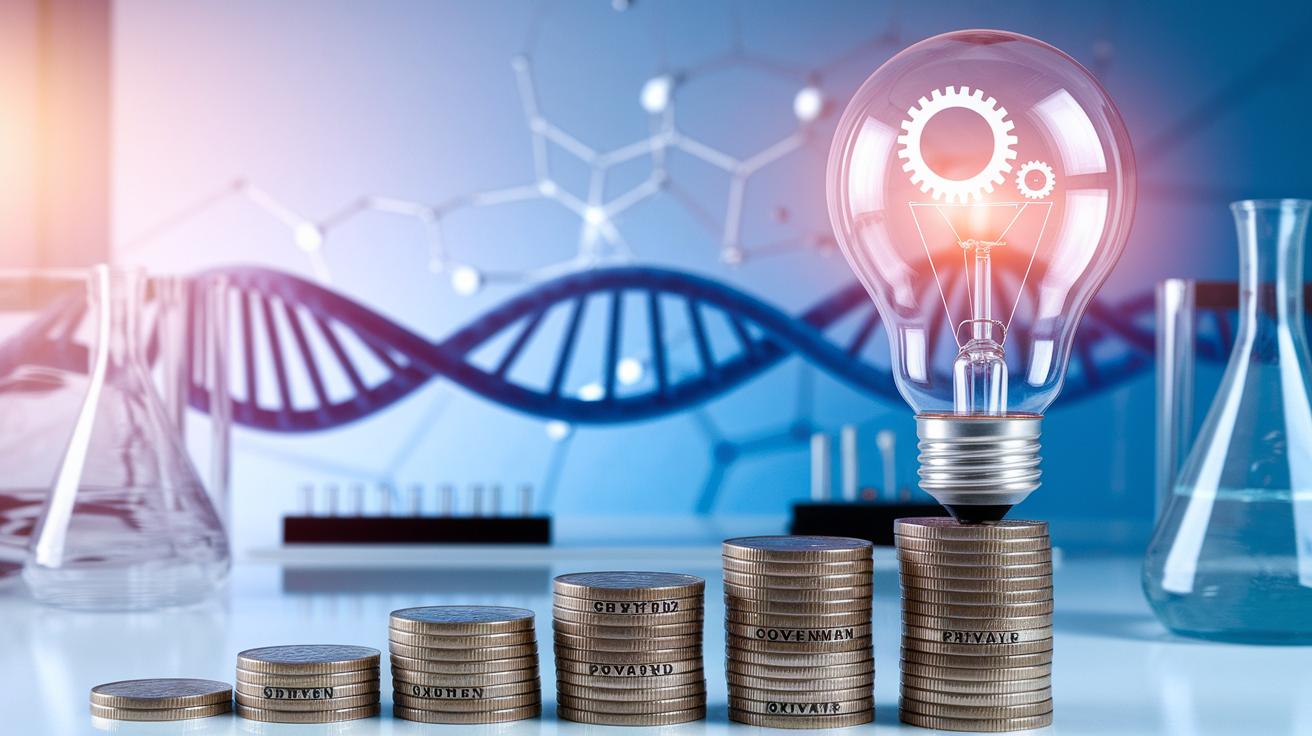
Research and development spending acts like a spark that turns new ideas into real solutions. Even a small amount of funding can kick off projects that grow into major breakthroughs. For example, a little government grant once set off research that later boosted gene-editing technologies (methods for changing DNA).
When comparing government grants with private investments, each plays its own important role. Government funds help support long-term, risky projects by giving researchers a steady start. On the other hand, private money is great for speeding up ideas and turning them into practical products. You can see this mix in partnerships with pharmaceutical or biotech companies, where public and private sources work side by side to boost both basic studies and applied research.
New funding models now combine traditional grants with innovative investment strategies. This mix uses the reliable flow of public money along with the quick action of private funds to keep research moving forward. In this way, breakthrough ideas can move from the lab into real-world solutions without skipping a beat.
Technological Innovation and Advanced Methods Driving Breakthrough Discoveries
New tech is completely changing how we do science. These days, tools like machine learning and AI (artificial intelligence, which are computer systems that learn from data) help researchers comb through huge piles of information quickly and accurately. This change touches lots of fields such as chemical biology, genomics (the study of genes), and epigenomics (looking at changes in gene activity). In many labs, scientists now use smart data methods to turn long, boring tasks into fast, efficient projects. This means that ideas that were once only on paper are now becoming real experiments.
Take genomics, for example. AI is speeding up the process so scientists can study entire genomes (all the genes in an organism) in no time, finding small changes that might hint at health issues. Meanwhile, high-resolution spatial analysis lets researchers see how cells interact, almost like watching a high-def video of a busy city at night. Computational modeling and high-performance computing work together to test theories by simulating complex biological systems, no endless trial and error required. Advances in imaging let scientists capture images at extremely small scales, reshaping how experiments are planned. Check out technological advancements to see more on these cool innovations.
These fresh ways of using computers and imaging tools are changing research design. With more reliable models that mimic natural processes, scientists can now spot trends and ideas much sooner. This new approach gives them a clearer picture from the start and opens the door for even more big breakthroughs.
Interdisciplinary Collaboration and Innovation Ecosystems Shaping Breakthroughs

Different groups from business, schools, and government often team up to tackle tough challenges. They share tools, ideas, and skills, which helps researchers move from working alone in labs to joining hands with others. For example, when biotech companies and tech firms work together, they can spark clever new ways to diagnose or treat illnesses.
Across the world, teams link up to share what they know and support each other. By working with experts from different countries, ideas grow faster than they might if one group tried to do it all alone.
Innovation hubs, special centers, and events like the early-onset cancer meeting in Bergamo give bright minds a place to connect. Places like the Carlos Slim Center, Gerstner Center, Klarman Cell Observatory, Merkin Institute, Novo Nordisk Foundation Center, Eric and Wendy Schmidt Center, and Stanley Center show how support from institutions brings together different perspectives. These meet-ups lead to shared experiments, new ways of thinking, and fresh ideas that help science move forward.
Experimental Design and Methodology Advancements Fueling Breakthroughs
Scientists often follow a simple cycle: try an idea, check the results, and then make changes before trying again. In the lab, this means setting up an experiment, watching what happens, and then adjusting the plan based on what they see. Every setback teaches them something new, helping refine their guesses and improving the way they design experiments so that one day they can make solid breakthroughs.
Today, smart computer methods and careful repeatable steps have become the backbone of modern research. Advanced systems now handle huge piles of information while strict rules help keep all the details in order. By focusing on methods that yield the same results every time, researchers build confidence in their work as they test their theories bit by bit, making sure every step is as clear and reliable as possible.
Researchers also spend a lot of time reviewing past studies and sorting through big sets of data. This careful look back helps them sharpen their techniques and double-check their findings. In this way, they connect old discoveries with new insights, turning raw numbers into trustworthy scientific breakthroughs.
Translational Research and Clinical Trials: Turning Discoveries into Solutions

Translational research is like building a bridge from the lab to the clinic. It brings together researchers, doctors, and industry experts so that clever lab discoveries can quickly become treatments that help people live better lives. Imagine a breakthrough in understanding a gene's role being enhanced with clinical insights, that’s how innovation finds its way into real-world care.
Take CRISPR therapies as an example. Early studies using CRISPR-Cas9 (a tool that lets scientists make precise changes in genes) have advanced into clinical trials, showing us that targeted treatments can work. One standout case is Casgevy, the very first approved treatment of its kind, which underwent thorough testing to prove it is both safe and effective. This progress, alongside new diagnostic tools, shows how smoothly experimental ideas can turn into on-the-ground medical solutions.
Moreover, clever technology transfer and smart patent strategies are key to bringing these discoveries to market. By forming strong partnerships and speeding up the patent process, researchers turn lab innovations into commercially available health solutions, making sure that good ideas benefit everyone.
Historical Context and Future Trends in Scientific Breakthrough Drivers
In the early days of modern science, researchers built on important discoveries that paved the way for what we see today. Back then, breakthroughs in gene research, early computing, and environmental studies sparked a spirit of curiosity that made people eager to explore the unknown. These early wins not only proved that big ideas were possible but also encouraged scientists to experiment and work together in fresh ways.
Now, we're seeing a new mix of exciting trends ready to change the game:
- CRISPR therapeutics pipeline
- Solid-state battery advances
- AI-driven data-quality improvements
- Materials science innovations under the Paris Agreement
- Novel molecular editing techniques
- Circular-economy waste management
- Practical quantum computing deployments (like the Cleveland Clinic-IBM installation)
- Omniomics market growth (USD 4.34 billion in 2023, growing around 18.7% annually from 2024 to 2030)
These emerging trends for 2025 spark our curiosity about the next big steps in science. Each one hints at creative strategies that could reshape areas like biotechnology, sustainable energy, and genetics. For example, new strides in quantum computing (super-fast computing that uses the principles of quantum math) and materials science promise to speed up testing and improve the accuracy of experiments. When we look at these signals, it feels like the solid work of today is directly connecting with tomorrow’s bright ideas, giving us a vibrant roadmap for future breakthroughs.
Final Words
In the action, we explored how research funding, technological innovation, interdisciplinary collaboration, and precise experimental design drive progress in science. We examined how funding shapes direction, how emerging technologies increase capacity, and how teamwork across sectors fuels discovery. These key factors driving scientific breakthroughs offer a clear picture of our rapidly shifting science scene. They remind us that every breakthrough builds on steady, cooperative work, making it exciting to see what tomorrow brings. Keep your curiosity alive and enjoy every spark of insight along the way.
FAQ
What are the key factors driving scientific breakthroughs?
The key factors driving scientific breakthroughs include research funding, technological innovation, interdisciplinary collaboration, advanced methods, translational research, and supportive research networks that shape how ideas turn into impactful science.
What are some top science discoveries expected by 2025?
The top science discoveries expected by 2025 involve advancements in CRISPR therapies, solid-state batteries, AI-enhanced research, high-performance computing, and breakthroughs in quantum computing that push the limits of our current knowledge.
How have scientific discoveries shaped our world?
Scientific discoveries have reshaped our world by improving healthcare, driving technology changes, and transforming industries. These breakthroughs have led to practical applications that make everyday life better and more efficient.
What drives the advancement of scientific knowledge?
The advancement of scientific knowledge is driven by a mix of funding, new technological tools like AI, teamwork across different fields, refined research methods, and strategies that turn lab results into practical solutions.
What are the 7 basic elements of scientific research?
The basic elements of scientific research are observation, hypothesis development, experimentation, data analysis, conclusion formation, reproducibility, and peer review, all of which work together to guarantee reliable outcomes.
What were the key factors that led to the Scientific Revolution?
The key factors that led to the Scientific Revolution include improved scientific methods, innovative experiments, the use of better instruments, and increased idea exchange across cultures, which all sparked new ways of thinking about nature.