
Have you ever thought about how one space mission can change life here on Earth? Landmark missions have opened our eyes, helping us see both our planet and the vast universe in a fresh way.
From launching a small satellite (a tiny device that trips around the Earth) to sending people on journeys to far-off worlds, each adventure has shifted how we see our place among the stars. These brave efforts don’t just push technology forward, they spark our curiosity about what lies out there.
In truth, exploring space touches our everyday lives, too, fueling progress in both distant galaxies and our own backyard. Isn't it exciting to imagine what new discoveries might come next?
Landmark Space Missions: A Comprehensive Overview
Space missions that truly changed the game are all about pushing our limits and giving us a fresh view of the cosmos. We pick these milestones because they broke new ground with inventive technology, led to big scientific breakthroughs, and left a lasting mark on later space travels. For instance, Sputnik 1 launched in 1957. It wasn’t just the first satellite ever, it also shifted our view of our small spot in the vast universe. Every mission here has helped us move from simple orbits to exploring far-off galaxies.
Looking back over time, you can really see how far we’ve come. Sputnik 1 opened the door, and then Explorer 1 in 1958 discovered Earth’s Van Allen radiation belts, hinting at dangers in space we hadn’t known about before. In 1969, Apollo 11 made history by landing the first people on the Moon, a moment that still stirs our imaginations. After that, Salyut 1 in 1971 and Skylab in 1973 showed us that humans could live in space, a journey continued today on the International Space Station where crew members from all over the world conduct vital research. The Hubble Space Telescope, launched in 1990, gave us stunning, high-resolution views of the stars, and Voyager 1 and 2, which left Earth in 1977, have taken a grand tour of our solar system and are now exploring space beyond it. More recent feats include the Curiosity and Perseverance rovers and Artemis 1’s lunar flyby, all adding new chapters to our story of exploration.
These missions have had huge scientific and cultural effects. They’ve brought countries together, fueled new inventions, and sparked our endless curiosity about space. Every breakthrough reminds us that even the smallest step in space research can lead to monumental progress both on Earth and beyond.
Early Space Race Landmark Space Missions
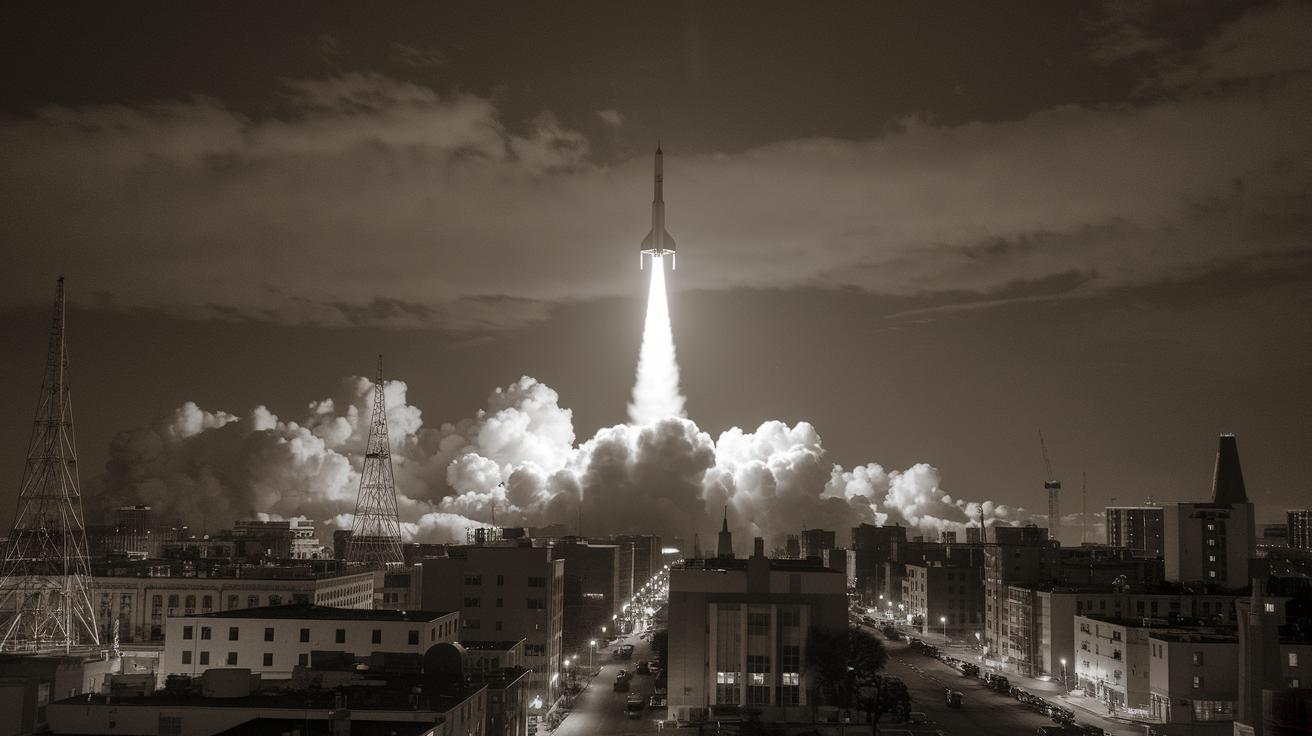
During the Cold War, both the Soviet Union and the United States took bold steps by using space missions to show off their science and strength. They sent satellites into orbit, turning technical achievements into symbols of global power. Have you ever thought about how Sputnik 1’s launch left the world in awe? Its debut made everyone realize that technology was taking a giant leap forward in a way no one had ever seen before.
| Mission | Launch Date | Key Achievement |
|---|---|---|
| Sputnik 1 | October 4, 1957 | First artificial satellite |
| Explorer 1 | January 31, 1958 | Discovered Van Allen radiation belts |
These pioneering missions not only demonstrated technical skill but also laid the groundwork for future spaceflights with humans aboard. Their successes helped pave the way for later advances, blending scientific progress with the fierce global rivalry of that era.
landmark space missions ignite stellar progress
Project Apollo got people excited by pushing our boundaries beyond Earth. It was a bold step when we first set out to explore space, opening the door to new adventures that changed how we see the cosmos.
Apollo 11 took off on July 16, 1969, with Neil Armstrong, Buzz Aldrin, and Michael Collins aboard. The spacecraft reached the Moon’s orbit on July 19, showing that we were getting good at navigating space. Then on July 20, the Eagle module carefully landed on the lunar surface. Picture that unforgettable moment when Armstrong, stepping onto the Moon, softly said, "That's one small step for man, one giant leap for mankind."
This mission reshaped the way we think about space. It proved that teamwork and smart technology can unite people around the world, sparking continued dreams of space travel and inspiring us to look beyond our own little blue planet.
Space Shuttle Landmark Space Missions: Breakthroughs and Setbacks
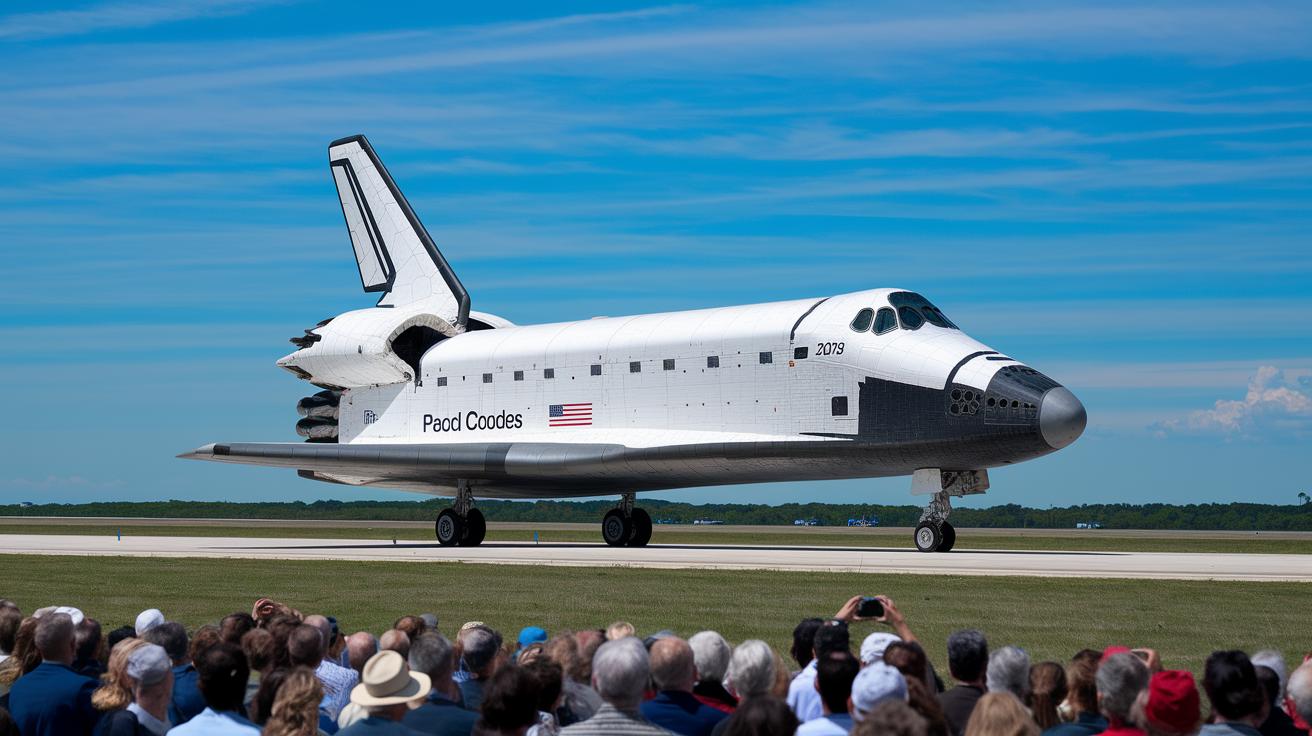
Columbia’s first flight on April 12, 1981 kicked off the Shuttle program. The idea was to create a spacecraft that could land on a runway and be used over and over, much like an airplane. It was built to carry people and experiments into orbit and then come back home safely, helping cut costs and make regular trips to space a reality.
The program had its share of highs and lows. On January 28, 1986, the Challenger disaster took the lives of its crew just 73 seconds after liftoff. Later, on February 1, 2003, Columbia broke apart during its return to Earth. These heartbreaking events rocked the space community and led to a complete review of safety and design practices, showing us just how risky human spaceflight can be.
Today’s spacecraft designs still carry memories of the Shuttle program. Engineers have used the hard lessons learned to boost safety and improve efficiency. Many of the innovations from Shuttle research are now key parts of newer launch vehicles, which aim to be both reliable and cost-effective. The ups and downs of these missions remind us that pushing the limits in space technology means learning from every success and setback. Every flight, every experiment adds to a legacy of progress that shapes future designs and inspires explorers to look beyond what we know.
Robotic Probe Landmark Space Missions to Deep Space
Pioneer missions set out to show us the wonders of our solar system using unmanned probes. Pioneer 10 blasted off on March 2, 1972, and by December 1973, it zoomed past Jupiter, giving us our first close-up look at this giant planet. Soon after, Pioneer 11 launched on April 5, 1973, and in September 1979, it made history by flyby Saturn, proving that robotic probes could safely travel far and send important data back home.
Voyager 1 and Voyager 2, which both launched in September 1977, took these achievements even further. They went on a grand tour of our outer solar system, capturing detailed images and collecting key information from planets that for the first time we could explore up close. Voyager 1 stepped into interstellar space in 2012, and Voyager 2 followed in 2018, each marking a remarkable milestone that has forever changed what we know about space.
These groundbreaking missions have had a big impact on our study of the sun (heliophysics, or the science of the sun) and the space between stars (interstellar science). Their journeys continue to inspire new questions and spark our curiosity about the vast universe beyond our own backyard.
Mars Rover Landmark Space Missions

The Viking 1 and 2 landers first set down on Mars in 1976, sending back detailed reports about the planet’s soil. They measured the soil’s makeup and recorded weather details (like wind and temperature), giving us a real peek at what Mars is like. These early missions paved the way for future, more detailed studies that help us understand the Red Planet even better.
Then came the Curiosity rover, which landed in Gale Crater on August 6, 2012. This rover took our Mars exploration to a whole new level. It checked out old lakebeds and hunted for organic molecules (the basic ingredients for life), offering eye-opening clues about Mars’s past and its chance to have supported life. Its findings have changed the way we think about the planet’s history and potential for habitability, sparking even more missions to dig deeper.
Here's a quick recap:
| Mission | Highlights |
|---|---|
| Viking | First to study soil chemistry and weather data |
| Curiosity | Found clues of ancient environments that might have supported life |
| Perseverance | Collects samples for studies on past life |
International Space Station Landmark Space Missions in Collaboration
The International Space Station shows us how well countries can work together in space. Its journey began on November 20, 1998, when the first module, Zarya, was launched. Over the years until 2011, NASA, Roscosmos, ESA, JAXA, and CSA joined forces to build a space lab where technology and science meet. Each team from different places played a key role, making this station more than just one country's project.
Since November 2000, people have lived on the ISS almost without a break. It has been a busy hub where over 3,000 experiments on biology, physics, and Earth science have been done. These tests help us learn about space and our own planet. Long missions on the station have taught us a lot about how humans can work and live in orbit. It’s amazing how teamwork in space can drive real science.
Upgrades are on the way. They promise to boost its research abilities and improve how we use this space station to study Earth.
Space Telescope Landmark Missions: From Hubble to James Webb
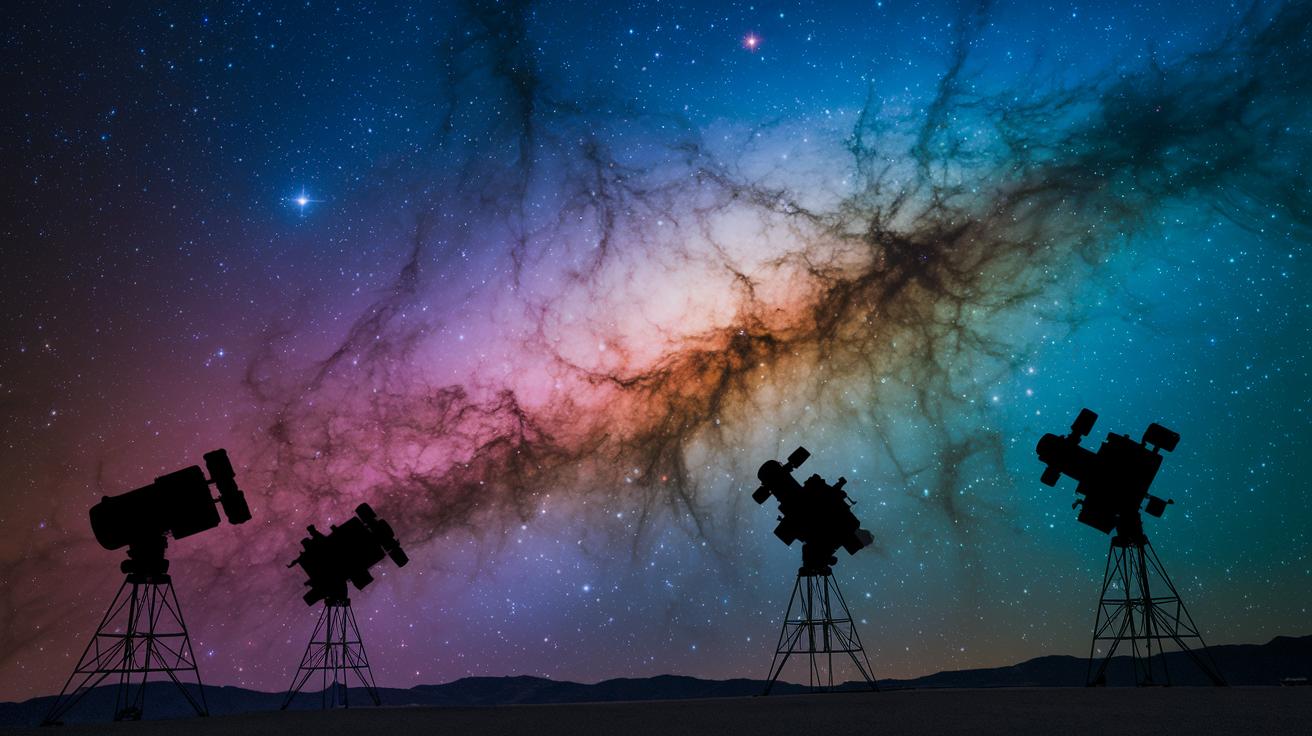
Back in 1990, the Hubble Space Telescope burst onto the scene and totally changed how we see the universe. It sent back bright, detailed pictures that let us peer at distant stars and galaxies in a way that felt almost magical. Hubble’s eye-catching images even made amateur astronomers feel like they were gazing at a dazzling work of art. These views have sparked new ideas and captured our imaginations about space.
Then came the James Webb Space Telescope, which finally launched on December 25, 2021. This observatory faced a long series of challenges, including a 14-year delay and a price tag of about US$10 billion, before it could journey into space. Working in infrared light (a type of light we can’t see with our eyes), James Webb has been unlocking secrets of early galaxies and star formation that were hidden behind clouds of cosmic dust. Its clever design and state-of-the-art technology continue to push the limits of what we can explore in space.
Together, these two telescopes have expanded our view of the cosmos. Hubble’s stunning images paved the way for the James Webb, whose unique infrared vision is revealing parts of the universe that were once shrouded in mystery. Their joint discoveries keep inspiring us and shaping our understanding of the vast, ever-changing universe around us.
Final Words
In the action, our rundown covered the spark of Sputnik, Apollo 11’s Moon landing, and brave robotic probes venturing far beyond. Each chapter shed light on the trail of ups and downs that led from early satellite launches to smooth space collaborations on orbiting labs.
We also saw how telescopes help us see distant galaxies and how Mars rovers study our neighbor. It all shows how landmark space missions keep opening doors for science and everyday wonder.
FAQ
What is the NASA missions list by year?
The NASA missions list by year arranges key space projects by their launch dates, covering both past achievements like Apollo 11 and upcoming efforts planned for 2026.
What famous space missions define our space exploration timeline?
Famous space missions such as Apollo 11, Voyager, and the International Space Station mark major milestones. They highlight the progress from early space flights to continuous human presence in orbit.
What topics are covered in a space missions list and exploration timeline?
A space missions list and exploration timeline showcase landmark projects, spanning early satellites like Sputnik to modern observatories and robotic probes, illustrating the evolution of our space exploration efforts.
Where can I find the history of space exploration timeline PDF?
The history of space exploration timeline PDF can be found on educational and government websites, offering detailed mission dates, achievements, and progress in space research.
What are NASA manned space missions known for?
NASA manned space missions are known for launching humans into space, enabling groundbreaking research and scientific experiments, from Mercury and Gemini programs to the ongoing operations aboard the ISS.
Which NASA missions are planned or notable for 2026?
NASA missions planned for 2026 build on past successes, aiming to push the boundaries of crewed and robotic exploration with new objectives that expand our understanding of space and return valuable scientific data.
What is the role of missions like Akatsuki, Parker Solar Probe, Smart Lander for Investigating Moon, Venus Express, Magellan, and IKAROS?
Missions such as Akatsuki, Parker Solar Probe, Smart Lander, Venus Express, Magellan, and IKAROS each have distinct roles—studying planetary atmospheres, solar phenomena, and surface conditions—helping scientists better understand our solar system.