
Ever notice how quickly our world can change? New smart tools like AI (artificial intelligence that lets computers learn and make decisions) and robotics (machines designed to work on their own) are making our everyday lives look a little different. They help hospitals work faster, make factories more efficient, and let our gadgets connect in ways we never dreamed possible.
Each of these tech advances sparks fresh ideas and opens up exciting possibilities. In this article, we'll explore how these small shifts in technology can light a creative spark in all areas of our lives.
Technological Advancements Explained: Definitions, Examples, and Trends
Technological advancements are clever changes that affect how we work, live, and connect. They involve innovations like artificial intelligence (smart computer programs), robotics, and the internet of things (devices that talk with each other) that keep pushing what we thought was possible. For example, AI-powered diagnostic tools help doctors spot diseases quickly, and robots in factories make production smoother and faster. Plus, 5G connectivity now makes sharing data almost instantly reliable, which means everything from smartphones to home devices works better.
Digging into these breakthroughs shows us a cycle of ideas that create both useful fixes and bold new directions. When we look at where these technologies started, how they worked in the past, and where they’re headed next, it all helps us see the big picture of global digital innovation.
| Technology | What It Does |
|---|---|
| AI-driven diagnostics | Uses smart computer programs to detect diseases early |
| Industrial automation | Makes factory processes faster and cuts down on manual work |
| 5G connectivity | Enables quick, reliable data sharing across devices |
| Robotics revolution | Introduces machines capable of handling complex tasks |
| Internet of Things (IoT) | Links everyday items to boost overall efficiency |
These examples show how technology not only shapes our daily routines but also opens doors to new and exciting possibilities. Each breakthrough is a step in a never-ending journey of innovation, continuously reshaping what our future can be.
Technological Advancements Ignite Innovative Momentum

History teaches us that every breakthrough has changed everyday life and opened doors for future discoveries. These key moments stirred big changes in work, talk, and technology that still shape our modern world.
- In the 15th century, Gutenberg's printing press printed the very first Bible. This made reading something many people could enjoy and learn from.
- In 1775, Watt's steam engine powered trains and factories, turning work and travel on its head and changing society.
- In 1876, Bell's telephone let voices travel over long distances almost instantly, bringing people closer together in a way that was completely new.
- Around 1880, Edison's light bulb helped people work longer by lighting up the night. This invention sparked a boom in industries that rely on electricity, brightening communities everywhere.
- In 1903, the Wright brothers achieved the first powered flight. Their success opened the door to commercial aviation and boosted trade around the world.
- Between 1969 and 1971, ARPAnet slowly morphed into what we now know as the Internet, and the Kenbak-1 made its debut as the first personal computer. These steps laid the groundwork for the digital world we enjoy today.
- In 1983, the Motorola DynaTac 8000X brought mobile phones into our lives, starting a trend that ultimately led to the portable devices keeping us connected all around the globe.
Each of these milestones built on the last, guiding us from early mechanical wonders to today’s digital brilliance. This long journey changed not only business and daily life back then but also continues to steer our current digital era. The creative spark from these breakthroughs keeps inspiring new technologies that change how we connect, work, and live.
AI and Machine Learning: Technological Advancements Driving Intelligence
Artificial intelligence is all about creating computer systems that work a bit like our own minds. Machine learning is a special part of AI that lets computers learn from data without needing hard-and-fast rules. For example, think back to the early days when Turing’s test in 1950 and the Logic Theorist program in 1956 set the stage for what we see today in friendly chatbots and voice helpers. It’s like having a brain that keeps getting sharper with practice.
Machine learning uses huge amounts of data to make predictions, imagine it as spotting when an elevator might need a check-up. With every new piece of data, the system gets a little bit smarter, much like a student who learns a bit more from every quiz.
- Chatbots that have natural conversations with people
- Voice assistants that understand everyday instructions
- Self-driving vehicles that figure out busy roads on their own
- Generative models that can create images, text, and sounds
Looking forward, AI and machine learning hold exciting promise for things like personalized medicine and better fraud detection. There are still challenges, like making sure the tech is fair and keeps our data safe, but researchers are working hard. Soon, we can expect systems that are both innovative and ethical, always balancing new discoveries with the needs of everyone.
Technological Advancements in Healthcare and Biotechnology
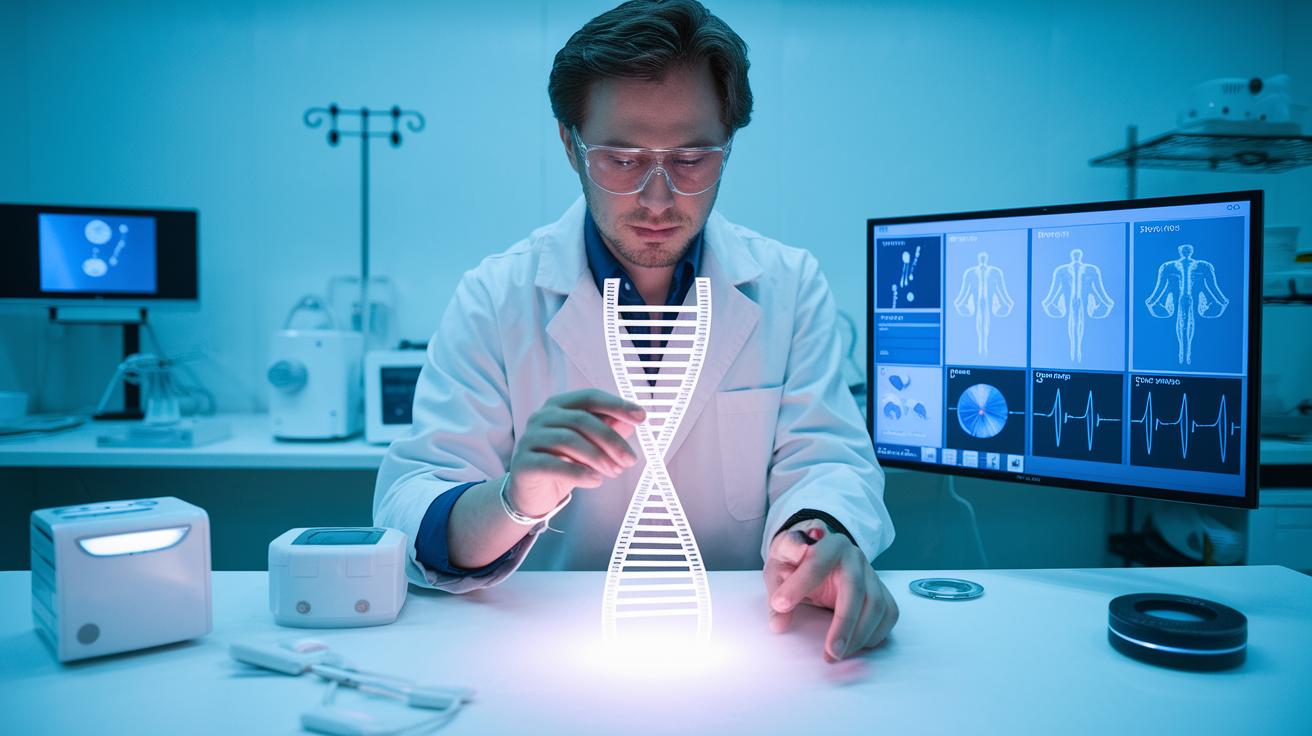
Healthcare technology is moving fast, turning ideas that once sounded like science fiction into everyday tools that help us live better. Advances in biotech (using living things to solve problems) and in medical devices mean that treatments are becoming smarter and more personal. We now have gadgets that can tweak drug plans based on a person’s unique genetics and keep an eye on our health in real time, making care both quicker and more effective.
Take a look at some key moments in this exciting journey:
- 2003: The Human Genome Project mapped every human gene. This big step laid the groundwork for therapies that target specific genes.
- 1960: The discovery of lasers opened up a world of precise eye surgeries, clean industrial cuts, and safe cosmetic procedures.
- Recently: Precision medicine tools now adjust drug doses to fit each individual's unique genetic profile.
- The rise of wearable technology has given us continuous glucose monitors and fitness trackers, keeping us informed about our own health.
- Modern surgical technology has embraced robotics, helping doctors perform minimally invasive procedures with great accuracy.
These breakthroughs are more than just cool tech, they’re making patient care better by reducing recovery times and boosting the quality of life. As we enjoy these high-tech benefits, lawmakers and health experts are working hard to set up fair rules, ensuring that innovation and safety go hand in hand for everyone.
Industrial and Environmental Technological Advancements
Factories and supply chains have changed a lot over time. Today, smart robots help improve production and make sure everything meets quality standards. Tiny semiconductor chips quietly power almost every electronic device we use. Meanwhile, clever manufacturing uses real-time IoT connectivity (devices communicating over the Internet) to run operations smoothly and adjust quickly when the market shifts.
Green ideas are also taking center stage. New renewable energy tools like modern solar panels and wind turbines help cut down on pollution. In our cities, advanced systems such as MULTI elevator technology, moving both vertically and horizontally, are changing how buildings and transport work.
| Technology | Benefit |
|---|---|
| Semiconductor chips | Power devices silently |
| MULTI elevator systems | Offer flexible movement in buildings |
| Collaborative robotics | Boost factory automation |
| Advanced solar panels | Cut down energy waste |
| Real-time IoT connectivity | Keeps manufacturing smart and agile |
Bringing together modern factory tech and green innovations benefits both the economy and our environment. It means companies can work more efficiently and save money, all while reducing pollution and supporting renewable energy. Ultimately, this mix of smart automation and sustainable practices is not only modernizing production, it’s also paving the way for greener, more resilient communities.
Future Technological Advancements: Emerging Trends and Next-Gen Tech
The future of technology is about to change the way we secure our data, treat illnesses, and connect in a digital world. Innovations that were once the stuff of science fiction are now becoming real solutions that touch every part of our lives.
- Google created a quantum computer called Sycamore that solved a tricky problem in just 200 seconds. This shows how quantum computing (a type of super-fast computing) could soon outperform older systems.
- Future computers will mix quantum and brain-like (neuromorphic) designs to explore new ways of protecting data and speeding up drug research.
- Advances in nanotechnology (tiny tech that works on a very small scale) are working toward building sensors at the molecular level, which might change how medicines are delivered exactly where needed.
- New material research is busy creating self-healing plastics and ultra-light metals. These could make a big difference in construction, travel in the air, and other areas.
- Emerging tech like AR and VR (augmented and virtual reality) is ready to change remote work by crafting digital workspaces that feel almost real.
- Digital twin solutions (virtual copies of real systems) along with next-generation robots will let factories and maintenance work become even more accurate and efficient.
Looking toward 2030, these advancements could transform society in many ways. Imagine more secure financial systems and healthcare, thanks to next-gen computing. Think of everyday products lasting longer and performing better because of new nanotech and materials. And picture immersive digital spaces blending with the real world in offices, schools, and homes. In truth, these new tools are set to make our world more connected, efficient, and better prepared for what comes next.
Cybersecurity and Connectivity: Protecting Technological Advancements
Our connected world brings amazing convenience along with its share of risks. Today, billions of smart devices share data over networks that weren’t built for the speed and volume we see now. This outdated design can leave cloud platforms and internet-connected devices open to attack, making it easier for cyber threats to sneak in. Experts are working hard to add secure, built-in protections in every device.
Developers and security pros are building flexible solutions to keep us safe. They’re using real-time monitoring and smart systems that detect unusual activity (kind of like an alarm system for your tech) to fend off clever attacks. Plus, cloud computing is stepping in with on-demand, scalable security options for companies of all sizes.
- AI-driven threat detection keeps an eye out for odd activity.
- Zero-trust models check every device and request.
- Encrypted firmware updates help keep devices safe.
- Cloud-based solutions give companies flexible, secure setups.
- Improved IoT security puts protective measures right into devices.
The best way forward is to stay on top of updates and keep checking for any weak spots before hackers can jump in. Companies should use a layered approach to security, think strong hardware, updated digital rules, and constant system checks. As cybersecurity methods improve, it’s a fine balance between enjoying smooth connectivity and making sure everything is well-protected in our fast-moving tech world.
Final Words
In the action, we've seen how technological advancements reshape our lives. The post explored clear definitions, striking examples, and historical milestones. We touched on AI, robotics, smart devices, medical breakthroughs, and green tech innovations.
Each segment showed how science influences everyday challenges and keeps pace with the times. Technological advancements drive change across industries and make our future brighter. It's exciting to witness these shifts and look forward to more insights in science news.
FAQ
What are some examples of technological advancements?
The technological advancement examples include AI-driven diagnostics (machines that detect diseases), industrial automation boosting efficiency, and 5G connectivity enhancing communication worldwide.
What is another term for technological advancements?
The technological advancements synonym is tech breakthroughs, which highlights key improvements in machines, tools, and digital systems that elevate everyday processes.
What are ten technological advances in human history?
The list of ten technological advances in human history spans from the printing press and steam engine to the light bulb, telephone, flight, personal computers, the Internet, mobile phones, modern robotics, and renewable energy systems.
How do technological advancements impact society and the world?
The impact of technological advancements on society and the world is seen in improved communication, better productivity, enhanced convenience, and overall transformation of lifestyles through innovations like AI, smart devices, and digital connectivity.
What technological advancements characterized the Industrial Revolution?
The technological advancements during the Industrial Revolution include the steam engine, mechanized manufacturing, rail innovations, and early industrial automation, which collectively reshaped production and society.
What are some notable technological advancements today?
The technological advancements today include cutting-edge improvements like artificial intelligence, robotics, self-driving vehicles, the Internet of Things (devices that communicate), and sustainable energy technologies.
What does a technological advancements timeline look like?
The technological advancements timeline charts key milestones from early inventions like the printing press and steam engine to modern innovations like digital networking and AI, illustrating a steady climb in global innovation.
What exactly are technological advancements?
The technological advancements refer to the continual innovations and improvements in tools, machines, and digital systems that boost efficiency and transform how we live, work, and communicate.
What was the biggest technological advancement?
The biggest technological advancement is often seen as the Internet, which redefined communication, commerce, and access to information across the globe.
What three technological advances have changed our world?
Three technological advances that have transformed our world are the Internet, smartphones, and renewable energy innovations, each dramatically affecting communication, daily life, and environmental sustainability.
What are the top 10 technologies in the world?
The top 10 technologies in the world include the Internet, mobile connectivity, artificial intelligence, cloud computing, renewable energy, smart manufacturing, robotics, blockchain technology, genomic medicine, and quantum computing.