
Ever wonder if a plane’s smooth ride comes from a secret balancing act, much like a bike correcting a wobble? It turns out there’s a hidden force called longitudinal stability (the way a plane stays level) that works quietly behind the scenes. When a plane is disturbed, nature steps in to help it find its balance again. And just like a bike performs best with its weight balanced evenly, a plane relies on the placement of its center of gravity (the average point where its weight sits) to stay steady. This careful balance not only keeps flights safe but also helps save fuel, making our journeys more efficient.
Core Principles of Longitudinal Stability
Before becoming a world-renowned scientist, Marie Curie used to carry test tubes of radioactive material in her pockets, completely unaware of the dangers that would later shape her legacy. It’s a wild reminder that even great minds started out with surprising habits before turning them into breakthroughs.
Static stability means that when a plane is nudged out of its balanced flight, it naturally works to get back on track. Think of it like when you’re riding a bike and a small wobble prompts you to steer back into balance. In an aircraft, if the angle between the wing and the oncoming air (called the angle of attack) gets a bit too high, natural forces act to lower the nose. This happens because a key measurement called the pitching moment derivative (a number that tells us how the nose moves) comes out negative. That negative value simply means that if the plane unexpectedly tips up, forces are in place to help lower it back down.
Engineers pay close attention to how forces around the center of gravity (CG – essentially the balance point of the plane) react when the angle of attack changes. Even a minor increase in this angle creates a gentle corrective push that nudges the CG back toward its ideal position. Imagine giving a slight tap to a balanced seesaw, and it slowly returns to a steady state, that’s what these forces do for the aircraft.
Another important piece of the puzzle is the static margin. This measurement tells us how far the center of gravity is set behind the neutral point, which is the sweet spot for keeping everything in balance. When the static margin is strong, even the smallest disturbances get smoothed out quickly. In simple terms, it ensures that the plane stays stable and flies smoothly, counteracting little bumps along the way.
Center of Gravity and Aerodynamic Center in Longitudinal Stability

When a plane gets a little jolt or bump, the spot where its weight sits (the center of gravity) and a key fixed point called the aerodynamic center largely decide how it reacts. With a forward center of gravity, the tail has more pull, like a seesaw with a long end that can push the nose down easily. This extra push helps the plane settle back into steady flight.
But if the weight shifts to the back, the tail loses some of that leverage. That means the plane might tip its nose up more easily and become less steady. Meanwhile, the aerodynamic center stays put no matter the angle of the wing. Engineers use this unchanging spot as a reliable reference to help balance the plane even when things get a bit rough.
We also talk about something known as the static margin. This term describes the gap between the center of gravity and a point called the neutral point, the farthest back you can place the weight without the plane becoming unstable. Engineers watch these numbers closely to make sure the aircraft can turn quickly yet still fly smooth and safe.
| Parameter | Definition | Impact on Stability |
|---|---|---|
| CG Position | The spot where most of the weight is centered | A forward CG makes the plane steadier; an aft CG makes it less stable |
| Aerodynamic Center | The fixed point where the nose’s pitching force remains the same | Provides a constant reference to help design for a balanced flight |
| Static Margin | The gap between the CG and the neutral point | Shows how stable the plane is |
| Neutral Point | The farthest back the weight can go while still staying stable | Beyond this point, the plane can become unstable |
Longitudinal stability of an aircraft Inspires Efficiency
When a plane suddenly changes its angle in the air, the tail helps it get back on track. Think of it like a ship’s rudder that pushes the nose down when a gust raises the wing. This push works like a balancing force, keeping the flight steady and smooth.
The design of the tail is all about balance. Engineers carefully choose its size and spot on the plane to make sure it gives the right kind of push. As the wing sends air downward (a process called downwash), the tail’s angle shifts too, affecting how the air hits it. Even a small change can cause a big reaction if the airflow around the tail is altered.
To make sure everything works smoothly, engineers use math (a method called derivative formulation analysis) to predict how the tail will react. When they get the tail’s size and position right, it creates extra lift or reduces downforce to fix any pitch problems. In short, this smart mix of air movement and tail design keeps the aircraft flying efficiently.
Mathematical Modeling and Stability Derivatives for Longitudinal Analysis
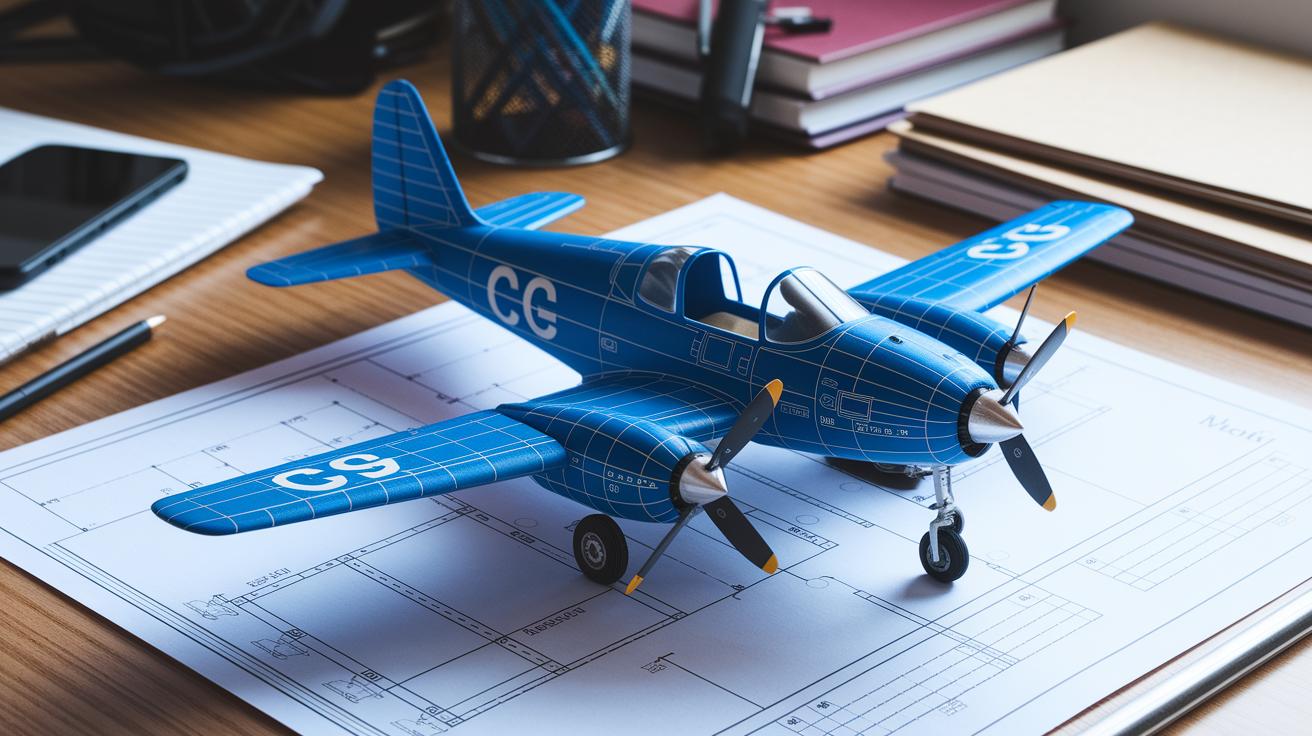
When engineers work on an airplane's motion, they break down the full equations into a few key parts like the wing, horizontal tail, elevator, and center of gravity (CG). The pitching moment (how the nose of the airplane tilts up or down) is explained by what we call stability derivatives (numbers that tell us how forces act on the airplane). One big rule for stick-fixed static stability is that Cₘ(α) must be negative. This means that when the angle of attack (the tilt of the airplane in the air) goes up a little, the forces quickly work to push the nose back down. For example, a stability curve might show how a tiny increase in the angle of attack pulls the airplane back toward its balanced, normal state.
Stick-Fixed Static Stability
When the back edge of the elevator moves downward, we call this a positive deflection. This move creates a force that works against any disturbances the airplane might face. The negative value of Cₘ(α) is super important because it ensures that if the airplane pitches upward, the forces will automatically act to lower the nose. Engineers use simple equations to balance these forces, making sure the airplane can smoothly recover from any bumps or gusts during flight. Essentially, these stability formulas help predict and improve how the airplane behaves in the air.
Neutral Point Determination
Finding the neutral point is key to understanding the airplane's overall balance. The neutral point is the furthest back the CG can be while keeping the airplane stable. In simple terms, the static margin (calculated by the formula Hₙ = (X_NP – X_CG)/MAC) tells us how much room there is before the airplane loses its natural ability to right itself. Engineers carry out flight tests by shifting the CG and checking how changes in elevator movement relate to lift. This careful process helps them pinpoint the neutral point accurately, guiding the design for smooth and predictable flight.
Dynamic Stability and Oscillation Modes in Longitudinal Analysis
When an airplane flies, its balance is shown by two kinds of movements. One, called the short-period oscillation, makes the plane quickly rock its nose up and down. This action is quickly calmed by the airplane’s control parameters (think of these like quick adjustments that keep the plane steady). It’s much like a leaf that flutters briefly in a soft breeze before settling again.
On the other hand, the phugoid mode is much slower. In this case, the plane gently climbs and then drops as it changes between speed and height. Here, researchers study the time it takes for these movements to fade out. They use computer tools to simulate how the plane moves, so they can tweak the controls to stop any unexpected swings from getting worse.
Studying these natural movements helps engineers fine-tune the plane’s design. They work to balance the pushing force of the air with the flexibility of the aircraft’s structure. This careful balancing act allows for both lively corrective actions and smoother, longer changes in energy. In truth, keeping both the quick and slow movements in check is important for a steady and smooth flight.
Longitudinal stability of an aircraft Inspires Efficiency

When an airplane is in flight, keeping it balanced is more than just number crunching. Pilots and engineers work together using load sheet procedures to track changes in weight from fuel burn and passenger movement. This helps them tweak controls quickly. For instance, when fuel burn shifts the center of gravity (the balance point) forward, a small adjustment to the elevator can bring the plane back into balance, much like leveling a wobbling table.
These trim adjustments also guide design choices for different flight phases. During take-off or in emergencies, even slight control tweaks are vital. Imagine that on take-off, if a small imbalance shows up, the pilot might shift the elevator just a few degrees to keep things running smooth and safe.
| Flight Phase | Control Adjustment Example |
|---|---|
| Routine Flight | Small elevator moves during fuel burn counterbalance shifts in weight |
| Emergency | Quick adjustments to controls help maintain stability when sudden changes occur |
Final Words
In the action, we traced how a plane uses aerodynamic forces to return to balance after a disturbance. We explained the impact of the center of gravity, tailplane effects, and even mathematical formulas that guide pitch restoration.
We also explored flight behavior through dynamic modes, emphasizing real-life design practices that keep the craft steady in the sky. All of this ties back to making sure the longitudinal stability of an aircraft boosts safe, smooth flight. Science can really make our everyday tech shine!
FAQ
Q: What is longitudinal stability of an aircraft?
A: Longitudinal stability of an aircraft is the ability to return to a balanced state after a pitch disturbance by generating aerodynamic forces that restore its original angle of attack.
Q: How is longitudinal stability of an aircraft analyzed using formulas, graphs, examples, PPTs, and calculators?
A: Longitudinal stability is analyzed through formulas that use pitching moment derivatives, graphs that plot restoring forces, example cases, presentation slides, and calculators to quantify parameters like the static margin and neutral point.
Q: Why is longitudinal stability about the lateral axis?
A: Longitudinal stability is about the lateral axis because it involves the aircraft pitching up or down, with aerodynamic forces generating a restoring moment to correct changes in the angle of attack.
Q: What are three factors that determine an airplane’s longitudinal stability?
A: Three key factors are the position of the center of gravity relative to the aerodynamic center, the effectiveness of the tailplane, and the static margin that quantifies the stability margin.
Q: What are the three types of aircraft stability?
A: Aircraft stability is divided into three types: longitudinal stability (pitch), lateral stability (roll), and directional stability (yaw), each addressing different axes of motion.
Q: What is the 70-50 rule in aviation?
A: The 70-50 rule in aviation is a guideline that helps maintain the center of gravity within set bounds, ensuring that an aircraft stays balanced and that control surfaces work effectively.