
Have you ever pictured a small robot roaming another planet, searching for secrets hidden in ancient rocks? The Mars Exploration Rover program completely changed how we look at Mars. Spirit and Opportunity worked like curious detectives, using smart design and sturdy engineering to study rocks and gather clues that nature left behind.
Their discoveries gave us a fresh look at the red planet, sparking new ideas and bold steps in space science. In this post, we chat about how these friendly robotic explorers pushed our understanding of Mars and opened the door to even more amazing space adventures.
Mars Exploration Rover Missions: History and Objectives
The Mars Exploration Rover program was an adventurous NASA mission that paved the way for us to learn more about the red planet. Spirit and Opportunity were built to explore the planet’s surface and to help us understand its rocks and history better. At its heart, the mission was fueled by science and the excitement of a space race.
Spirit and Opportunity took off in June 2003 and made it to Mars by January 2004. They journeyed through space using a mix of heat shields, parachutes, airbags, and retro-rockets to help them land safely. Every step was carefully planned to make sure the rovers touched down without a hitch, even though Mars is millions of miles away.
The main goal of the mission was to study the rocks, climate, and potential for life on Mars. The rovers were fitted with a range of tools, including 23 cameras (used for different purposes) and instruments like spectrometers (devices that measure light), rock-grinding tools, SAM, CheMin, and an Alpha Particle X-ray Spectrometer. These gadgets were key to finding out if Mars might have supported life once, by looking for clues such as rocks that formed in water.
Early discoveries from the mission changed the way scientists think about Mars. They found sedimentary rocks, little spheres of hematite often called “blueberries,” and silica deposits that suggested liquid water once flowed on the planet. These results not only deepened our view of Mars' past but also set the stage for many more exciting space discoveries.
Mars Rover Design and Technical Specifications
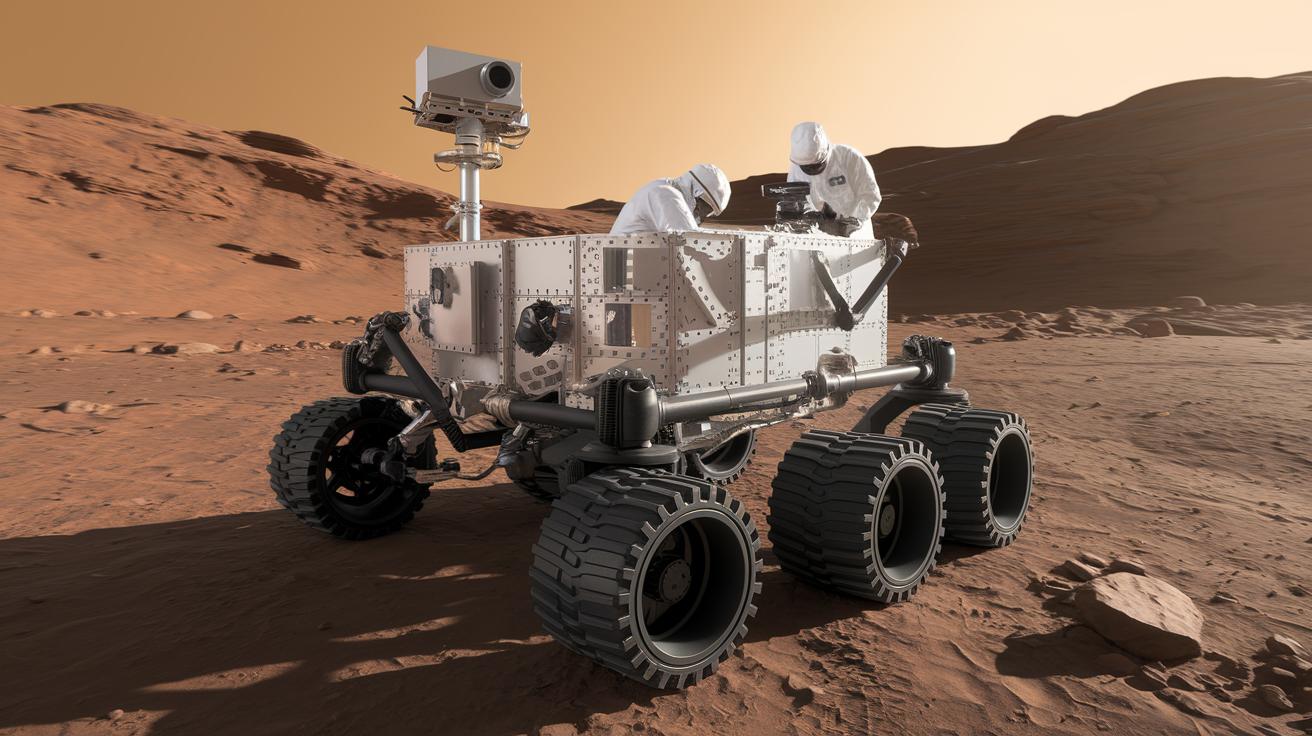
This section dives into the engineering behind the rover and shows how the team made a vehicle tough enough for Mars' rough surface. The engineers used smart space techniques and built the chassis from high-strength aluminum 7075 (a super durable metal that stands up to wear and tear).
The design borrows ideas from aerospace engineering. It carefully balances weight, strength, and usefulness so the rover can handle demanding tasks. Its six wheels can turn all the way around, which makes navigating rocky terrains a breeze. Solar panels soak up energy to charge its batteries, and onboard heaters keep it running even when temperatures drop to -195°C or climb to 27°C. These neat innovations ensure the rover works safely and efficiently on Mars.
Inside, advanced systems keep everything running smoothly. The rover relies on two compute units (backup brains) for extra safety, and UHF and X-band antennas maintain a steady link with mission control. Plus, a 7-foot-long robotic arm with many joints is ready for careful sample collection. Every piece is designed to meet strict needs in the harsh Martian climate.
Chassis & Mobility System: frame design, wheel motors, suspension
The frame uses aluminum 7075 for top durability. Six independent wheels offer full 360° turns, and the sturdy suspension handles rough ground with ease.
Power & Thermal Control: solar arrays, battery packs, insulation strategy
Solar panels capture the sun's energy to recharge batteries. Active heaters and solid insulation keep the rover performing well in both deep cold and intense heat.
Robotic Instrument Suite: arm joints, sample tools, calibration fixtures
A 7-foot-long robotic arm, crafted with methods like CNC milling and Wire Cut EDM, features precision joints for careful sample handling and fine calibrations.
Computing & Communication Systems: processor redundancy, antenna layout
Two compute units work side by side to avoid failures, and UHF plus X-band antennas keep a strong communication line with Earth.
| Component | Specification |
|---|---|
| Chassis | High-strength aluminum 7075 |
| Power | Solar panels with rechargeable batteries and active heaters |
| Instruments | 7-foot robotic arm with multi-joint calibration |
| Wheels | Six independent wheels with 360° steering |
| Arm | Manufactured via CNC milling and Wire Cut EDM, finished with Type II anodizing |
Mars Exploration Rover Scientific Payload and Geological Instruments
This Mars rover has a cool set of tools that work together to explore the red planet. The rover’s instruments help us learn about Mars by taking pictures, checking the rocks, and looking for hints of old environments. With each tool designed to capture special details, like tiny organic molecules (small building blocks of life) or the basic elements of the soil, we get a clearer picture of Mars' history.
- SAM: This tool looks for organic molecules using very sensitive detectors. It helps scientists understand if some basic life-like processes might have taken place.
- CheMin: This instrument checks out the minerals in the rocks and soil. It works like a detective, showing us what types and how many minerals exist, which gives clues about the planet’s past.
- APXS: By shooting tiny particles at a sample and then studying the X-rays (light that you can’t see that tells us about elements), this tool helps figure out what the rocks are made of.
- Pancam: Capturing sharp, colored photos, Pancam shows us a big picture of the land around the rover. These images are important for choosing where to explore next.
- Navcam: This camera gives live views that help the rover drive safely. It maps out the terrain so we can see where it’s safe to go.
- Hazcam: Watching the area close by, Hazcam looks for any obstacles or hazards, keeping the rover safe as it moves.
- Infrared Spectrometer: Using light in the infrared range (a type of light that feels warm), this instrument checks the heat and the chemical bonds of materials on the surface. This helps us learn more about what the rocks and soil are made of.
Together, these tools form a powerful science kit that fills in our knowledge of Mars. Their combined work not only tells us how the planet changed over time but also paves the way for future missions to learn even more about Mars’ past.
Mars Rover Landing Procedures and Deployment Strategy
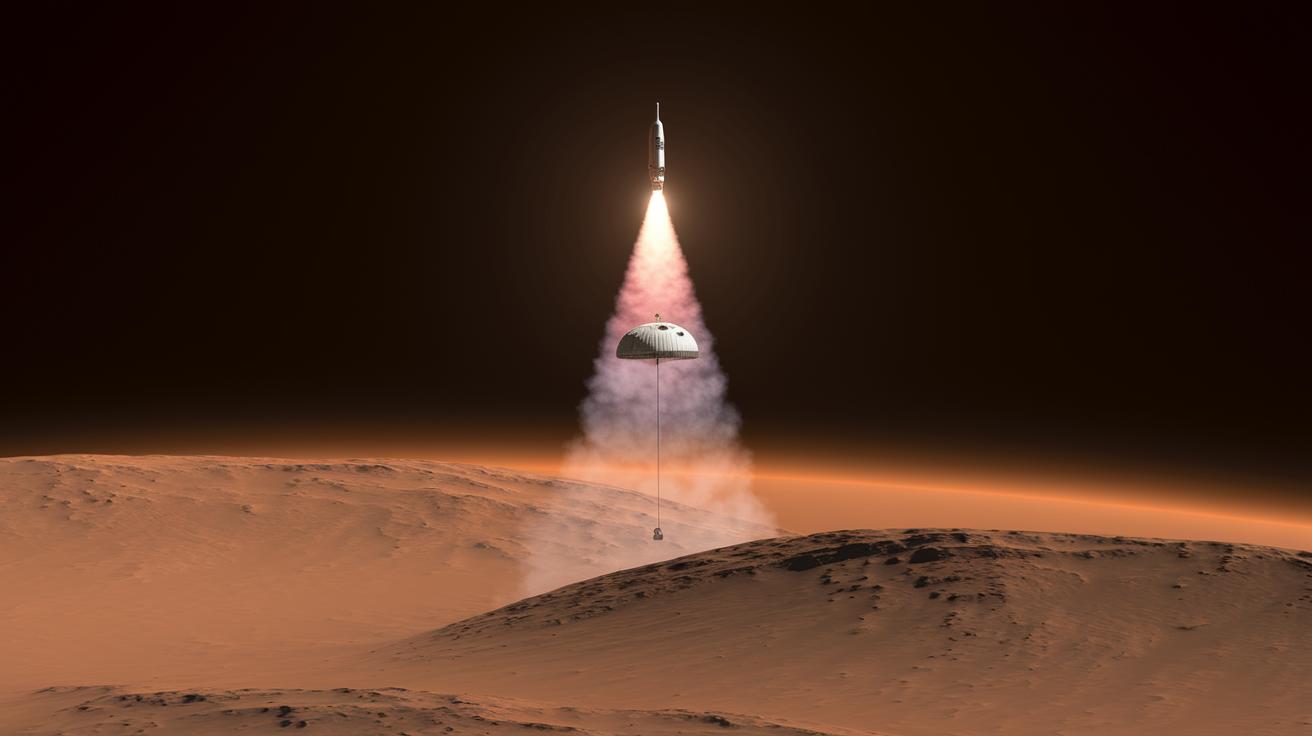
The rover's trip to Mars began with a careful launch and a long seven-month ride through space. Along the way, engineers made small adjustments to keep it on the right path toward the red planet. Picture a spacecraft slicing through the darkness, with its course fine-tuned step by step to hit its target.
Next came the exciting arrival phase, often known as the "seven minutes of terror." The rover first entered Mars’ atmosphere protected by a tough outer shell that guarded it from harsh conditions. A parachute then opened to slow the descent, followed by a rocket-guided drop that helped it lower smoothly to the surface. Finally, airbags cushioned the landing, softening the impact as it touched down. It was a perfectly timed sequence, with every step building on the one before.
Once safely on Mars, the rover started its surface mission. The airbags deflated, and the lander's petals opened up to reveal the rover inside. With careful steps, its wheels and tools unfolded into place, getting it ready to explore the mysterious Martian terrain.
Major Scientific Discoveries by Mars Exploration Rovers
The Mars rovers found layered rocks and tiny spheres of hematite that hint at ancient water flows. Early soil studies even confirmed that liquid water once existed on the planet.
Scientists also discovered deposits full of silica, suggesting that hot water once moved below the surface. One researcher put it simply: hot water under pressure can shift silica like a gentle stream, slowly changing the minerals over time.
A closer look at the soil’s chemistry revealed a basalt base mixed with sulfates and clay minerals. These clues show that volcanic materials and water worked hand in hand to reshape Mars’ terrain.
The rovers even uncovered Martian meteorites, adding fresh insights into how impact events have affected the planet’s surface over millions of years.
Autonomous Navigation and Remote Operations of Mars Rovers
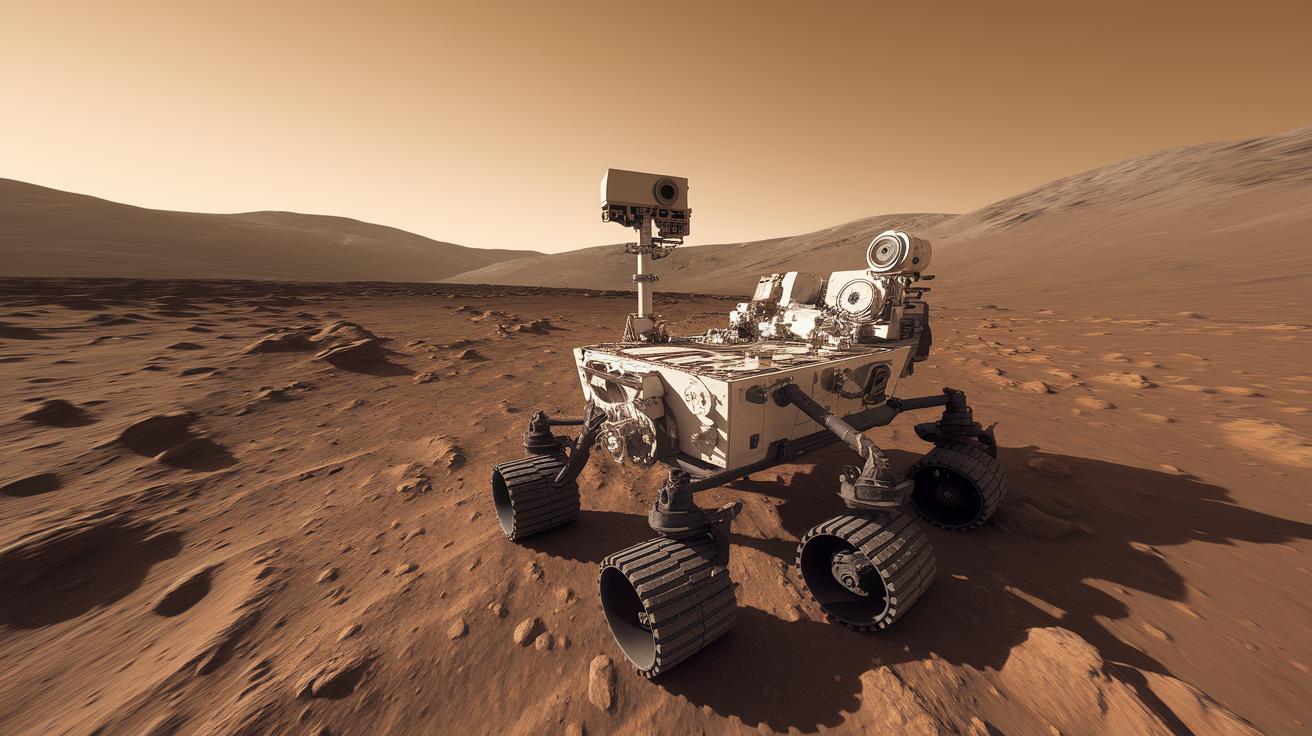
The rover's onboard autonomy is an impressive example of modern engineering. In December, a test drive showed that the rover could handle different types of terrain for two whole days without any help from humans. It uses smart navigation software paired with built-in hazard detectors and path-planning tools (methods to choose the best route) to spot obstacles and pick the safest way forward. Plus, automated terrain mapping takes detailed images of its environment, so every bend and dip is carefully recorded.
Machine learning (computers learning from data) helps the rover adjust its movements by correcting wheel slip in real time and modeling the landscape accurately. This clever system keeps updating its strategy as it meets new features on Mars. It works hand in hand with the mapping tools to provide high-resolution details, making sure the rover can quickly adjust if something unexpected pops up along its path.
Remote control still plays a key role in Mars exploration. Satellite telemetry using UHF and X-band channels keeps a steady link between the rover and Earth. This reliable system allows mission controllers to set new course directions and keep an eye on the rover's performance while it carries out its self-guided journey.
Technological Legacy and Future of Mars Exploration Rover
The MER program left a lasting mark on how we explore Mars, setting a high bar that still guides our journey today. With a smart mix of mobile design, precise instruments, and reliable software, it helped shape rovers like Curiosity and Perseverance. This setup not only deepened our understanding of Mars' rocky surface but also showed how strong engineering can fuel big scientific discoveries.
Today, engineers are building on that solid foundation. They’re upgrading rover computers, fine-tuning the way we store samples, and adding advanced astrobiology tools (devices that search for signs of life). These improvements make planning future missions easier and prove that creativity in robotics keeps pushing the boundaries of space exploration.
Looking ahead, planned missions to bring samples back from Mars and early steps toward human-robot teamwork are set to change our adventures on the red planet. These exciting plans show that every bit of MER’s success still counts, inspiring us to uncover even more secrets of Mars.
Final Words
In the action, we saw how Mars missions used technology to study the red planet's geology and climate history. The blog post highlighted key mission milestones, engineering details, and the amazing discoveries that reshaped our view of Mars.
Every part of the mission, from launch and landing to scientific payload details, shows our growing ability to explore and understand outer space. The mars exploration rover continues to spark curiosity and inspire scientific progress.
FAQ
What is a Mars exploration rover?
The Mars exploration rover refers to a robotic vehicle designed for Martian surface studies, gathering data on geology, climate, and past water activity using advanced scientific tools.
What was the goal of the Mars Exploration Rover mission launched in 2003?
The mission aimed to study Mars’ geology and climate history by sending two rovers, Spirit and Opportunity, to analyze rocks, soils, and signs of ancient water activity.
How many rovers have explored Mars and which ones are they?
Several rovers have explored Mars, including Spirit, Opportunity, Curiosity, Perseverance, and Sojourner. Orbiter missions like 2001 Mars Odyssey also contribute valuable data about the planet.
What were the last words of the Mars rover that stopped functioning, like Opportunity?
The last words from Opportunity weren’t spoken phrases; instead, its final data transmissions signaled communication loss as it faced the harsh Martian environment.
Is the Curiosity rover still exploring Mars?
The Curiosity rover continues its work on Mars, collecting scientific data on the planet’s environment, geology, and climate to help researchers understand its past.
What is meant by “Mars Exploration Rover LEGO”?
Mars Exploration Rover LEGO refers to model kits that replicate real Mars rovers, offering a hands-on way to learn about space exploration and the engineering behind these missions.
Who is referred to when mentioning the “Mars exploration rover crew”?
The term refers to the team of engineers and scientists who design, launch, and manage Mars rover missions, ensuring these robots operate effectively and gather key scientific data.