
Have you ever stopped to think about how a tiny machine can change the way we see an entire planet? NASA has sent special robots to Mars that mix smart technology (tools that work like mini-computers) with brave exploration. From Sojourner’s quick but powerful trip to Perseverance’s advanced gear, these machines show us just how exciting space can be. They reveal a red planet full of secrets, surprises, and stories waiting to be told. It’s a tale of science, courage, and incredible discoveries in a corner of the universe not too far away.
Mars Rover Ignites Marvelous Red Planet Science
NASA’s Mars rovers have truly changed how we explore our neighboring planet. They mix smart new tech with brave exploration and have helped us learn so much about Mars, all while showing us the true benefits of space research.
The first success came with Sojourner in July 1997. This tiny rover, which used special airbags to ease its landing, carried an x-ray spectrometer (a tool that looks at the elements in rocks) and cameras to capture the rugged Martian landscape. Originally planned for a one-week mission, it ended up sending data until September 1997. Its brief time on Mars set the stage for even more exciting missions.
Then came Spirit and Opportunity in January 2004. Spirit landed in one crater while Opportunity touched down at another. Both rovers were loaded with cameras, spectrometers, rock abrasion tools (tools that scrape rocks), and magnet arrays. They spent years searching for signs of water on Mars. Spirit explored for six years, and Opportunity kept on rolling until 2018, helping us piece together Mars’ watery past.
More recently, Curiosity and Perseverance have pushed the boundaries even further. Curiosity arrived in Gale Crater in November 2011 using a parachute to help slow down its landing. It carries a suite of instruments including cameras, spectrometers, radiation detectors, and environmental sensors. Perseverance, which landed in February 2021, is even more advanced. It carries tools like MEDA (which checks the weather), a ground-penetrating radar called RIMFAX to look beneath the surface, SHERLOC for chemical analysis, and MOXIE, a tool that makes oxygen. It even teamed up with the Ingenuity helicopter to explore more independently.
All these missions have reshaped our understanding of Mars and continue to push the limits of landing technology. They remind us that with each new rover, we take one step closer to unraveling the mysteries of the cosmos.
Historical Timeline of Mars Rover Exploration
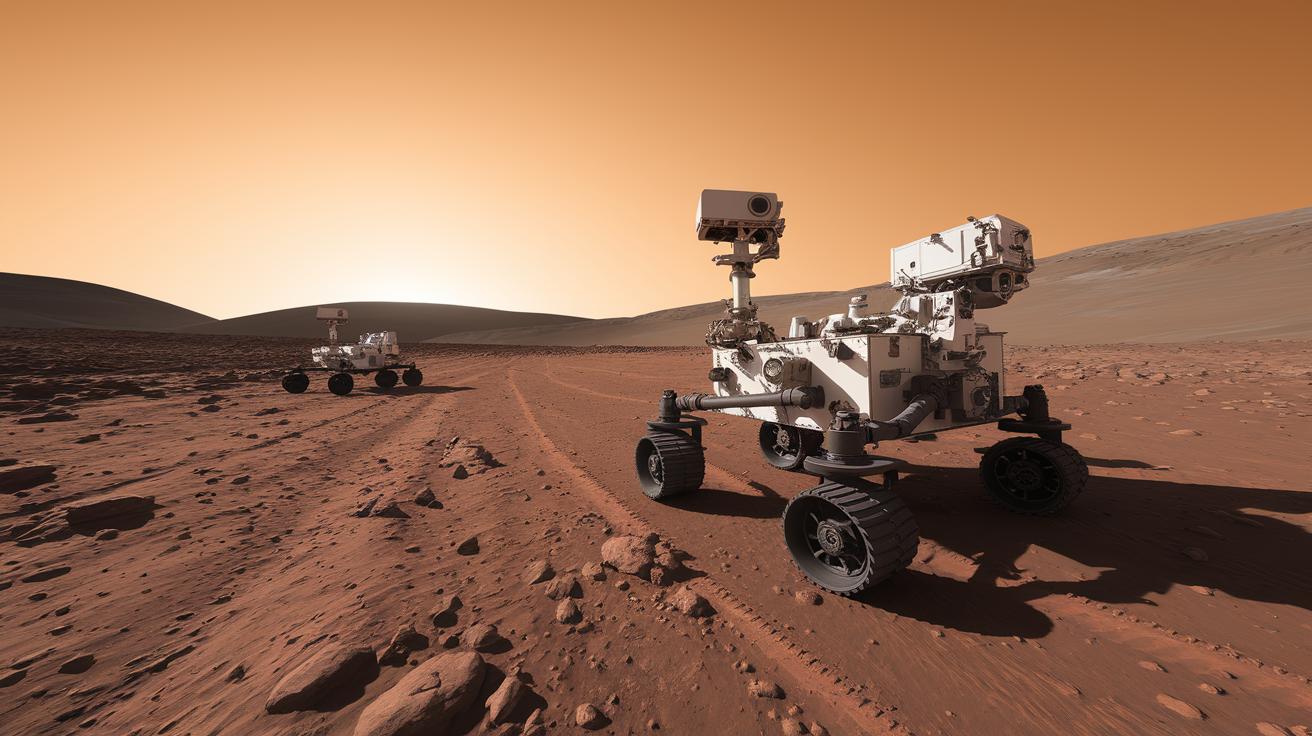
Mars rover missions have come a long way, with each new mission bringing fresh challenges and smart upgrades that changed how we explore Mars. Every mission brought a new design and science aim, and behind these shifts were unexpected puzzles that led us to develop better space exploration techniques.
-
In 1997 at Ares Vallis, Sojourner landed during the exciting space race of the late 1990s. Originally set to work for one week, it surprisingly kept chugging along for two more months, showing everyone that sometimes plans can be pleasantly exceeded.
-
In 2004, Spirit and Opportunity touched down in Gusev Crater and Meridiani Planum, respectively. They ran into rough terrain and design hiccups along the way. Spirit eventually stopped working in 2010, but Opportunity kept on gathering clues about Mars’ watery past until 2018.
-
In 2012, Curiosity touched down in Gale Crater with a suite of state-of-the-art tools. It looked for organic compounds (basic building blocks of life) and monitored radiation, all while braving Mars’ harsh conditions, sparking even more curiosity about the planet’s true nature.
-
In 2021, Perseverance made its mark in Jezero Crater by focusing on collecting rock samples. This bold mission solved many technical puzzles, laying the groundwork for future studies of Mars.
Each step in rover design and mission focus has not only deepened our understanding of Mars but has also kept the public excited about space exploration.
Mars Rover Technological Innovations
Sojourner was the first rover that paved the way for Mars exploration. It used a rocker-bogie suspension (a clever design that helps the rover climb over obstacles) and a manual joystick for control. Its simple design let it roll over rough ground easily, and engineers found it very impressive. Later rovers like Spirit, Opportunity, and Curiosity improved on this by using adjustable suspension systems that could handle bumpy terrain and better power setups for longer missions.
Curiosity took things to the next level with its set of sensors. Its REMS suite (a package for gathering weather information) provided live data about Martian weather, while its RAD detector (a tool that measures cosmic and solar radiation) kept track of harmful rays. Together, these instruments formed a complete system that not only monitored Mars’ environment but also helped make missions safer. This allowed scientists to study how Mars’ weather and radiation levels might affect future human visits.
Modern rovers have become much smarter when it comes to handling unexpected hazards. They now come equipped with software that can detect dangers on their own, which minimizes risks during their journeys. For instance, Perseverance features an upgraded robotic arm with built-in protection and smart controls. These improvements let the rover quickly decide the best route through tricky landscapes without having to wait for constant instructions from Earth.
Recent breakthroughs at Missouri S&T are pushing rover design even further through university-led projects. The Hyperion rover in 2024 impressed with its innovative scientific tools and a precise robotic arm, along with advanced self-driving navigation. Its follow-up, Talos, built for a world championship competition in 2025, showed off a strong mechanical design and complete autonomous abilities. These projects highlight how ongoing improvements in robotic engineering continue to advance space exploration on Mars.
Mars Rover Scientific Discoveries on the Red Planet
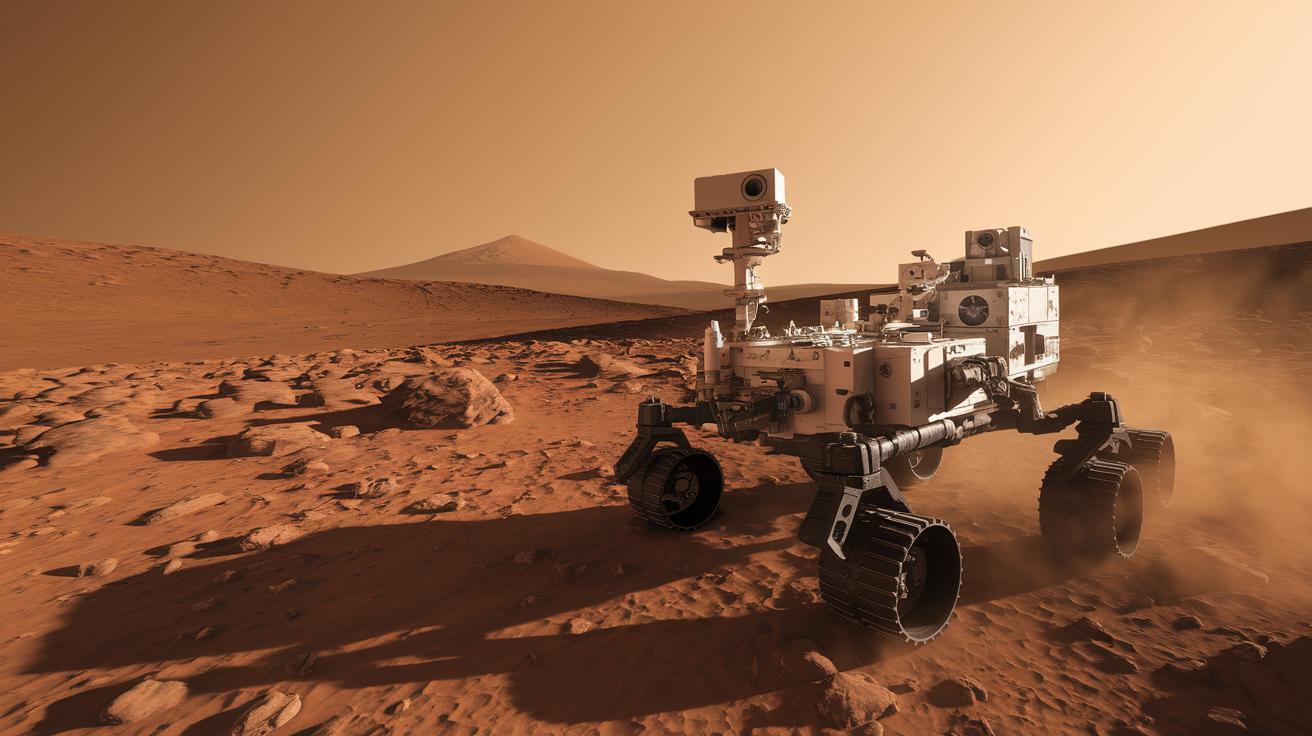
Mars rovers have truly changed the way we see our red neighbor. They send back loads of detailed data that help us understand Mars like never before. We now know there are hints of water and a mix of chemicals hidden beneath the surface. It’s almost like each rover is a clever detective, gathering clues to tell the story of Mars’ past.
Every mission turns a barren, rocky place into a treasure chest of science. With smart tools onboard, these rovers let us peek into a world that once might have flowed with water and had different chemical secrets waiting to be uncovered.
- Sojourner: This little rover snapped photos of smooth, rounded pebbles. Those images gave us our first clear sign that water once moved across Mars.
- Spirit and Opportunity: These twin rovers used special tools like spectrometers (instruments that study light to tell what things are made of) and rock abrasion tools (gadgets that scrape off layers of rock) to prove that Mars once had watery spots in places like Gusev Crater and Meridiani Planum.
- Curiosity: Equipped with its Sample Analysis at Mars instrument, this rover picked up traces of organic carbon (the basic building blocks of life) and even mapped the radiation levels on Mount Sharp’s slopes.
- Perseverance: With tools such as the SHERLOC biosignature detector (which spots signs that life might have existed) and RIMFAX ground-penetrating radar (a way to see what lies below the surface), this rover is exploring underground layers that might hide more secrets about Mars.
Every new finding from these rovers brings us closer to understanding how Mars evolved over billions of years. I find it amazing how each discovery not only deepens our knowledge but also lights the way for future missions. Who wouldn’t be excited to learn more about what lies beneath the rusty surface of Mars?
Current Mars Rover Operations: Perseverance and Ingenuity
Perseverance is busy testing its cool gadgets on Mars. RIMFAX (a tool that uses radar to peek at underground layers) is helping us see what lies beneath the surface, while MOXIE (an experiment designed to make oxygen from the thin Martian air) is working on turning Mars’ atmosphere into something useful. It’s like watching a science experiment unfold right in front of your eyes.
Ingenuity is also impressing us. This little drone has made several flights, each one showing how it can soar above Mars’ dusty ground, much like a hummingbird lifting off into the sky. It really highlights the amazing things that can happen even in a low-pressure environment.
Curiosity is busy as ever, snapping high-resolution photos and collecting data about Mars’ weather and soil. Its steady stream of observations gives scientists a clearer picture of how the planet changes over time, making us all feel closer to understanding our red neighbor.
Future Mars Rover Exploration and Sample Return
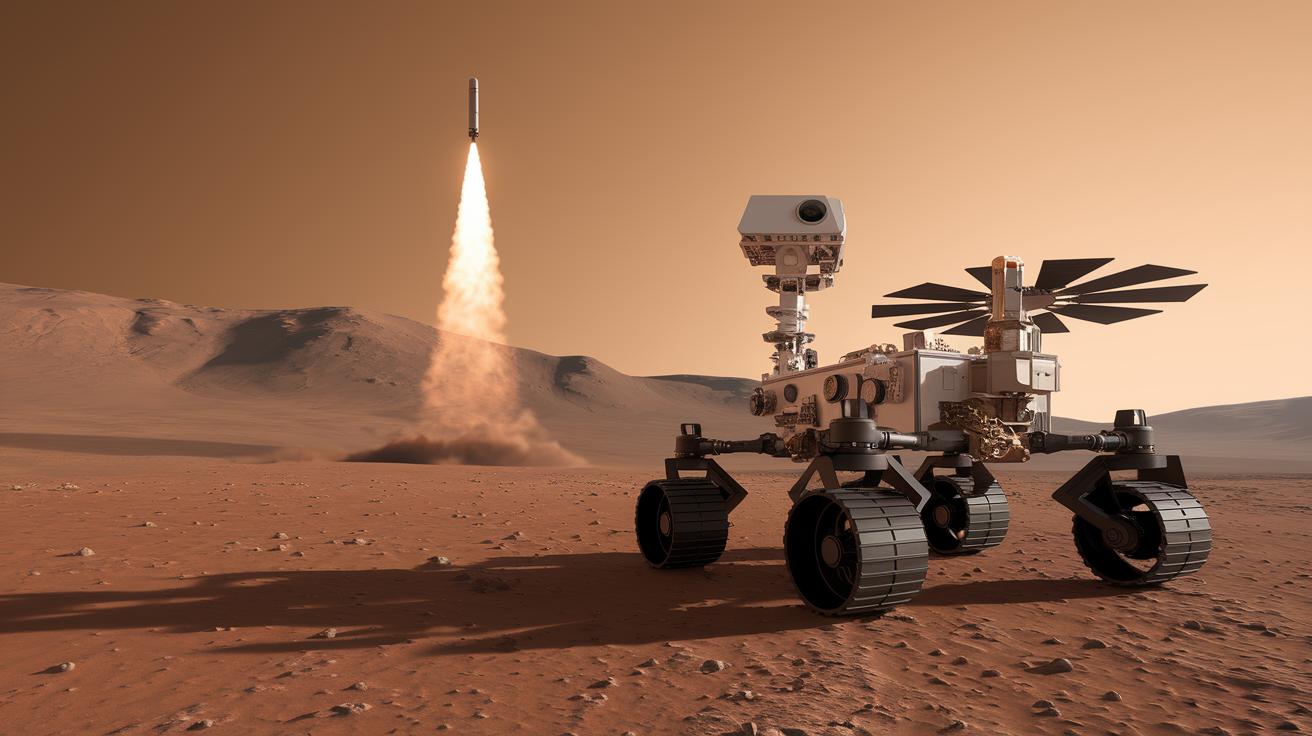
We're gearing up for an exciting mission to bring samples from Mars back to Earth. The plan involves a rover that collects the samples, a lift-off vehicle to send them from the planet, and an orbiter to help guide them safely back to Earth. Launch is set for the mid-2020s, and scientists hope this mission will unlock secrets about Mars' geology and whether the planet could once have supported life.
This adventure will feature next-generation rovers that can work with more independence. They use AI (artificial intelligence that helps machines think and act) to make decisions on the fly, and they’ll even study how to use materials found on Mars to help future missions run smoother. High-resolution pictures taken from orbit will also play a big role, helping us choose the safest landing spots for the vehicles.
- Smarter, more automated operations with AI-powered navigation.
- Experiments using local Martian materials to support sustainable missions.
- Advanced space imaging to pick out the best landing sites.
Final Words
In the action, the piece tracked major rover missions from early successes to recent scientific and technological breaks that continue to shape our view of Mars.
It covered Sojourner, Spirit, Opportunity, and the advanced work of Curiosity and Perseverance in exploring the planet.
The narrative also touched on current operations and future plans like the Mars Sample Return.
Every mission builds on past wins, pushing the boundaries of what our mars rover can achieve, inspiring us all to keep looking upward.
FAQ
What does Mars Rover toy refer to?
Mars Rover toy refers to a model replica of the real Mars exploration vehicle, designed for play or display. It offers a fun way to learn about space technology and Mars missions.
What were the last words of the Mars Rover that died?
The so-called last words of a Mars rover are not spoken phrases. Instead, the final transmissions were technical log messages sent as the rover’s systems powered down at mission’s end.
How does Mars rover Curiosity operate?
Mars rover Curiosity explores Gale Crater with cameras and environmental sensors. Its instruments study rock formations, detect organic materials, and track radiation to help scientists understand Mars’ past conditions.
What is the significance of a Mars rover’s name?
A Mars rover’s name, such as Sojourner, Spirit, Opportunity, Curiosity, or Perseverance, reflects its mission goals and honors the spirit of exploration, connecting the machine’s purpose with human ingenuity.
What does it mean when a Mars rover is described as dead?
Describing a Mars rover as dead means its mission has ended due to loss of communication or system failure, like with some earlier missions that finished transmitting data from Mars.
How are Mars rover images used in exploration?
Mars rover images capture detailed visuals of the Martian surface and rock formations. These images help scientists study the planet’s geology and assess environmental conditions from millions of miles away.
What is meant by Mars rover drawing?
A Mars rover drawing is an artistic or schematic illustration of the rover, created to highlight its design features and mission tools. Often used in educational materials, these drawings make complex technology more accessible.
How does Mars rover Perseverance contribute to exploration?
Mars rover Perseverance explores with advanced instruments that study geological features and seek signs of past life. Its work lays the groundwork for future sample return missions and deeper scientific research.
How many rovers are on Mars now?
There are multiple active rovers on Mars today, including Curiosity and Perseverance. Each continues to explore, send data back to Earth, and provide valuable insights into the planet’s surface.
Is Elon Musk going to Mars in 2026?
Elon Musk has ambitious plans for human space travel, but there is no confirmed schedule that guarantees he or his team will reach Mars by 2026. The timeline remains uncertain.
Is the Mars Rover still working?
Whether a Mars rover is active depends on the specific mission. For example, both Curiosity and Perseverance are still operational, actively gathering science data on the Martian surface.