
Have you ever wondered how one simple test could change everything? Experiments like these let us see nature in a totally new light.
Imagine a tiny mold that stops dangerous bacteria or scientists piecing together the secret code of our genes (the building blocks of life). Each study helped us unlock a new part of the natural world.
When researchers turned their endless curiosity into real, step-by-step tests, they made everyday miracles possible. And now, those early breakthroughs still spark the innovations powering science today.
Key Landmark Experiments Across Scientific Disciplines
Big experiments have changed how we see the world. They’ve asked tough questions about ideas we once took for granted while bringing fresh ways to study nature. In many ways, they show off human creativity and the power of careful observation.
Science moves forward when experiments turn ideas into actual tools. Each study on our list helped light the way for research that still touches lots of different fields today.
-
Fleming’s penicillin discovery (1928)
Fleming noticed that a mold called Penicillium (a type of fungus) could kill staphylococcus bacteria. This simple experiment started the era of antibiotic treatments that save lives. -
Gel electrophoresis refinement (1930s–1960s)
Scientists improved gel electrophoresis, a technique that sorts proteins and nucleic acids (the building blocks of our genes). This made it easier to study the complex mix of molecules in our cells. -
HeLa cell immortalization (1951)
Researchers found that HeLa cells could grow forever in a lab. These cells became a cornerstone in creating vaccines and led to many breakthroughs in medicine. -
DNA structure elucidation (1952–53)
Franklin, Watson, and Crick worked together to build a model of DNA’s double helix. This work completely changed the way we understand genetics and heredity. -
DNA polymerase identification (1956)
Kornberg discovered an enzyme, DNA polymerase, which helps build new strands of DNA in the lab. Think of it as nature’s way of copying information accurately. -
Reverse transcriptase discovery (1970)
Temin and Baltimore found that RNA (a molecule similar to DNA) can be turned into DNA. This discovery lit up new understanding of retroviruses, which are viruses that use this trick to replicate. -
Type II restriction enzymes mapping (1970)
Scientists mapped out enzymes that can cut DNA at specific spots. This process is key for genetic analysis and helped open up the world of genetic engineering. -
E. coli CaCl₂ transformation (1970)
Using a method with calcium chloride (CaCl₂), researchers taught E. coli bacteria to absorb new DNA. This technique made studying genes in bacteria much simpler. -
Polymerase chain reaction invention (1983)
Mullis created a fast way to make many copies of a DNA segment in the lab. This method, known as PCR, quickly became a game changer in scientific research. -
Bioluminescent marker cloning (1986)
Cloning firefly luciferase, the protein that makes fireflies glow, helped scientists tag and watch how genes are expressed in real time in living cells. -
First gene therapy trial (1990)
The first tests in gene therapy aimed to fix faulty genes in patients. These early trials paved the way for using genes to treat diseases in a whole new way. -
Green fluorescent protein sequencing (1992)
Scientists sequenced green fluorescent protein (GFP), which glows when exposed to certain lights, allowing them to see proteins in action inside living cells. -
RNA interference (1998)
This method lets researchers turn off specific genes to understand what they do. It’s like flipping a switch to see what happens when a part of the system is quiet. -
CRISPR-Cas9 reengineering (2012)
This gene-editing tool lets scientists change DNA with precision. CRISPR-Cas9 is still transforming research by offering a simple way to modify genes and unlock new medical treatments.
Each of these experiments is a building block in modern science. They remind us that bold ideas and careful work can challenge old views and light the path to new discoveries.
Pivotal Experiments Driving Breakthroughs in Biology

Important experiments in biology have helped us treat diseases and even change genetic material. We now sort these studies into groups based on how they contribute to medicine and biotechnology.
Medical Innovations
• Fleming’s penicillin discovery (1928): Imagine a scientist noticing that mold could fight off bacteria. This observation led to the creation of penicillin, a life-saving antibiotic.
• HeLa cell immortalization (1951): In this discovery, scientists developed cells that can divide forever, which turned out to be vital for making vaccines like the one for polio. Picture cells that never stop growing and helping researchers find cures.
Molecular Tools
• DNA double helix elucidation (1952–53): Researchers combined X-ray images with molecular models to unlock the secret double helix code inside every living cell.
• Reverse transcriptase discovery (1970): Scientists found an enzyme that changes RNA into DNA (RNA is like a messenger carrying instructions, and DNA is the cell’s blueprint). This helped explain how viruses copy themselves.
• Mapping of Type II restriction enzymes (1970): Scientists identified enzymes that cut DNA at very precise spots. This breakthrough opened the door for targeted changes to genes.
• Polymerase chain reaction creation (1983): This technique quickly makes many copies of a small piece of DNA, which makes tasks like forensic analysis and genetic research a lot simpler.
• RNA interference development (1998): Researchers introduced a method to “turn off” specific genes, providing a clearer picture of each gene’s role and the origins of some diseases.
• CRISPR-Cas9 reengineering (2012): By adapting a bacterial defense system, scientists created a tool that can edit genes with precision, sparking new ideas for gene therapy.
These key breakthroughs in both medicine and biotechnology continue to guide research and shape new treatment strategies.
Chemical Innovations in Molecular Analysis
Molecular separation and labeling techniques grew from our deep study of chemical properties. For example, gel electrophoresis uses an electric field to move charged molecules through a gel. Think of it like tiny beads sliding along a track, each stopping based on its own size and charge.
Then there’s Type II restriction enzyme mapping. This method uses special enzymes (proteins that speed up chemical reactions) to cut DNA at exact spots. Cloning firefly luciferase and sequencing green fluorescent protein (GFP, a protein that glows) both rely on chemical reactions that produce light. Early gene therapy trials also showed us how mixing chemical signals with cell biology can deliver helpful genes to cells.
| Experiment | Year | Technique | Impact |
|---|---|---|---|
| Gel electrophoresis development | 1930s–1960s | Using an electric field to separate molecules | Sorted proteins and nucleic acids by charge and size |
| Type II restriction enzyme mapping | 1970 | Using enzymes to cut DNA at specific sites | Created predictable DNA fragments based on chemical traits |
| Firefly luciferase cloning | 1986 | Cloning a light-producing protein | Made it possible to see reactions through light emission |
| GFP sequencing | 1992 | Watching live cells with glowing markers | Helped track protein behavior in living cells |
| First gene therapy trial | 1990 | Delivering genes with vectors | Showed how chemical and cellular interactions can work together for treatment |
These chemical methods not only revealed how molecules interact but also paved the way for future advances. They remind us that even the smallest reactions can lead to huge changes in science.
Physics Experiments Shaping Fundamental Laws
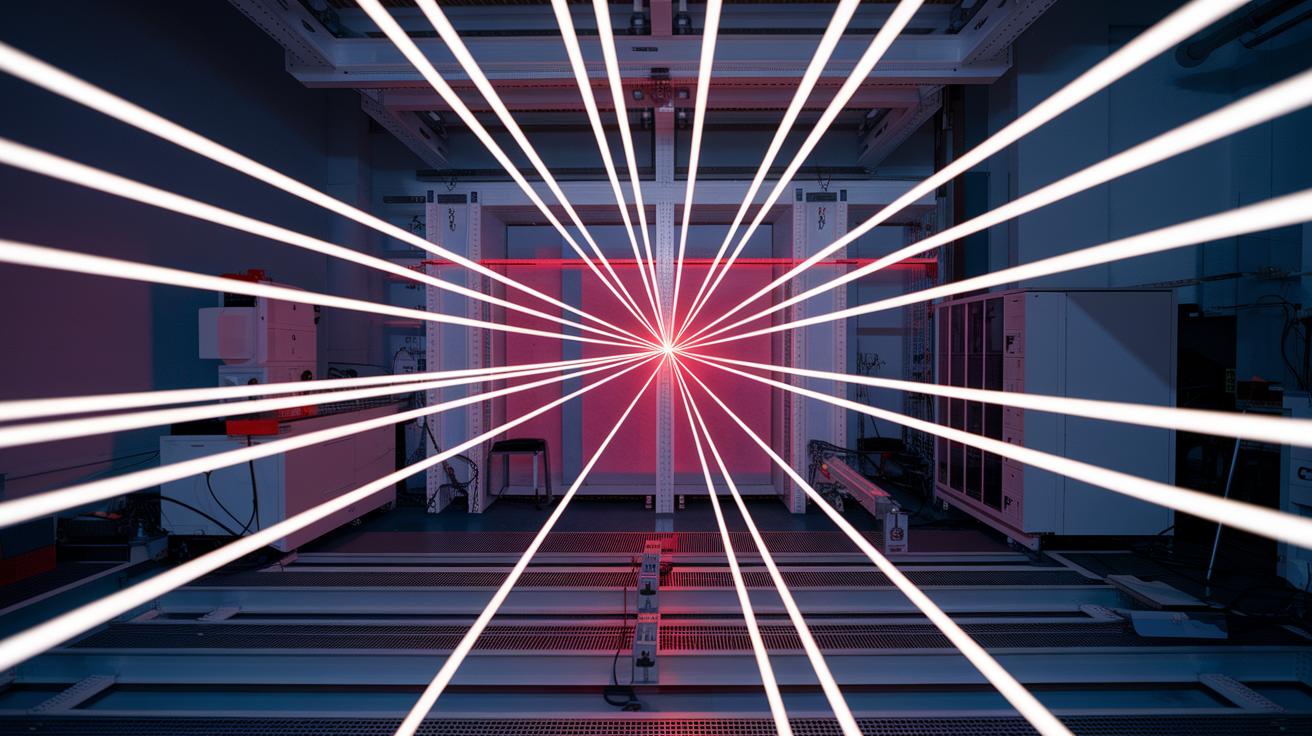
Scientists have long put old ideas to the test to see if they really hold up. They came up with clever experiments to challenge what was once believed about the universe, shaking up long-held views and paving the way for modern physics.
- Michelson-Morley (1887): Researchers used a tool called an interferometer (a device that splits and then mixes light beams) to check if light traveled at different speeds in different directions. Because they couldn’t find evidence of the mysterious ether (a once-popular idea about a space-filling substance), people had to rethink the idea of fixed space.
- Rutherford’s gold-foil (1909): In this experiment, tiny particles known as alpha particles were fired at a thin piece of gold foil. Most particles passed straight through, but a few bounced off. This showed there was a dense center inside atoms, now known as the nucleus.
- Millikan’s oil-drop (1909): Here, oil droplets were put in an electric field to measure their electric charge. This study helped scientists pin down the exact charge of an electron and proved that electric charge comes in small, fixed amounts.
- Stern-Gerlach (1922): Silver atoms were sent through a magnetic field that wasn’t the same everywhere. The beam split into separate paths, showing that particles have a built-in spin (a tiny rotation that helps explain their behavior).
- Penzias & Wilson (1965): Using a horn-shaped antenna, scientists picked up faint microwave signals coming from across the sky. This background glow confirmed predictions about the Big Bang, the massive explosion thought to have created the universe.
- LIGO’s first gravitational wave observation (2015): For the first time, ripples in spacetime were detected, caused by huge cosmic events. This discovery opened up a brand new way to listen to the universe.
These groundbreaking experiments have reshaped how we think about physical laws and even influenced the technology we use every day. Their creative approaches continue to inspire new tests and help us understand matter, energy, and the vast cosmos a little better.
Pivotal Experiments and the Role of Reproducibility in Science
In the early days, scientists learned that new discoveries had to work over and over again to truly change our ideas about the world. For example, a method using E. coli bacteria with CaCl₂ in 1970, along with later improvements in PCR (a way to copy DNA quickly), showed that even tricky techniques could be repeated with the same results. But teams in fields like psychology and cancer research sometimes had trouble getting the same results when different labs used different methods. These problems pushed scientists to take a closer look at their work and stress that clear, repeatable findings are very important. When results can be repeated, it builds trust and makes room for even newer ideas.
Today, science uses strong validation methods to check findings before they are accepted everywhere. Labs now focus on following set procedures, and many projects require detailed methods along with open data so anyone can see the original information. Innovations supporting these efforts include:
- Standard protocols that help scientists follow the same steps every time.
- Open data rules that let others review the original numbers and facts.
- Better peer review processes that catch possible mistakes.
- Automated lab tools that reduce human errors.
All these new steps have made lab results more dependable and continue to guide research toward clearer, more reliable outcomes.
Final Words
In the action, science has surged forward with experiments that have reshaped biology, chemistry, and physics. From Fleming’s penicillin breakthrough to LIGO's gravitational wave observation, these studies have altered our everyday understanding of the world. The blog post showcased how pivotal experiments in scientific breakthroughs drive new research and transform our lives. Each study not only redefined its field but also inspired further discussion and innovation. It’s exciting to see how science keeps lighting up our path to discovery.
FAQ
Frequently Asked Questions
Q: What are some examples of pivotal experiments in scientific breakthroughs?
A: Pivotal experiments are foundational studies that shaped our modern science mindset. They include Fleming’s penicillin discovery, the elucidation of the DNA double helix, the invention of PCR, and CRISPR genome editing.
Q: What are some of the most significant scientific discoveries that changed the world?
A: Some groundbreaking discoveries include penicillin saving millions, the DNA structure unlocking genetics, and gravitational wave detection revealing cosmic events—all of which reshaped technology and medicine.
Q: What medical breakthroughs are expected by 2025?
A: Researchers predict advances like refined gene therapies, personalized medicine approaches, and improved diagnostic tools, all of which aim to transform treatments and offer better patient outcomes by 2025.
Q: What are some recent scientific breakthroughs?
A: Recent breakthroughs include LIGO’s gravitational wave detection, progress in CRISPR genome editing, and novel gene therapy techniques that are broadening our understanding of physics and medicine.
Q: What is considered the biggest scientific breakthrough in history?
A: The discovery of the DNA double helix is often seen as the biggest breakthrough, as it revolutionized genetics, medicine, and biotechnology, paving the way for countless further innovations.
Q: What is the biggest scientific experiment ever?
A: The Large Hadron Collider is seen as one of the biggest experiments, with its massive scale and impact on particle physics influencing our understanding of the universe’s fundamental forces.
Q: What is the most famous experiment?
A: Rutherford’s gold-foil experiment is among the most famous, as it revealed the existence of the atomic nucleus and fundamentally altered our view of atomic structure.
Q: What is the most surprising scientific discovery?
A: CRISPR-Cas9 reengineering stands out as a surprising discovery, as it transformed the field of genetics by enabling precise genome editing and opening new possibilities for disease treatment.