
Ever wonder how scientists turn huge challenges into neat little puzzles? Today, they break down complicated physics into small tasks that handle themselves, making research hundreds of times faster. This smart trick lets researchers see how materials twist, bend, and even break as it happens. In this post, we chat about how these speedy simulation methods are sparking real breakthroughs in science and engineering, giving us more precise results and exciting insights that light up innovation.
Core Simulation Innovations Fueling Scientific Breakthroughs
Revolutionary simulation techniques reshape how we mimic real-world physics. New methods for elastic body simulations let computers handle millions of tiny interactions in real time by breaking huge problems into smaller puzzles using Gauss-Seidel iterations (a way to solve equations in small, manageable parts). This clever trick makes the process 100 to 1000 times faster than older methods. Really, imagine splitting one enormous calculation into many little puzzles that solve themselves, letting scientists watch materials stretch and snap at lightning speed.
These smart models also keep things accurate even when objects are heavily squished. In other words, when something bends or gets compressed, it still comes back to its original shape. And it gets better, engineers use other physics methods too. For example, finite element analysis (a technique for studying stress in structures), Monte Carlo models (which check how random events play out), and molecular-scale simulations (that observe tiny interactions) all add extra power to these simulations.
For a real-life example, think about car crash tests. Engineers now run millions of small calculations to predict how materials behave with almost perfect accuracy. These simulations not only speed things up but also sharpen precision, making them essential in fields from engineering to medical research.
| Computational Approach | Main Focus |
|---|---|
| Finite Element Analysis | Analyzing structural stresses |
| Monte Carlo Models | Evaluating random processes |
| Molecular-Scale Simulations | Capturing minute interactions |
In short, these breakthroughs open new doors in science with faster speeds, better reliability, and amazing precision. They are paving the way for exciting future discoveries.
Advanced Computational Models Powering Discovery
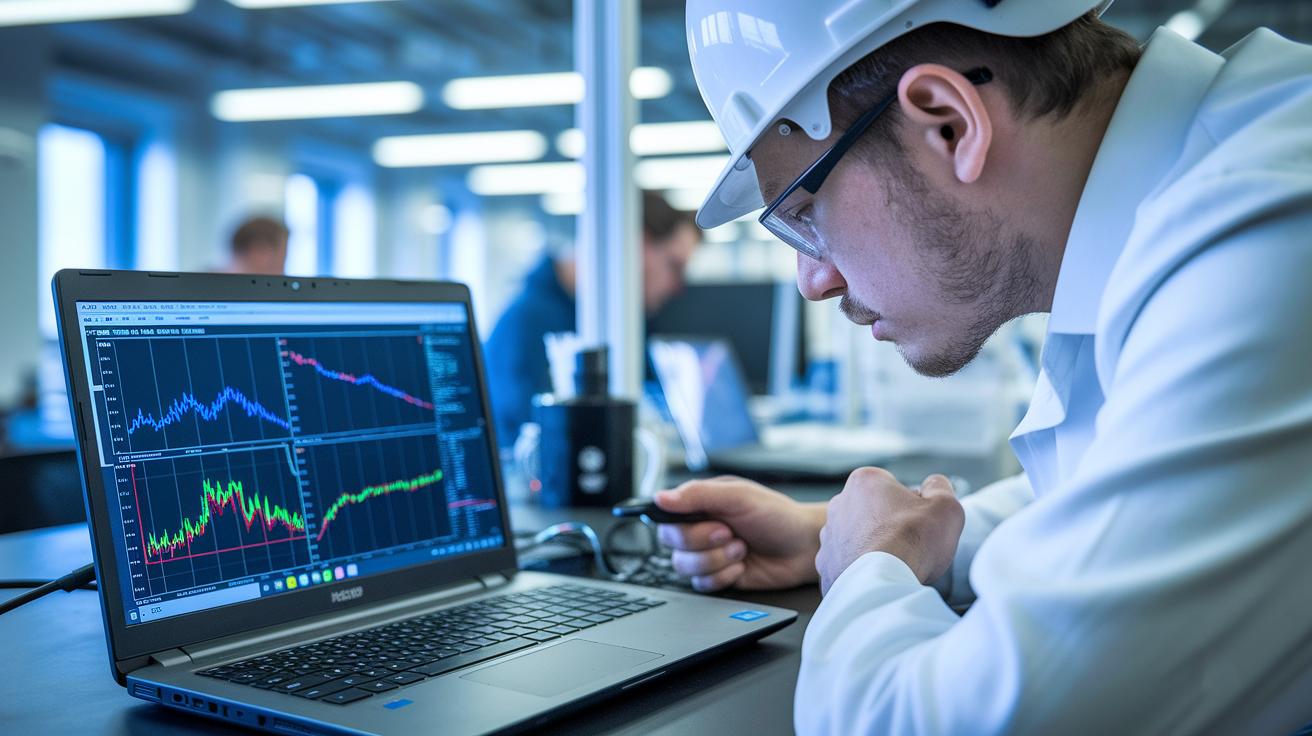
Finite element analysis helps researchers see how forces spread out in materials by breaking objects into small pieces. This lets engineers check how stress affects everything from bridges to body tissues (biomechanics studies how our bodies move and work). Think of it like designing a car part where every tiny section shows how it bends or holds up under pressure.
Monte Carlo methods handle uncertainty by running a bunch of random simulations. These tests give scientists a clear picture of tricky systems where many chance events play a role. Ever wonder how weather forecasts work? These methods show how random outcomes can combine to predict weather with surprising clarity.
Computational fluid dynamics focuses on how liquids and gases flow. By simulating every little swirl and eddy, scientists can study air movement around airplanes or even the behavior of cosmic gases in space. This careful modeling gives them a solid base to predict how fluids will react under different conditions.
Multiscale computational science brings all these approaches together. It combines models at the molecular level, mid-size scales, and large structures into one smooth process. This lets researchers explore everything from the tiniest particles to huge systems, driving scientific discovery to new heights.
AI-Driven and Machine Learning-Based Simulation Strategies
Today, modern AI tools adjust simulation settings automatically while creating smart substitute models for heavy calculations. Imagine a computer that takes hundreds of complex computations and turns them into one smart prediction, that’s surrogate modeling in action. Deep learning solvers can now copy the way materials flex and stretch (nonlinear elastic behaviors) much faster than old-school methods, letting simulations run through different scenarios almost as quickly as our own thoughts.
Next, new workflows mix traditional physics engines with modern neural networks. This means classic simulation methods work alongside fresh, data-driven insights. Think of it like playing a video game where you get better with each round. These systems learn from every simulation run and continue to improve over time. For example, they can adjust their settings on the fly using reinforcement-learning optimization (a way to learn by trying different actions), which helps speed up the process and produce more accurate outcomes.
Then, developers are blending these AI-powered techniques with proven physics formulas to bridge the gap between theory and reality. Machine learning experiments offer quick predictions about what might happen before a full-scale simulation begins, saving researchers a lot of computing time. And with emerging quantum computing promising even faster speeds, it looks like complex simulations could soon be handled almost instantly. This blend of smart algorithms and traditional methods is sparking a new era for simulations, making them both efficient and impressively precise.
Real-World Case Studies of Hyper-Realistic Virtual Trials
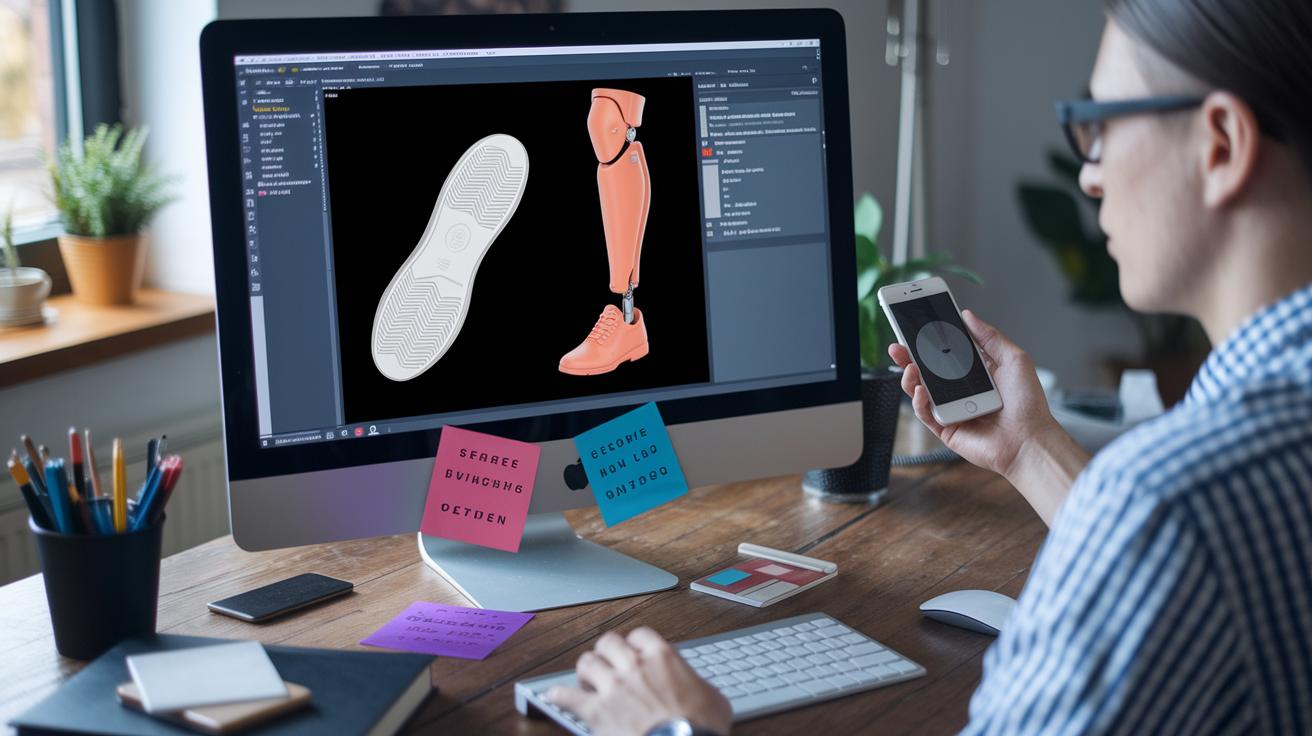
Footwear creators now use computer simulations instead of real crash tests. They mimic how shoe soles bend and handle impacts. With these digital tests, designers can try out hundreds of designs really fast. One team even said that one cycle of simulation saved them over 80% of prototype development time. A virtual crash test can now do in hours what months of physical testing used to achieve. Isn't that incredible?
In the world of biomechanics, digital labs are helping to customize prosthetic limbs. Engineers run computer models that show how stress and strain affect a prosthetic, so they can adjust its shape to match a patient’s movement. This method lowers the risks during testing and makes prosthetics more comfortable and effective when they’re finally used in real life.
Robotics experts use ultra-realistic simulations to test how robots handle collisions in safe, controlled settings. These virtual tests let programmers adjust how robots react when they bump into unexpected obstacles. One study even found that these simulation-led tweaks cut unpredictable errors by nearly 70%. That's a huge boost in safety!
Researchers also use computer models to predict floods and landslides. These digital environments can copy extreme conditions so experts can design better safeguards for cities. With these tests, planners can set up evacuation routes and emergency responses with solid, measurable confidence.
In digital biomedical labs, surgeons train using virtual reality modules that mimic the way tissues stretch and move. This simulated tissue behavior gives instant feedback during practice surgeries, letting doctors improve their skills without any risk to patients. Imagine practicing surgery dozens of times in a very detailed virtual setting before ever operating on a real person.
These examples show a big change in how we do science and design products. Using digital models instead of physical prototypes can really boost efficiency, safety, and creativity across many different fields.
Validation Protocols and Calibration Techniques in Modeling
We build our simulation models carefully by checking them with solid validation protocols. We even push these models to their limits, imagine a digital octopus or a tiny armadillo facing heavy pressure, to see if they still work well. Did you know that even models of soft tissues have to pass tough tests that mimic high-pressure situations?
We also use calibration techniques. Simply put, we let the computer make small adjustments over and over until the error between the simulation and what we expect is almost nothing. It’s like tuning a musical instrument until every note sounds perfect.
Next, we use uncertainty quantification methods to set clear confidence limits on our results. These easy-to-understand checks help us see which parts of the simulation are working best, so we keep our expectations realistic.
We also measure performance by looking at speed, accuracy, and resource use in our digital tests. With clear numbers, we can compare how fast the simulation runs and how close its results are to real experiments.
- Model validation protocols make sure every digital test stands up to strong, careful checks.
- Calibration techniques adjust each part step by step to lower the error.
- Uncertainty methods show us the confidence in the results, while performance checks keep everything on track.
Next-Generation Virtual Twin Studies and Emerging Trends

Virtual twin studies are moving fast, blending real-time sensor data with detailed computer models. Imagine a digital copy of a car checking its own health while driving, or a building that adjusts its energy use by itself. These systems mix sensor information with detailed simulations that are used in cars, building designs, and even health research.
New hardware developments are also on the horizon. Picture a simulation powered by a group of speedy graphics cards, special chips that speed up calculations (called FPGA accelerators), or even cutting-edge quantum processors. What once took hours now might only take minutes. This leap in technology is set to expand what virtual twins can do.
Software is keeping up too. Today, mixed reality platforms let users interact with virtual models using natural hand movements. Imagine putting on a VR headset and tweaking a digital design as if you were really in a lab. It makes science feel much more interactive and fun.
Innovative algorithms add to this rapid progress. New platforms can combine different streams of data, letting experts from various fields work together smoothly. This teamwork helps break down old boundaries, leading to faster and more accurate simulations.
As these hardware and software trends come together, virtual twin studies will broaden how we use simulations to drive scientific discovery. This means more creativity and better teamwork across different fields.
Final Words
In the action, the article explored cutting-edge simulation methods that reshape how we test ideas. We witnessed core innovations, from advanced computational models to AI-driven strategies, that demonstrate how simulation brings science closer to everyday understanding.
Real-world cases showed how digital trials mimic reality, while precise validation trusted these methods further. Revolutionary simulation techniques in scientific breakthroughs continue to spark curiosity, inspire inventive thinking, and push research toward a brighter, more accessible future.
FAQ
Q: What are some examples of revolutionary simulation techniques in scientific breakthroughs?
A: Revolutionary simulation techniques include methods such as finite element analysis, Monte Carlo models, and AI-driven approaches. These techniques allow researchers to study complex physics and engineering challenges with improved speed and accuracy.
Q: What were the scientific breakthroughs of the Scientific Revolution and what revolutionary ideas emerged during that time?
A: The scientific breakthroughs of the Scientific Revolution include ideas like the heliocentric model and early physics theories. These ideas transformed our view of the universe and laid the groundwork for modern research techniques.
Q: What is an example of a scientific simulation?
A: A clear example of a scientific simulation is a soft-body crash test used in footwear design. This simulation helps engineers test materials and structures without costly physical trials.
Q: What do the terms host scientist, scientist load, and scientist score mean in simulation research?
A: These terms refer to roles and performance metrics within research. A host scientist leads experimental projects, scientist load can indicate computational demand, and scientist score may measure simulation efficiency and accuracy.