
Have you ever thought that a little stumble might lead to a huge discovery? Sometimes, science surprises us with unexpected moments. A small, accidental observation can turn a misstep into a breakthrough. It reminds us that great ideas often come unplanned. Instead of everything being perfectly planned, unexpected twists can push entire fields forward. These moments show that even an error might unlock progress, encouraging researchers to remain open to life's little surprises.
Serendipity in Science: Iconic Case Studies of Chance-Driven Breakthroughs
Serendipity in research is like having a happy accident. It happens when scientists find answers or ideas they never planned on discovering. Sometimes, a small, unexpected observation can open the door to new methods or products, turning what might seem like a mistake into a breakthrough insight. Have you ever noticed something unusual that sparked a whole new line of thought?
Lots of big advances have come from these surprise moments. When researchers keep an open mind, even an unexpected twist can turn into progress. These "happy accidents" can spark creative approaches that completely change a field, showing that not every discovery follows a straight, predictable path.
- In 1928, Alexander Fleming noticed that Penicillium mold stopped the growth of Staphylococcus bacteria. This lucky find eventually led to penicillin, the first antibiotic produced on a large scale by 1945, and it saved millions of lives.
- In 1938, Roy Plunkett at DuPont discovered that the gas tetrafluoroethylene (a chemical compound) turned into a solid when stored cold. This accidental discovery led to the invention of Teflon.
- In 1945, Percy Spencer at Raytheon saw a candy bar melting near a magnetron (a device that produces microwave energy). This unusual incident inspired the creation of the very first microwave oven by 1947.
- In 1879, Constantin Fahlberg sampled a coal-tar derivative and named it saccharin, which paved the way for the breakthrough low-calorie sweetener we know today.
- In 1895, Wilhelm Röntgen detected mysterious rays (later named X-rays) passing through objects. This observation transformed medical imaging and diagnostics forever.
These stories show that unplanned events can be stepping stones to lasting scientific progress. By welcoming the unexpected and staying curious, scientists keep research lively, always pushing boundaries and coming up with fresh solutions to the challenges we face.
Serendipity in Science: Uncovering Mechanisms Behind Unforeseen Research Results
Scientists always keep an open mind when things don’t go as planned. They believe that an unexpected result might not be an error at all but a hint of a hidden process waiting to be uncovered. It’s like finding a secret door in a familiar room, suddenly, there’s a whole new path to explore.
When a surprising outcome shows up, researchers set up careful experiments to see if it happens again. They compare these odd results with what they normally expect, making sure they’re not just random mistakes. This thoughtful process helps them figure out if they’re looking at an error or at something that could change how we think about science.
Take history, for example. In the 1880s, Louis Pasteur was working on a chicken cholera vaccine when a culture tube was accidentally exposed to air. That mistake turned out to make the vaccine work in a new way. And in 1962, Carl Djerassi found a by-product called norethindrone that led to a major breakthrough in birth control. Even studies of Nobel Prize winners show that about 20% of them say a surprising twist set them on the road to success.
Isn’t it amazing how a little misstep can open up a whole new world of discovery?
Serendipity in Science: Leveraging Interdisciplinary Collaboration for Breakthroughs
Working together from different fields can spark unexpected breakthroughs. When scientists with varied backgrounds team up, their unique ideas often lead to fresh ways of thinking and solving problems. They spot details others might miss and come up with innovative solutions that push discoveries far beyond what anyone imagined.
Engineering Meets Microbiology
Back in the 1940s, chemical engineers and microbiologists joined forces at Oxford and USDA labs. Their teamwork led to a new design for fermenters (devices for growing substances) that boosted penicillin production by ten times. It’s amazing how a chance meeting in the lab turned everyday work into a groundbreaking innovation. If you’re curious about how such partnerships shape science, check out this research on scientific collaboration: role of scientific collaboration in breakthrough research.
Biology and Computer Science Fusion
In the 1990s, experts in computer science and molecular biology found common ground when some gene sequences hinted at unusual patterns. Their collaboration led to the creation of the BLAST algorithm, a tool that now drives genomics research. It’s a clear sign that unexpected combinations of knowledge can redefine how we approach complex data. By keeping communication open and respecting each other’s expertise, scientists can turn unforeseen discoveries into solid breakthroughs.
Serendipity in Science: Designing Laboratories to Foster Unexpected Insights
A smart lab setup can spark surprising discoveries. Back in 1947, Bell Labs designed open hallways that encouraged people to chat, and these chance conversations led to the creation of the transistor, a tiny breakthrough that changed everything. When labs are built to help people move around and connect face-to-face, unexpected ideas often pop up and push researchers to think in new ways.
Google did something similar in 2004. They set aside 20% of work time for engineers to follow their own projects. This freedom let them experiment outside the usual routine, eventually giving us Gmail. It shows that stepping away from our everyday tasks can invite creative moments that shake up old methods.
Another key factor is the habit of sharing every odd result. When scientists record and share even their unexpected findings, everyone can learn from them. Using simple strategies like having open spaces, giving time for unplanned work, and encouraging transparent data sharing means labs become lively spaces where chance insights can flourish.
Serendipity in Science: From Laboratory Accidents to Technological Innovations
Back in 1971, George H. at Intel noticed something odd, a miswired circuit was actually running faster than it should have. Instead of simply chalking it up to a mistake, the researchers took a closer look. They discovered that this mix-up held important clues about how circuits work, which eventually helped lead to the creation of the 4004 microprocessor. This little accident set the stage for a revolution in computing.
Then in 1974, Spencer Silver at 3M accidentally created a low-tack adhesive, a glue that wasn’t too sticky. Rather than tossing it aside, his colleague Art Fry had an idea. He figured this unique glue could be just right for keeping bookmarks in his hymn book. Their curiosity turned an unexpected lab experiment into what we now know as Post-it notes, a simple tool that many people use every day in offices and homes around the world.
Even earlier, in 1839, Charles Goodyear had what might seem like a kitchen mishap when a rubber-sulfur mix fell onto a hot stove. Instead of dismissing the accident, he noticed that the heat transformed the sticky compound into vulcanized rubber (a much tougher, more resilient form of rubber). This discovery changed the game for many products, making them stronger and more durable.
Serendipity in Science: Balancing Chance Discoveries with Systematic Research
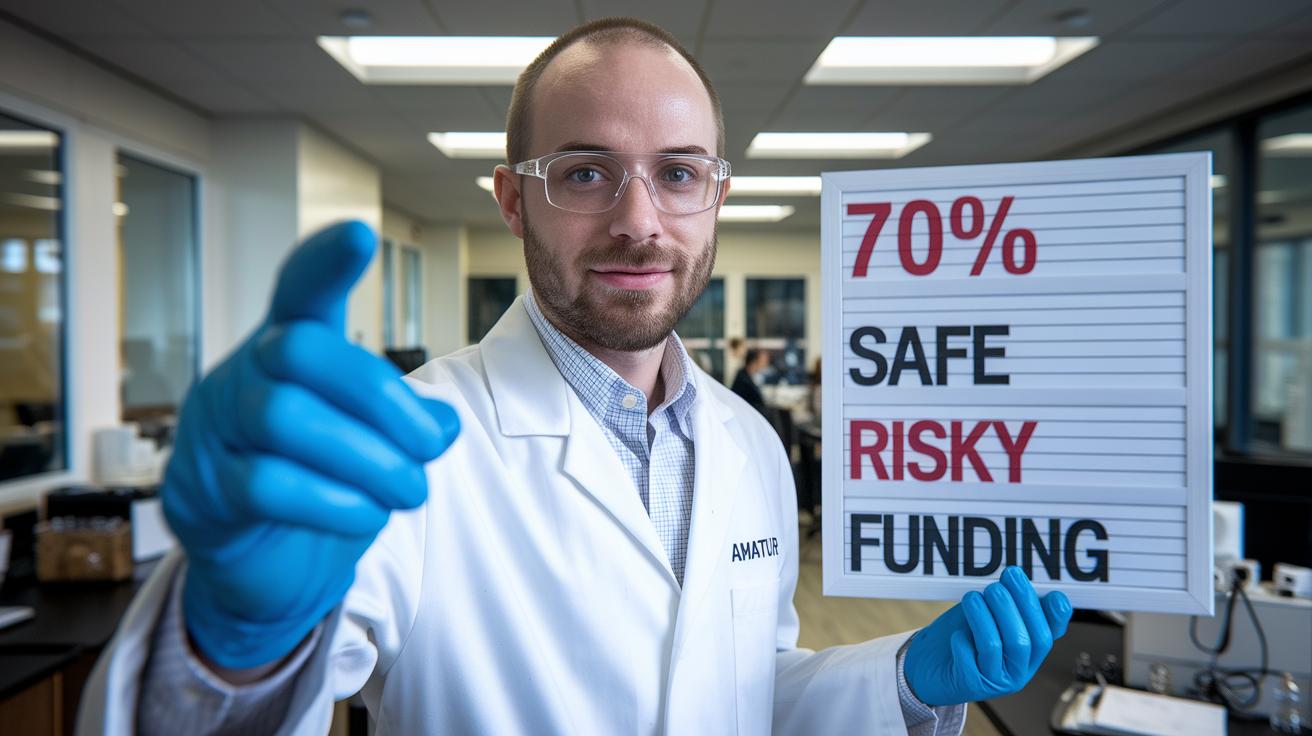
When it comes to funding, choices play a big role in how scientists plan their work. For instance, big groups like the NIH spend about 70% of their money on projects that test a clear idea and about 30% on wild, high-risk projects that could change everything. This setup lets researchers chase creative ideas while still keeping an eye on their main goals. Think about how, during the Manhattan Project, unexpected results in separating plutonium led to new centrifuge methods that we still use today.
Science isn’t always a straight path. One study showed that during the 1960s to 1980s, a burst of creative, unplanned work went along with a 25% jump in new patents from odd or surprising observations. It’s a reminder that not every new idea comes from a strict plan. A mix of careful research and leaving some room for surprises can really shift how we think about our work. Sometimes, little mistakes or unexpected results might just open the door to a whole new way of looking at things.
Strategies for Integrating Open-Ended Experiments
- Checkpoints for regular reviews
- Flexible steps when odd results show up
- Frequent look-backs at surprising data
Setting up a good plan means having clear steps while also being ready to change course when needed. By doing regular check-ins, researchers can tell the difference between normal outcomes and findings that hint at something new. This kind of balance helps teams welcome surprise data points, pushing the boundaries of research without losing sight of their main tests.
Serendipity in Science: Future Trends and the Next Wave of Breakthroughs
Today in labs, AI platforms are truly changing the game. They watch over data in real time and pick up on odd patterns, just like a clever friend who notices details others might miss. This helps scientists explore fresh ideas and new directions.
In a similar twist, gene-editing tools such as CRISPR (a tool that lets us change genes) are surprising researchers with unintended benefits. Sometimes, when these tools make off-target changes, they uncover hidden regulatory switches in our DNA. This unexpected find can pave the way for novel treatments, showing us that a little imperfection can lead to major breakthroughs.
Quantum computing is giving us more to marvel at too. Experiments that use random background noise to test error-correction codes have hinted at new ways to design algorithms. What might seem like a technical glitch can actually inspire smarter solutions and a deeper understanding of how computing works.
Looking forward, the next decade promises even more discoveries driven by chance. As technology keeps evolving and experts from different fields start working together, researchers are getting ready to embrace surprises that could completely reshape the tools we use in science.
Final Words
In the action, our exploration of unexpected scientific moments shows that chance can spark groundbreaking innovations. From Fleming’s penicillin to modern algorithms, accidental observations have pushed research forward. These unexpected discoveries reveal how different fields join efforts to set new standards. We hope this discussion inspires a deeper appreciation for serendipity in science: how chance leads to breakthroughs. Every unexpected moment proves that a little chance can lead to astonishing change, keeping scientific progress vibrant and full of promise.
FAQ
Q: What is an example of serendipity in science?
A: An example of serendipity in science is when Alexander Fleming observed mold stopping bacteria growth, leading to penicillin—a breakthrough that transformed medicine.
Q: How does serendipity play a role in scientific advancements?
A: Serendipity in research means that unexpected results can redirect studies, leading to breakthrough innovations and new applications that impact multiple scientific fields.
Q: What is meant by accidental discoveries or serendipitous discoveries in science?
A: Accidental discoveries occur when researchers observe unplanned, beneficial results—like the invention of Teflon—turning chance findings into meaningful scientific progress.
Q: What are some examples of serendipity in science and history?
A: Examples include Fleming’s penicillin, Plunkett’s polymer, Spencer’s microwave invention, and Fahlberg’s accidental sweetener discovery, all demonstrating how chance events have shaped progress.
Q: How do serendipitous events lead to breakthrough discoveries?
A: Serendipitous events prompt further inquiry from unexpected outcomes, leading scientists to explore new ideas and methods that can result in groundbreaking technological and medical innovations.