
Ever thought science might work like mixing ingredients in a recipe? Sometimes, researchers find that the old ideas just don’t fit anymore, so they take big leaps into the unknown. Thomas Kuhn showed us that science isn’t a straight path; it often involves shaking things up and starting over when clues pile up and nothing makes sense. This way of thinking reminds us that solving everyday puzzles can also mean looking at problems with fresh, unexpected ideas.
Understanding Kuhn’s Revolutionary Framework
Thomas Kuhn completely changed how we see science. When his book, The Structure of Scientific Revolutions, first came out in 1962 (and was updated in 1969), he showed us that science isn’t a straight, smooth path. Instead, scientists work inside big ideas called paradigms (widely accepted theories that guide everyday research). For example, did you know that before Marie Curie became world-famous, she carried test tubes of radioactive material in her pockets, not knowing the hidden dangers? It’s a reminder that even genius starts with unexpected beginnings.
Most of the time, scientists solve puzzles using these set rules. But sometimes, experiments give results that just don’t add up. We call these odd results anomalies (clues that don’t fit the norm). When enough of these anomalies pile up, it can push scientists into a sort of crisis because their usual ideas can’t explain what they’re seeing. In that moment, they look for a fresh, bold solution that changes everything, a revolutionary shift.
There’s another interesting idea Kuhn talks about called incommensurability (a big word that means sometimes different ideas can’t be compared easily). This shows us that science doesn’t just add new facts one by one. Instead, it often makes sudden leaps when the old ways can’t keep up with new findings.
By introducing words like paradigm, anomaly, crisis, and incommensurability, Kuhn invites us to see science not as a slow climb but as a series of big, brave leaps. His work still sparks lively discussions and makes us appreciate how exciting and ever-changing science can be.
Role of Normal Science in Paradigm Evolution

A scientist once noted that everyday observations, like the precise swing of a pendulum, contributed to a broader understanding of gravitational forces. Normal science is all about the regular research work that scientists do using a trusted set of rules. They rely on shared methods and classic ideas, like Newton’s laws of motion and gravity, to answer daily questions about how nature works.
Scientists collect evidence, test what they expect to see, and adjust their ideas about the natural world. They add small pieces to the larger puzzle until something unexpected happens that makes everyone rethink the old ways of understanding things.
From Anomalies to Crisis in Scientific Inquiry
Anomalies are like clues that just don’t fit the puzzle we expected. They appear when experiments give us results that stray from what our trusted models predicted. Scientists, even those working with well-known ideas, sometimes find data that simply won’t make sense. And slowly, these odd bits of evidence start to shake the very ground that supports our usual thinking.
For example:
| Example | Description |
|---|---|
| Phlogiston theory | The idea failed because it couldn’t explain why metals gain weight when they burn. |
| Geocentric model | This old view of the planets got muddled up when observations didn’t match the predictions. |
| Ether theories | Late-19th-century experiments showed results that went against what the theory of a mysterious “ether” suggested. |
When these unusual cases pile up, they create a kind of crisis. Scientists start to feel that their old methods just won’t cut it anymore. Next, they begin to question everything they thought they knew, opening the door to bold new ideas.
Landmark Paradigm Shifts and Historical Timeline

Paradigm shifts are key moments when our view of the world changes completely. In science, a great example is when experts moved from an Earth-centered model to a system with the sun at the center. This wasn’t just a small tweak, it completely changed how scientists asked and solved problems. It’s like finding a new way to solve a puzzle that makes the old solution seem outdated.
| Revolution | Previous Paradigm | New Paradigm | Year |
|---|---|---|---|
| Copernican Revolution | Ptolemaic astronomy | Heliocentric model | 1543 |
| Newtonian Mechanics | Aristotelian physics | Newtonian laws | 1687 |
| Oxygen Theory | Phlogiston concept | Oxygen-based combustion | Late 18th century |
| Relativity | Newtonian space-time | Einstein’s relativity | 1905–1915 |
• 1543 – Copernicus’s De revolutionibus
• 1687 – Newton’s Principia
• 1770s – Lavoisier’s oxygen research
• 1962 – Kuhn’s first edition of The Structure of Scientific Revolutions
• 1969 – Revised edition of Kuhn’s work
Each milestone shows how bold ideas can completely change science. When Copernicus argued that the sun, not Earth, sat at the center, many scientists had to start questioning everything they thought about space. Newton later showed that nature operates with clear, simple rules. Lavoisier’s work with oxygen turned old ideas about combustion on their head. And Kuhn reminded us that science isn’t just about adding up facts, it sometimes has to throw out old theories when they no longer fit what we observe.
These examples remind us that when surprising new evidence pops up, our thinking can flip in an instant. Old ideas break down, making space for fresh perspectives. As Kuhn explained, science is as much about rethinking the world as it is about gathering data. Each revolution gives us better answers and shows just how unpredictable our journey of discovery can be.
Incommensurability and Shifts in Epistemic Assumptions
Sometimes, science ideas seem hard to compare because each one uses its own language and set of rules. For example, Newton’s physics focuses on everyday events like watching an apple fall, while Einstein’s theories talk about ideas like time slowing down (time dilation) and space bending (curved space). Did you know that before classic physics was the norm, scientists didn’t even think space and time could be connected?
When old theories can’t explain new discoveries, researchers tweak the way they gather and interpret evidence. This change in thinking sparks fresh ideas and sets new standards for what counts as proof.
Scholarly Reception and Contemporary Debates on Paradigm Change
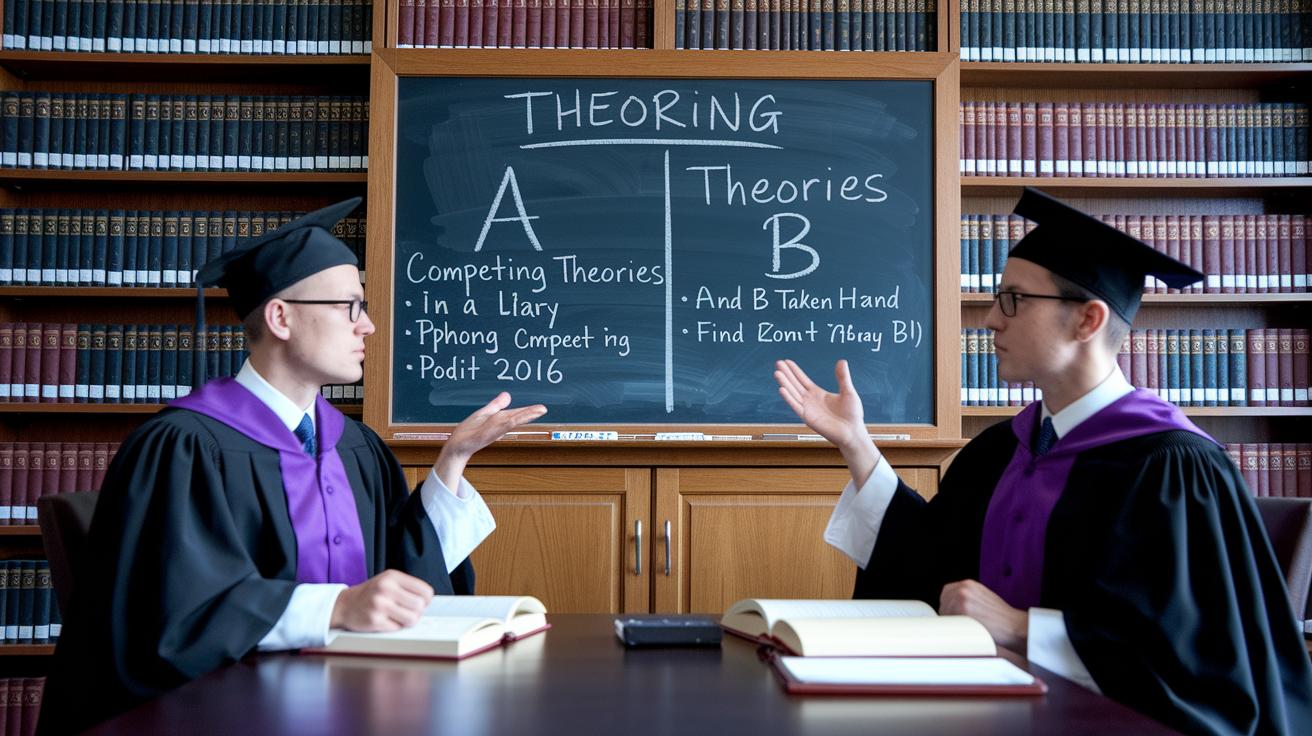
For about fifty years, the book The Structure of Scientific Revolutions has sparked many lively debates among scholars. Many folks appreciate its view of science as a series of big shifts instead of a slow, steady buildup of facts. Some critics, however, feel that the focus on social factors may give too much credit to outside influences. One scholar even said, "Science isn’t just about numbers and experiments; it’s about communities rethinking old ways." This reminds us that every idea is shaped by human experience.
Other researchers have issues with Kuhn’s idea of incommensurability (the thought that different scientific theories cannot be easily compared). They point out that it can be really hard to compare different scientific systems. This brings up an interesting question: Should we see scientific progress as a series of leaps instead of a smooth climb? In other words, are these shifts really radical or do they just stretch our current thinking in new ways?
Within academic circles, people still debate whether science moves forward by sudden bursts or gradual changes. Changing scientific ideas isn’t as simple as switching from old to new, it often involves negotiation, convincing others, and sometimes even heated discussions. As one scholar put it, "When evidence doesn’t add up, the rules have to change." This dynamic shows how ongoing discussions continue to shape our understanding of these exciting changes in science.
Final Words
In the action, we explored Kuhn’s revolutionary framework and watched how steady work under normal science shifts when persistent puzzles shake current ideas. We reviewed periods where small changes grew into major theory shifts and saw clear examples of the structure of scientific revolutions. Each phase shows us that science is alive and always changing. These fresh insights leave us inspired to keep asking questions and embracing each step that brings new clarity to our everyday understanding of science.
FAQ
What is The Structure of Scientific Revolutions according to Kuhn?
The Structure of Scientific Revolutions, according to Kuhn, explains that science moves from long stretches of routine work, called normal science, to phases of crisis that lead to transformative shifts in thinking.
Is The Structure of Scientific Revolutions worth reading?
The Structure of Scientific Revolutions is worth reading because it offers a fresh look at how science actually progresses, shifting our view from steady advancement to revolutionary leaps in thinking.
What is the structure of scientific evolution?
The structure of scientific evolution shows that science develops by following established methods until new data challenges current ideas, prompting shifts in understanding and leading to new frameworks.
What are the 5 characteristics of the Scientific Revolution?
The 5 characteristics of the Scientific Revolution include a focus on central paradigms, reliance on normal science practices, accumulating data that doesn’t fit current views, crisis periods before change, and shifts that can’t be compared by one standard.
Where can I find various editions and formats of The Structure of Scientific Revolutions?
Details on editions, such as the PDF, epub, 3rd, 4th, and 50th anniversary versions, along with citation formats and Amazon listings, are available through major academic resources and popular book retailers.
How does The Structure of Scientific Revolutions relate to works like The Logic of Scientific Discovery or On the Origin of Species?
The Structure of Scientific Revolutions highlights shifts in scientific thinking through paradigm changes, setting it apart from works that focus on specific empirical or theoretical contributions.