
Have you ever wondered if a really hot summer might come with a hidden benefit? Our climate in the United States is changing fast, as more CO2 (a gas that traps heat) pushes our weather into extreme territory. So, cities are trying out smart fixes like cooling centers and more green spaces to keep us safer even when the heat is intense. Although wild and unpredictable weather can make us feel uneasy, local efforts are lighting up a path to a brighter future. In this blog, we explore how creative steps can transform a harsh climate challenge into new opportunities for a safer, more comfortable life.
Climate Change in America: Overview of Impacts, Policy, and Science
Greenhouse gases (the gases that hold heat in our air) have risen a lot over time. Today, CO2 levels are 50% higher than they were before industry began. This extra CO2 stirs up weather that we aren’t used to. In America, we now see weather that doesn’t match natural cycles, and it makes both scientists and everyday people rethink how our actions shape the environment.
During the summer heat dome of 2025, over 255 million Americans faced days where temperatures hit triple digits with high humidity. It was like standing next to a roaring furnace. That kind of heat not only strains our bodies but also puts heavy stress on our power systems and health services, making daily life really challenging.
Local, state, and federal leaders are busy setting up plans to cut emissions and help communities get stronger. Opinions are split on climate policies, with 34% saying the rules boost the economy, 34% feeling they hurt it, and 30% believing they have little effect. Still, most people back ideas like tax credits for home energy improvements and rewards for capturing carbon. This strong support shows that many Americans are eager for smart, innovative solutions to these serious issues.
Climate change in america: Sunny Outlook

Local leaders across the country are stepping up to tackle extreme heat. In places like Phoenix, officials have rethought how they handle hot days. They’ve built new cooling centers and added more green spaces, which can lower the temperature by around 3°F. Imagine being in a spot where a cooling center brings down the heat during a sizzling surge!
In New York and California, communities are also taking action. They’ve introduced heat emergency plans that cut down the local risk by about 15% over recent years. By teaming up with clean energy projects and better public services, these policies show how local efforts can keep people safer when the mercury rises.
Regional Effects of Climate Change Across U.S. Regions
Climate change in America brings warmer days that feel different depending on where you live. In Florida Keys, the oceans got so hot they hit 101.1°F on July 24, 2023. This heat stressed out the coral, especially staghorn and elkhorn types, making them bleach, which is like losing their natural color and life energy.
Over in the Midwest, extreme heat turned dangerous. In June 2025, a heat advisory in St. Ann, Missouri cost a life and proved that no place is off limits when it comes to climate impacts. Then, in the agricultural heartland, tough weather has hurt crops on 62% of U.S. farmland, slashing annual earnings by an estimated $720 million.
Even our roads and bridges aren’t safe. Warmer temperatures could bump up maintenance costs by $19 billion to $26.3 billion over the next twenty years, putting extra strain on our infrastructure.
Below are some of the key effects we’re seeing across the country:
- Marine heat in the Florida Keys leading to coral bleaching
- Extreme heat in the Midwest, like the fatal event in St. Ann, Missouri
- Big revenue losses for farmers, especially in the Corn Belt
- Rising costs for fixing roads and bridges nationwide
These changes show why it’s important to learn about each region’s challenges and come up with plans that work best for them. By understanding the details, experts can create smarter, focused ways to handle these climate problems right where they matter most.
U.S. Climate Policy and Legislative Responses to Climate Change

Across the United States, more and more people are urging our leaders to take immediate steps to fight climate change. Recent surveys show that 83% of Americans support giving tax credits to help make homes more energy efficient, and 79% back incentives for companies to develop ways to capture carbon (tiny pieces of carbon dioxide released when we burn fossil fuels). Meanwhile, 69% believe that big companies aren’t doing enough to slow down warming. These numbers show a growing worry about the real harm of climate change and a strong push for policies that help protect people from severe weather.
| Policy Measure | Public Support | Level | Goal |
|---|---|---|---|
| Home Energy Efficiency Credits | 83% | Federal | Emissions Reduction |
| Carbon Capture Incentives | 79% | Federal | Greenhouse Gas Accountability |
| Corporate Emissions Accountability | 69% | State/Local | Environmental Justice |
| Resilience Infrastructure Funding | – | State/Local | Climate Adaptation |
Lawmakers at the federal, state, and local levels are busy turning these ideas into action. They’re introducing plans meant to cut down on harmful emissions while making it easier for communities to handle extreme weather. These policies aim to tackle issues like power outages, hospital overcrowding, and interruptions in public services during bad weather. Sure, there are still political hurdles and funding challenges, but there’s a clear push from our leaders toward a cleaner and safer future for everyone.
Economic and Social Impacts of Climate Change in America
When the weather heats up, it isn’t just the temperature that climbs – so do our costs. Every year, extreme heat drives up health care bills by about $1 billion and takes a toll on work productivity to the tune of $100 billion, with projections reaching $500 billion by 2050. Imagine an outdoor worker forced to take more breaks under the relentless sun; even a slight pause means lost wages and extra strain on family finances, not to mention the ripple effects on our entire economy. These added expenses even squeeze public budgets, meaning less money for other key services.
Extreme heat also wears down our everyday structures like roads, bridges, and railways. As the mercury rises, we could end up spending an extra $19 to $26.3 billion on repairs over the next twenty years. Think of it like a machine that routinely overheats every summer, forcing us to repair it again and again while delaying other improvements. Local governments are left juggling urgent fixes with long-term development, so investing in tougher, weather-resistant infrastructure is crucial for keeping our communities strong when times get hot.
The effects of climate change are not felt equally by everyone. Low-income families, Black and Brown communities, older adults, children, and people with disabilities bear the brunt during extreme heat events. With fewer resources like cooling centers and limited access to vital medical care, each degree of warming hits harder. It reminds us that fairness must be a priority. Policymakers need to provide targeted support to help safeguard these communities because every bit of help today can save lives tomorrow.
Adaptation and Resilience Strategies for Climate Change in American Communities
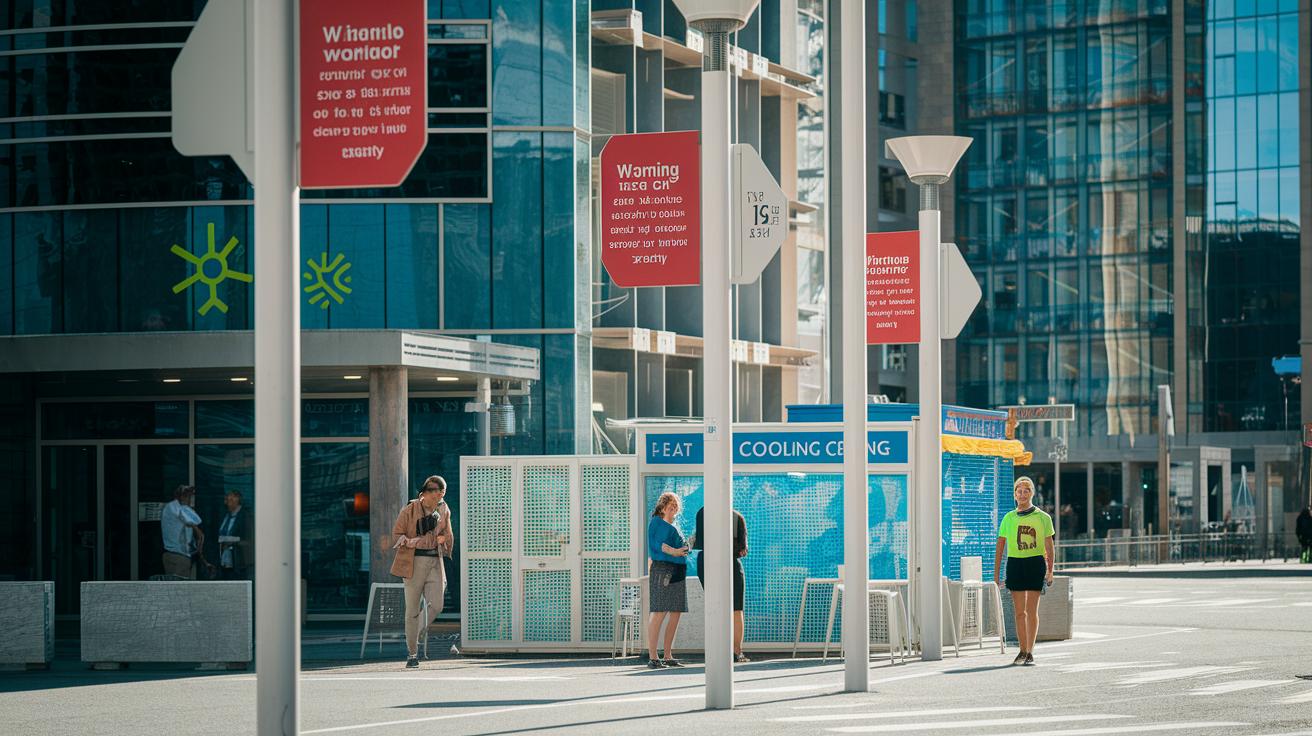
Cities across America are using heat-warning systems and cooling centers to help people stay safe when temperatures spike. Some places even use interactive mobile alerts that show nearby cooling centers using live data. For example, in Austin, a smart alert system quickly guided thousands to a nearby cooling center during a sudden heat surge. This mix of traditional fixes and new technology helps reach more people fast.
Utility companies are also stepping up by adding smart sensors to their grids and using renewable energy (clean energy from natural sources like the sun or wind) to handle higher temperatures. They’re even applying reflective coatings on roads to keep them cooler. In Honolulu, a project with reflective road surfaces has kept streets safer under intense heat. Federal, state, and local teams are partnering with tech experts to test sensor-based energy systems and adaptive traffic signals so emergency services can respond in real time. In Connecticut, one monitoring system adjusted traffic signals during peak heat, which cut emergency response times significantly.
Future Projections and Mitigation Approaches for Climate Change in America
Major cities could face some tough challenges soon. By the 2090s, experts say that urban areas might experience as many as 28,000 extra heat-related deaths per year. Coastal regions could become hard to live in when rising seas start changing everyday life, forcing entire neighborhoods to move. It really makes you think about how urgent it is to take action now to protect our communities and health.
On a brighter note, there’s hope with renewable energy and decarbonization (that means cutting down on harmful gases from industries and cars). Current trends suggest that we could reduce U.S. emissions by 50% by 2035. Just imagine millions of homes powered by clean energy from solar panels and wind turbines, it’s a clear sign that technology can reshape our energy systems. For more ideas on how to reduce emissions, check out this article on how to stop climate change.
Across the nation, several states are boosting their investments in clean energy and updating power grids to meet future needs. They are working on smarter power networks that adjust on the fly when energy use spikes, and they’re adding more renewable sources into the mix. Yet, some gaps in policy might hold back these advances. Filling those gaps gives lawmakers a great chance to support a smooth shift to cleaner energy, helping us face the challenges of a warming world with confidence.
Final Words
In the action, we witnessed how rising temperatures, shifting weather patterns, and economic pressures combine to shape climate change in america. Policy responses are paving new pathways for emission cuts and community resilience. Adaptation efforts, like improved grid systems and cooling centers in cities, show us that change is possible. New scientific forecasts remind us that every step toward cleaner energy helps. With determination and fresh research, our future looks brighter and more sustainable.
FAQ
What does climate change in America today mean?
Climate change in America today means rising temperatures, extreme weather, and high CO₂ levels compared to pre-industrial times. Recent reports from 2022 and 2024 show significant impacts on weather and public health.
How is the U.S. taking action with climate change?
U.S. climate change action involves measures like tax credits for home energy efficiency and carbon capture incentives. Lawmakers at all levels work to lower emissions and boost community resilience against extreme weather.
What are 10 effects of climate change observed in studies?
The 10 noted effects include extreme heat events, severe weather, increased health care costs, higher heat-related fatalities, agricultural losses, infrastructure strain, rising sea levels, economic burdens, regional impacts, and more challenges for vulnerable communities.
What will the U.S. climate be like in 2050?
Projections for 2050 indicate a warmer climate with more frequent extreme heat events, coastal risks from rising sea levels, and increased public health challenges, putting further stress on communities and infrastructure.
Which U.S. states might be less affected by climate change?
Some U.S. states with cooler climates and strong resilience measures could fare better against climate impacts, though overall risks remain high. Regional studies show that vulnerabilities can differ widely across states.
What will happen if the 2030 climate change deadline isn’t met?
Missing the 2030 target could lead to more severe health care expenses, higher mortality from heat, increased extreme weather events, and larger economic and infrastructure costs, intensifying the stress on communities.
What has Bill Gates said about climate change?
Bill Gates has emphasized that climate change is an urgent challenge, urging innovation in renewable energy and carbon capture, and highlighting the need for effective policies to lower emissions and mitigate warming risks.