
Could new science breakthroughs change the way we learn? Picture a classroom where smart labs let you watch tiny atoms (the smallest parts of matter) come together, and digital lessons turn dull textbooks into lively adventures. It's like having a mini-lab right in the room!
In this article, we dive into how these cool innovations are making learning more hands-on and fun. They’re sparking curiosity and changing old lessons, making students excited for a future full of promise.
How Science Breakthroughs are Transforming Education Today
Interactive virtual labs let students dive into the world of atoms and physics safely and at a more affordable cost. In these digital labs, learners see atoms joining together and molecules forming in real time. For example, you might explore a simulation of a volcano erupting without any danger or messy cleanup.
Online resources and educational apps now offer quality learning materials that reach far and wide. Videos, articles, and interactive exercises cover subjects from studying the deep blue ocean to exploring faraway galaxies. Digital textbooks have come alive with animations, colorful simulations, and dynamic models that make old paper pages feel a lot less exciting.
Educational games and the concept of gamification turn tricky ideas into fun challenges. These methods spark a love for science by inviting students to solve puzzles and complete missions that build real skills. Video calls and virtual guest speakers also bring helpful, hands-on advice from true experts right into the classroom.
Studies show that even though 82% of Gen Z kids value STEM classes, only about one third take part in core science subjects. This gap shows why new ways of learning are so important. At the same time, experts predict that jobs in science will steadily grow over the next decade, pushing schools to embrace tech-friendly education even more.
For more on the latest science breakthroughs that are changing the way we learn, check out additional insights here: https://buzzyandclever.com?p=1640
Augmented and Virtual Science Breakthroughs Enhancing Classroom Experiences

Augmented reality (AR) and virtual reality (VR) are changing how students explore science. With these tools, learners can interact with 3D models that let them literally see and even "touch" things like a cell or a robot design in a digital world. Imagine a student spinning a virtual cell model and checking every part, just like fitting together a puzzle.
These digital simulations also let students experiment with chemical reactions or physics ideas in a safe space. This means they can learn without the risks found in a real lab, and schools can save money by not needing as many physical materials.
Teachers can guide students by setting clear learning goals and offering helpful tips, making it easy to mix these technologies into everyday lessons. Studies show that using these immersive experiences can help students remember what they learn a lot better, up to 30% more, and even spark a deeper love for STEM subjects.
For instance, a teacher might explain, "With AR, it's like holding a molecule in your hand and exploring its tiny details." This common approach shows just how powerful these new tech tools can be in bringing science lessons to life.
AI-driven Science Breakthroughs in Pedagogical Practices
Imagine being in a class where a smart system works like a friendly tutor. It adjusts lessons to match your learning speed and style, stepping in when a tricky problem like algebra gives you trouble.
AI tools are now stepping in to help teachers by handling boring tasks. They automatically update course material and even create interactive exercises that keep lessons fresh. For example, a math module might refresh with new problem sets, so you’re always seeing up-to-date examples.
Ever wished for instant help on a science problem? Chatbots and virtual tutors are ready to jump in, offering clear, step-by-step guidance the moment you need it. This type of real-time feedback can clear up confusion as soon as it happens.
Many teachers are seeing improvements after using these AI tools. Some have reported a jump in assessment scores by about 20% in just six months. One teacher even said it’s like having a personal helper for every student, making learning feel more personalized and effective.
In simple terms, AI is turning regular lessons into dynamic, interactive sessions that really help you understand and remember what you learn. With more schools adopting this technology, the way subjects are taught and experienced is changing every day.
Data-Driven Science Breakthroughs Shaping Adaptive Learning Systems

Teachers and students are now using smart tools that help improve learning right when it happens. These platforms watch everything in class, from how involved you are in a lesson to quiz scores and time spent on tasks, so that teachers can spot any struggles before they become big problems.
Adaptive engines take this data and change the lesson's difficulty as you work through it. It’s like starting with an easy math problem that slowly becomes more challenging based on how well you're doing. Sometimes, these systems even shuffle the order of activities so every student gets just the right practice at the right moment.
In a few pilot schools, using this data-driven approach has cut achievement gaps by 30%. That means students who were at risk of falling behind are now catching up. Teachers get clear trends through dashboards, making it easier to see what the class needs and give tailored support.
With these smart systems in place, personalizing learning isn’t just an idea, it’s a real part of the classroom. Students can learn at their own pace while teachers help balance differences in achievement, paving the way for a more equal and effective learning experience for everyone.
STEM Innovation Research and Interdisciplinary Science Breakthroughs in Education
Colleges are teaming up with schools to bring today’s science into everyday lessons. They mix in the latest research, like gene editing (tiny tweaks to a cell’s DNA) and renewable energy, to spark student interest. Imagine a teacher saying, "Let’s explore the science behind wind turbines and solar panels", suddenly, high-level studies turn into experiments you can relate to.
Another cool trend is blending different subjects in the lab. In these classes, students work together on projects that mix biology, coding, and engineering. It’s like putting together a puzzle: each field adds a piece until you see the full picture of modern technology. For example, building sensors to monitor air quality lets you see firsthand how science and tech work side by side.
Research shows that these mixed lessons can boost problem-solving skills by up to 40%! When you look at challenges from different points of view, you build confidence and learn to think quickly. Teachers are amazed at how tying subjects together makes learning more engaging and clear.
Now, lesson plans are built around real scientific studies. Using fresh research in daily classes shows how academic work influences everyday choices. This approach keeps lessons current and gives you practical skills, so students are ready to jump into the exciting future of STEM.
Next-Gen Science Breakthroughs and Future Learning Strategies
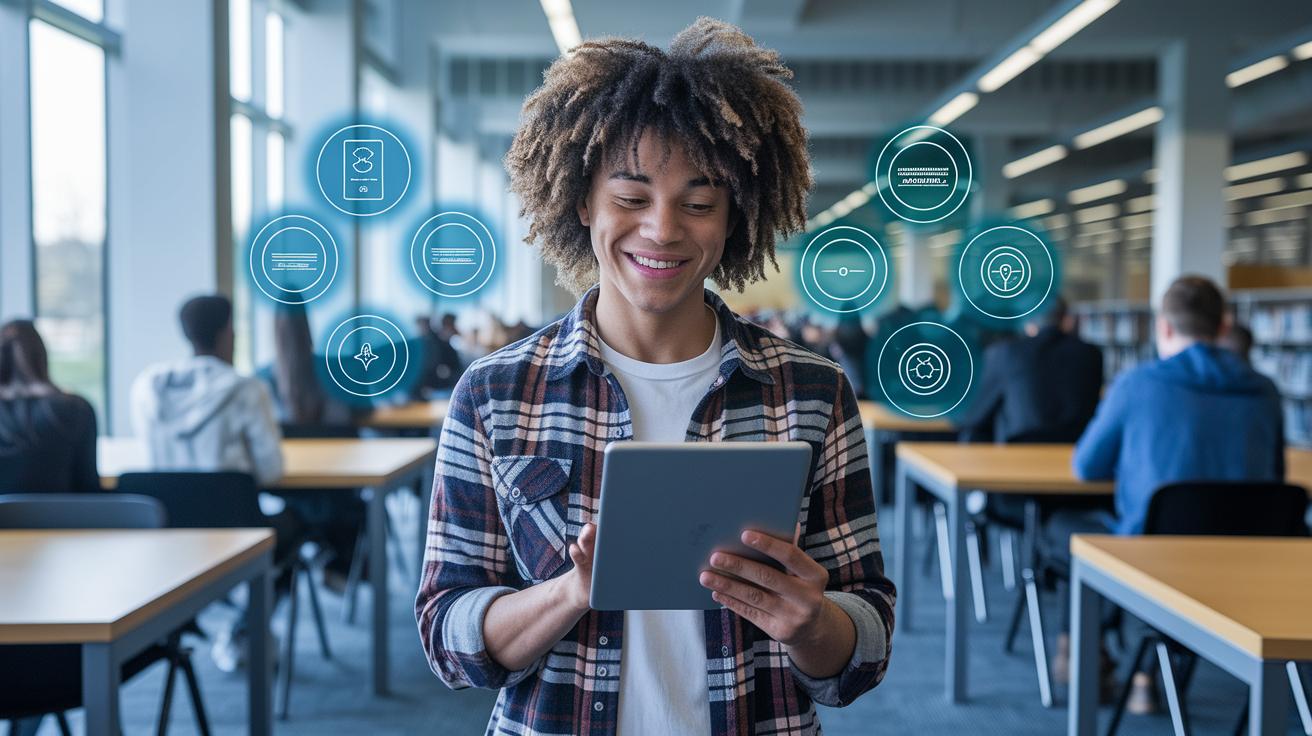
Experts say microcredentials and digital badges might soon be the go-to way to show what skills you have. These new tools let people gather proof of what they've learned without needing old-style transcripts. Plus, with hybrid-flexible science labs set to grow by 2025, students will get to try out real experiments in a safe online space that adjusts for different needs.
Because of blockchain-secured academic records (a secure online ledger), it will be nearly impossible to tamper with credentials. This gives both students and teachers more trust in their hard-earned accomplishments. Meanwhile, social learning platforms are creating a way for students to work together from anywhere, sharing ideas and teaming up on projects. And as more tech tools come out, schools need to beef up cybersecurity to keep sensitive information safe.
Some experts predict that around ten key education technology innovations will change the way science is taught by 2025. If you're curious to learn more, check out science breakthroughs 2025. Amid these exciting changes, teachers have to find smart ways to blend new tools into the classroom to better support student learning.
Final Words
In the action, we saw how interactive labs, immersive virtual tools, and AI-guided lessons are reshaping how we learn. The post walked through digital textbooks, engaging simulations, and smart data feedback that simplify complex topics. It’s clear that science breakthroughs transforming education are not only boosting knowledge but also sparking genuine curiosity. The advancements discussed open new paths for both teachers and students, promising a future filled with accessible, enriching experiences and continuous learning opportunities.
FAQ
What does the science breakthroughs transforming education PDF show?
The science breakthroughs transforming education PDF outlines how digital tools and scientific methods are used in classrooms, featuring interactive virtual labs, digital textbooks, and adaptive techniques that boost learning and teaching.
What did science breakthroughs in education 2020 change?
The breakthroughs in 2020 marked a shift where digital innovations like virtual labs and adaptive technologies started reshaping learning, offering safer, more engaging alternatives to traditional classroom methods.
How does overreliance on technology affect education?
Overreliance on technology in education highlights concerns that too much digital focus may reduce face-to-face interactions and hands-on experiences, which are crucial for developing problem-solving and social skills.
What role does technology play in teaching and learning?
Technology in education drives interactive lessons using digital textbooks, virtual simulations, and real-time feedback, making learning more engaging and accommodating each student’s unique pace.
How has technology evolved and impacted education over time?
Technology has evolved to transform education through dynamic digital platforms, augmented reality models, AI personalization, and data insights, continuously reshaping classroom experiences and instructional methods.

Categories:
Hot right now:
Company:
Follow on:
We participate in marketing programs, our content is not influenced by any commissions. To find out more, please visit our Term and Conditions page.