
Have you ever wondered if the comforts we enjoy every day hide stories of unexpected genius? Sometimes a small mistake or a casual remark sparked inventions that still shape our world. Curious minds made quiet breakthroughs that built modern science without any big fuss. Today, those little discoveries continue to guide our latest technology and medicine, even as research grows more and more complicated. In this article, we look at how a mix of chance and persistence has paved the way for major innovations we rely on every day.
How Unsung Scientific Discoveries in History Laid Foundations for Modern Science
Everyday comforts we enjoy are often built on quiet, unplanned scientific discoveries. Breakthroughs like penicillin from 1928, the microwave oven discovered in 1945, and the Post-it Note introduced in 1968 all started as unexpected results from hard work in the lab. These cases remind us that many of the things we take for granted began as little accidents during research.
Today, around 1,000 research universities and institutes around the world – including about 200 in India – produce millions of papers every year. This steady flow of work builds on earlier discoveries, laying the groundwork that continues to shape technology and medicine. It’s fascinating to think that small, almost unnoticed findings have grown into major innovations.
Researchers now face tough deadlines, strict funding pressures, and high expectations in competitive settings. In the past, however, curiosity and hands-on experiments were the main drivers of discovery. That mix of chance findings and persistence led to breakthroughs that still influence how we live today. Sometimes, experiments that looked unimportant at first have later sparked whole new industries and changed everyday life.
- They often started as unplanned lab work that turned into something transformative.
- Step-by-step trial and error opened the door to big breakthroughs, showing the value of persistence.
- They have reshaped various fields, from medicine to technology, through practical applications.
- Their impact still shows in everyday products and systems.
- They prove that even small research efforts can spur major progress in science.
Ancient Empirical Explorations: Early Hidden Scientific Discoveries
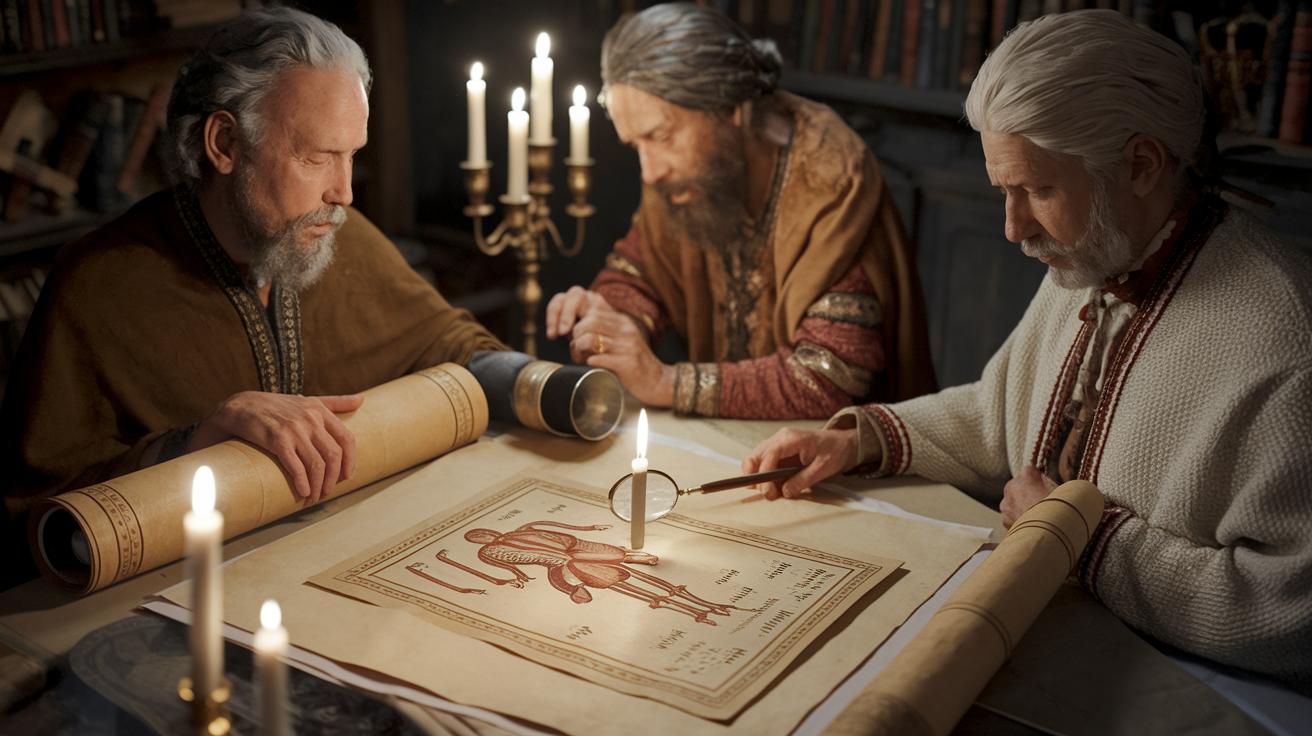
Long ago, curious minds watched nature with great care. Even when later tales downplayed their work, these early scientists laid the groundwork for modern science.
Galen, working in the 2nd century, carefully studied the human body. His dissections (cutting bodies apart to learn about them) guided medical teaching for more than 1,200 years. Even though some of his ideas were later corrected, his work shows how careful observation can change medicine.
Sushruta, a 6th-century scholar in India, wrote about surgical techniques. He described methods for removing cataracts (cloudy spots in the eyes) and doing rhinoplasty (nose reshaping). His writings prove that early practitioners could be both precise and thoughtful in treating injuries and illnesses.
In Han-dynasty China, Zhang Heng invented a seismoscope in 132 AD to show which way an earthquake came. And way back in the 5th century BCE, Mayan astronomers tracked the cycles of Venus. These stories remind us how ancient experts paid close attention to the human body and the world around them, opening the door to future scientific breakthroughs.
Medieval Invention Curiosities: Unsung Breakthroughs of the Middle Ages
Medieval scholars were real trailblazers who loved getting their hands dirty with experiments. They worked with simple tools and made discoveries that still shape our world today. Even without fancy theories, their practical tinkering shows us that even small experiments can spark big changes.
Back in the 1100s, alchemists improved the art of distillation. They created basic devices that boiled liquids and captured the vapor to purify substances. This simple method solved everyday problems and even helped set up the lab techniques we still use in modern chemistry. It was a real game changer.
In the 1200s, Roger Bacon played around with optical lenses that acted like early telescope parts, nearly 300 years before telescopes became a thing. By experimenting with these lenses, he could make faraway objects appear closer and hinted at the wonders of the cosmos. His hands-on approach paved the way for the brilliant scientific tools we have now.
Around 1300, inventors developed water-powered clocks that helped keep daily routines on track, even in busy medieval hospitals. Their steady tick brought a new order to everyday life. And way back around 1180, marine compasses gave explorers the confidence to navigate unknown seas. These clever innovations show how practical experiments slowly turned everyday life into a more orderly and connected world.
Serendipitous Lab Findings: Notable Accidental Scientific Discoveries
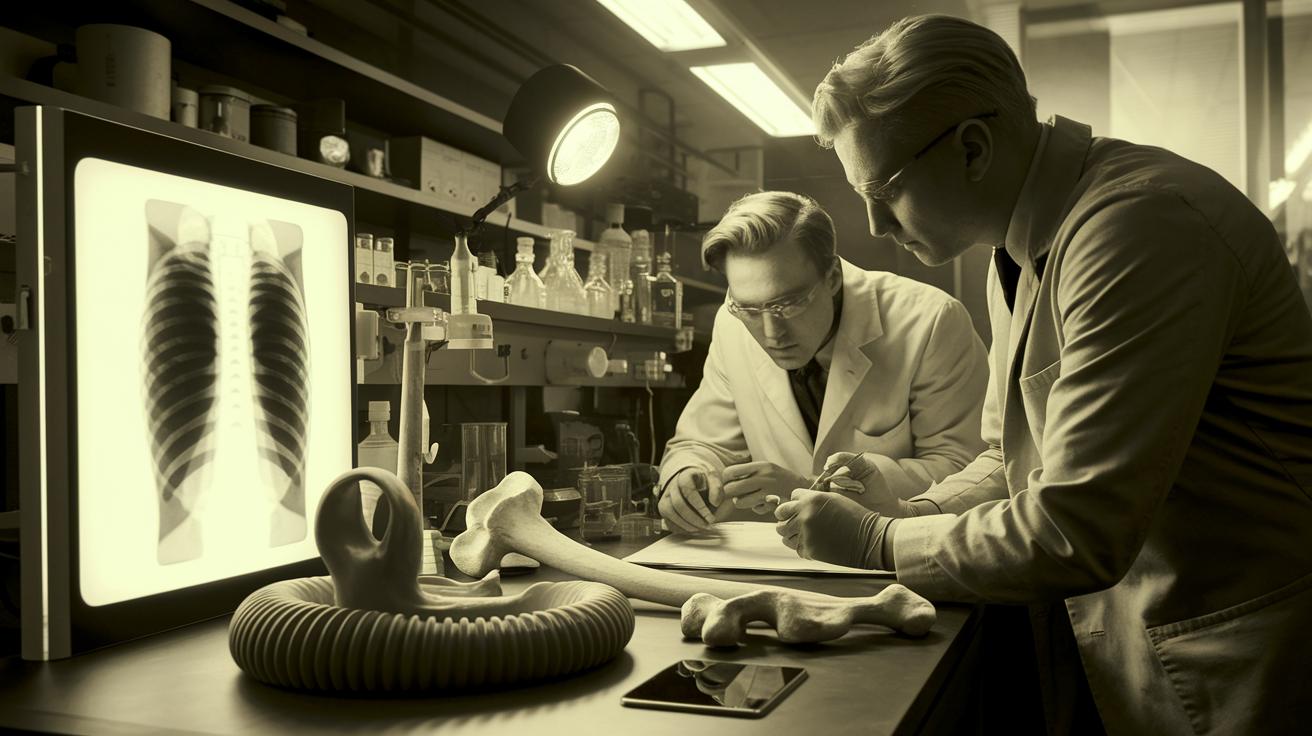
Accidental discoveries have played a big role in science. We often hear about penicillin, the microwave oven, and the Post-it Note, but there are other surprises too, like X-rays (a method to see inside the body) and vulcanized rubber. Imagine a mix-up in the lab that not only gives us a way to look at bones but also creates a tough material that changed our everyday lives.
| Discovery | Year | Inventor | Impact |
|---|---|---|---|
| Penicillin | 1928 | Alexander Fleming | Changed medicine with antibiotics |
| Microwave oven | 1945 | Percy Spencer | Revolutionized cooking |
| Post-it Note | 1968 | Spencer Silver/Art Fry | Became a must-have office tool |
| X-rays | 1895 | Wilhelm Röntgen | Opened up new ways to see inside the body |
| Vulcanized rubber | 1839 | Charles Goodyear | Led to the creation of durable materials |
These chance events show us that mistakes in the lab can lead to breakthroughs that change how we live every day.
Underappreciated Inventor Narratives: Forgotten Innovators and Their Discoveries
Lise Meitner changed how we see the atom. Even when times were tough and competition was fierce, she helped uncover nuclear fission (the process where an atom splits apart) in 1938. This discovery opened doors for nuclear science and energy. Her work was so important that element 109 was named Meitnerium in 1997. Imagine shaking up science when most believed you couldn’t overcome the odds!
Mary Anning had an eye for hidden treasures in ancient rocks. In 1811, she found the first complete ichthyosaur (a marine reptile with fish-like features), laying the groundwork for what we now call paleontology. Even though she faced many social barriers, her finds gave scientists a window into prehistoric life. Her story shows that passion and persistence can change our understanding of the world.
Satyendra Nath Bose brought fresh ideas to quantum theory with his 1924 work. He introduced Bose-Einstein statistics (a method to describe the behavior of tiny particles) which later led to the discovery of bosons (a kind of subatomic particle). His innovative thinking continues to influence modern physics by showing that a simple idea can spark entirely new fields of study.
Alice Augusta Ball developed a breakthrough treatment for leprosy. In 1915, she created an injectable method that eased the suffering of many people, with her contribution officially recognized in 1922. Her dedication reminds us that steady, focused innovation can improve lives, even when it takes time for the world to notice.
Chien-Shiung Wu changed the game in particle physics with her experiments in 1956 that showed parity violation (the idea that some processes are not the same when mirrored). Her careful work challenged old ideas and broadened what scientists know about the Standard Model (the theory explaining the basic building blocks of matter). Her journey proves that underrecognized talent can lead to groundbreaking advances in science.
Disregarded Experimental Advances: Covert Laboratory Breakthroughs in Methodology

In science, the biggest shifts sometimes start with quiet, almost unnoticed experiments that don’t make the headlines. Many breakthroughs began as curious, off-the-beaten-path tests that completely changed how we do research. It’s amazing how one clever observation can flip our understanding of the natural world. For example, think about how a single slip in measuring something can shift an entire research field.
James Hutton’s careful field work in 1785 led him to propose that slow, steady natural changes shape our planet over time. Imagine standing in a peaceful valley, where each rock tells a story of gradual change. This simple idea ended up redrawing the whole map of Earth science.
Then in 1818, Augustin-Jean Fresnel used prisms in his experiments to show that light moves in waves. Picture shining sunlight through a small glass piece and suddenly seeing a burst of hidden colors. His work quietly unlocked the mystery of how light bends and spreads.
In 1963, G.N. Ramachandran came up with a simple but powerful graph, a tool that still helps scientists today in understanding protein structures (the folding shapes that make up the building blocks of life). Think of it like a neatly drawn map that shows the twists and turns of life’s most important molecules.
And in 1952, Rosalind Franklin’s famous Photo 51 gave us our first clear look at the structure of DNA. Imagine a sharp, detailed snapshot that revealed the pattern of the double helix, changing the way we saw biology forever.
Contemporary Lessons from Archived Studies: Impact of Neglected Scientific Discoveries
Looking through old studies can teach us important lessons today. Hidden records, forgotten blueprints, and old lab diaries remind us that even tiny details from the past can spark fresh ideas. These archived materials give practical tips that help scientists update old methods to tackle modern challenges in technology, medicine, and energy.
For example, lost lab diaries from the Fiske Reading Machine in 1922 have helped shape today’s assistive technology (devices that aid usability). Researchers found detailed sketches and notes that, when revisited, sparked new ways to improve user interfaces and accessibility tools. It’s amazing how revisiting overlooked experiments can lead to big breakthroughs.
Engineers are also finding inspiration in the past. They’re using old blueprints of the Helio Motor from 1900 to guide research in concentrated solar power by combining old ideas with today’s materials. Plus, rediscovered antibiotic research notebooks have revealed new chemical paths, offering fresh hope for modern drug development. These examples show that exploring buried records can light the way to surprising innovations.
Final Words
In the action, we examined how hidden lab work, from ancient anatomical studies to accidental modern breakthroughs, influenced our everyday innovations. The blog shed light on forgotten innovation milestones and underrecognized inventor narratives, showing that even small contributions can carry big effects today.
Every piece of history reminds us that unsung scientific discoveries in history often reveal powerful lessons and lasting impacts on our daily lives.
• Unique insights
• Silent innovation
• Steady progress
• Unexpected turns
• Lasting influence
FAQ
Q: What are the unsung scientific discoveries in history?
A: The question about unsung scientific discoveries highlights how overlooked breakthroughs, like the creation of penicillin and the microwave oven, have laid the base for modern technology and everyday innovations.
Q: Who are some unknown scientists that changed the world?
A: The inquiry into unknown scientists reveals figures such as Rosalind Franklin, Lise Meitner, Mary Anning, and Alice Augusta Ball, whose important work quietly reshaped fields like biology, physics, and medicine.
Q: What is known about Rosalind Franklin’s contributions?
A: The discussion of Rosalind Franklin’s contributions focuses on her use of X-ray diffraction, particularly Photo 51, which played a key role in understanding the structure of DNA and propelled molecular biology forward.
Q: Which scientific discoveries were initially rejected?
A: The mention of initially rejected scientific discoveries refers to ideas that were once met with skepticism but later became essential, such as early insights in antibiotics and imaging techniques that transformed medical science.
Q: Who are the underrepresented scientists in history?
A: The look into underrepresented scientists points to innovators like Rosalind Franklin, Lise Meitner, Mary Anning, and Alice Augusta Ball, whose crucial work in various fields laid important foundations even without broad recognition.
Q: What are some great scientists and their inventions?
A: The question regarding great scientists and their inventions highlights figures like Alexander Fleming, Percy Spencer, and Charles Goodyear, whose breakthroughs led to penicillin, the microwave oven, and vulcanized rubber, respectively.
Q: Who are the unknown female scientists who changed the world?
A: The query about unknown female scientists reveals trailblazers such as Rosalind Franklin and Alice Augusta Ball, whose research had a lasting impact on genetics and medicine, despite not always receiving proper credit.
Q: Who are considered the best scientists in the world?
A: The discussion on the best scientists often includes innovators like Rosalind Franklin, Alexander Fleming, and other trailblazers who made groundbreaking contributions that continue to influence modern science.
Q: What are the top 10 scientific discoveries of all time?
A: The question regarding the top 10 scientific discoveries points to milestones like penicillin, the microwave oven, X-rays, and vulcanized rubber, alongside seminal insights in DNA, optics, and materials that have defined technological progress.
Q: What is the biggest unsolved mystery in science?
A: The biggest unsolved mystery in science is often considered to be the nature of dark matter and dark energy, phenomena that continue to puzzle researchers as they strive to better understand our universe.
Q: Who is the most underrated scientist of all time?
A: The exploration of the most underrated scientist often highlights figures such as Rosalind Franklin or Mary Anning, whose groundbreaking work made significant contributions while gaining less mainstream fame than other celebrated scientists.
Q: What is the most unbelievable science fact?
A: The question about the most unbelievable science fact draws attention to the idea that everyday items like post-it notes and microwave ovens originated from chance experiments and lab research, fundamentally changing how we live today.