
Have you ever wondered how our Earth emerged from chaos? In the beginning, huge space crashes set everything in motion like an intense cosmic car crash. Imagine a swirling mix of gas and dust crashing together, slowly forming our planet piece by piece. These powerful events set the stage for the home we know today. In this post, we'll explore the steps of Earth's formation and share the incredible story of how our world came to be.
How Earth Was Made: A Scientific Overview
Earth came together roughly 4.54 billion years ago through more than 10 powerful collisions. In the early days of our solar system, huge impacts reshaped our planet in just 100 million years. Imagine a cosmic car crash where giant objects collide, adding chunks of material and bursts of energy that slowly build a new planet. Each big hit set the stage for the geological events that would later define Earth.
At first, a cloud of gas and dust, known as the solar nebula, collapsed into a spinning disk. In this swirling mix, tiny particles of dust and ice began to stick together, forming small bodies called planetesimals (the early building blocks of planets). Through a process called gravitational accretion (where gravity pulls things together), these planetesimals merged, gradually building the protoplanet we now call Earth. Think of it like snowballs rolling downhill, gathering more and more snow, a simple, yet powerful way to form something extraordinary.
Over time, more giant impacts and a constant shower of micrometeorites added even more material to Earth. Imagine a light drizzle of space rocks falling every day, each one helping to shape the planet’s structure. These continuous additions not only made Earth larger but also played a key role in creating its diverse layers and chemical mix. It’s a dynamic process that eventually made our planet just the right place to support life.
Nebular Hypothesis: Earth's Early Accretion Processes
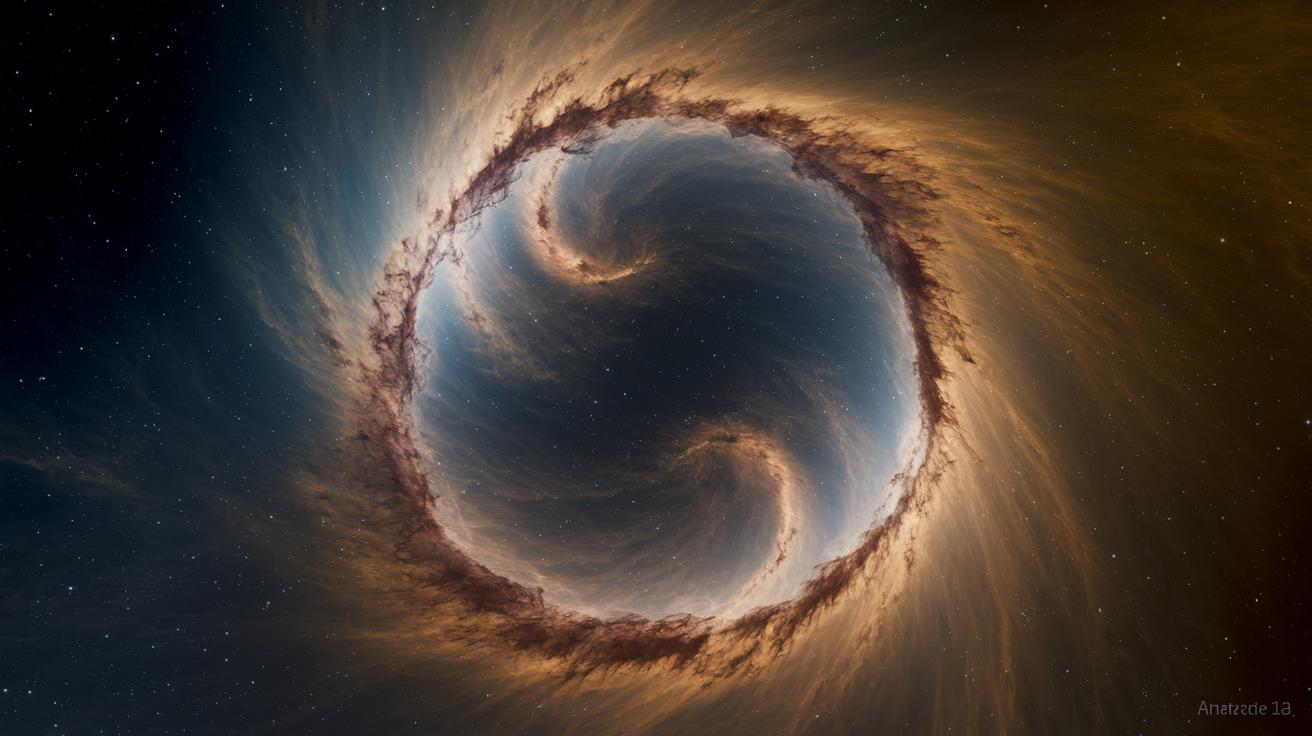
Earth began its journey from a big mix of swirling gas and cosmic dust. Gravity pulled everything together in a series of steps that shaped our planet's early days.
-
Nebula collapse – A huge cloud of gas and dust, known as the solar nebula, started to shrink under its own weight. Imagine a wild storm that draws everything in, like leaves spiraling into a whirlpool.
-
Dust coagulation – Tiny particles began to stick together almost as if they were water droplets on a chilly window. Picture these minute specks clinging to each other until they formed small clusters.
-
Planetesimal formation – These clusters of dust and rock slowly came together to form small bodies called planetesimals. It’s a bit like fitting together scattered puzzle pieces to create a rough image of a larger picture.
-
Protoplanet growth – The planetesimals used gravity as a gentle pull to collect more material, growing into larger, more solid bodies. Think of gravity as a soft tug helping these clumps merge into a bigger mass.
-
Debris clearing – As these larger bodies formed, they swept up the remaining particles around them, much like a broom clearing crumbs off a table. This process tidied up the space where our new planet was taking shape.
-
Micrometeorite infall – Even today, tiny bits of space dust, about 100 tons each day, float down to Earth, adding a barely noticeable layer of material. Imagine a constant, gentle sprinkle of stardust that gradually fills in all the gaps.
These steps work together to help us understand Earth’s early formation in a clear and friendly way, tying together the big events that built our planet over billions of years.
Earth's Giant Impact: Moon Formation and Magma Ocean
Collision with Theia
Around 4.5 billion years ago, a body about the size of Mars called Theia crashed into Earth. That powerful collision sent fragments of our planet's crust (the outermost rocky layer) and even bits of its atmosphere floating into space. It was like a sudden, explosive burst that instantly transformed parts of our world, some areas melted, and others even turned into vapor. Scientists have dug up clues about this dramatic event in rocks from the Moon and space rocks known as meteorites. In fact, tests reveal that many lunar rocks share the same ancient materials as Earth, pointing to a wild, shared beginning.
Moon Accretion and Magma Ocean
After the crash, tons of debris started swirling around Earth. In time, these scattered bits clumped together like pieces of a broken pot slowly reassembling, eventually forming the Moon. Meanwhile, the enormous energy from the impact transformed Earth into a vast ocean of molten rock, known as a magma ocean (a surface completely covered in liquid rock). Quickly, this fiery state was cloaked in a steamy atmosphere, created by evaporated elements. We know this cooling process happened because tiny zircon crystals (minerals that help date ancient rocks) have been found to be about 4.4 billion years old. These extraordinary events not only gave birth to the Moon but also set Earth on a long journey to becoming the planet we call home today.
Differentiation of Earth's Layers: Core, Mantle, Crust Evolution

Core Formation
When the Earth was very young and still a molten ball, gravity worked hard to sort things out inside. Heavy metals like iron and nickel sank to the center, creating a dense core. This moving down of heavy elements released a lot of heat, which later helped kickstart Earth’s magnetic field (a kind of invisible shield created by moving charged particles). Think about it like stirring a big pot of soup, those chunky bits settle at the bottom while the lighter stuff stays on top. Scientists have also found zircon minerals in really old rocks that tell us the crust formed pretty quickly, in just about 100 million years.
Mantle and Crust Development
Above the heavy core, lighter rocks made of silicates gathered to form what we call the mantle. As the molten rock cooled even more, bits of lighter, buoyant material began to rise and create the first version of Earth’s crust. This early crust served as a stable layer where other geological actions could happen over time. Zircon crystals, which act like tiny time capsules, show us exactly when this solid crust began to take shape. The development of these layers not only defines what the Earth is made of but also set up many of the processes that make our planet dynamic even today.
Emergence of Earth's Atmosphere and Oceans
Volcanoes released loads of water vapor, carbon dioxide, and nitrogen into early Earth’s atmosphere. As the planet erupted, these gases rose from deep underground and covered the young Earth in a thick, hazy layer. Think of it like a boiling kettle that sends out heavy steam; that's pretty much how our sky first filled with the gases needed for life.
Then, as Earth cooled down, the water vapor turned into liquid, forming huge early oceans around 4.4 billion years ago. Imagine tiny droplets coming together to form a small puddle that eventually grows into an ocean. This simple process was key in creating Earth’s water system.
At the same time, chemical changes in these early oceans built the foundation for prebiotic molecules (basic chemicals that later became part of living things). The mix of gases, water, and sunlight sparked reactions that slowly filled the oceans with organic compounds, which are crucial for life. Thanks to the warmth kept by greenhouse gases, these important reactions could happen and pave the way for life on our planet.
Early Tectonic Activity and Protocontinent Assembly
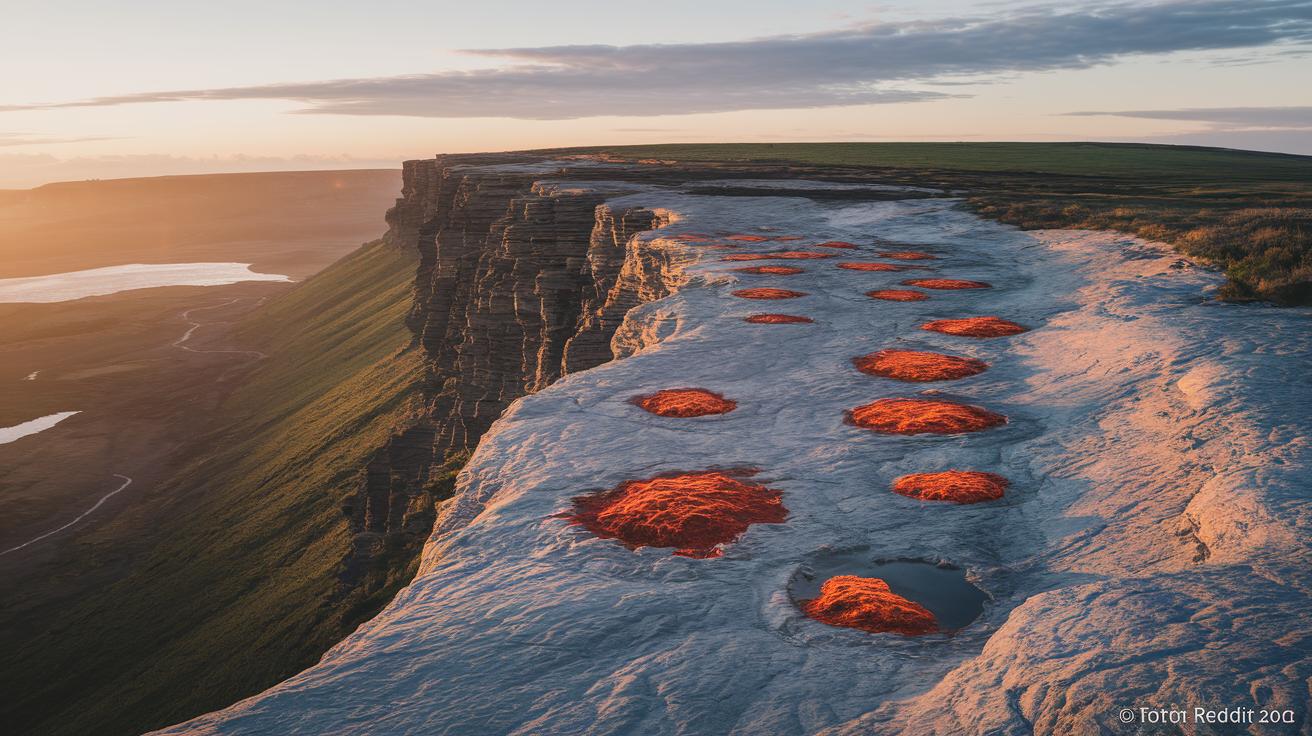
Little land fragments started to appear when pieces of volcanic and metamorphic rocks (rocks formed by fire and pressure) came together from Earth’s early fiery days. These bits united to create small patches of land, much like assembling broken bits of a clay pot into something new and sturdy. They remind us just how wild and unpredictable Earth’s start was.
By about 3 billion years ago, nearly 70 percent of Earth’s crust had taken shape. During this time, leftover materials cooled off and hardened to form new crust. These early formations give us a clear peek at how the planet’s surface slowly emerged over time, laying the foundation for the amazing geology that followed.
Then came a long, quiet period, sometimes called the "boring billion," when tectonic shifts were very minimal. The huge plates of Earth moved very slowly, and overall, nothing drastic was happening on a global scale. This calm allowed the planet to build a stable framework, setting the stage for the major changes that were yet to come.
After this quiet spell, renewed tectonic movement brought larger supercontinents together. This process eventually sparked dramatic events, including a time of global freezing around 750 million years ago known as Snowball Earth (a period when most of the planet was covered in ice). That intense, icy phase reshaped Earth’s surface and had a lasting impact on its geological history. In the end, these changes helped form the continents we know today.
Timeline of Earth's Formation: Major Events
Earth's history is like an epic story that unfolds over billions of years. It all started about 4.54 billion years ago when swirling cosmic dust came together to build our planet. Around 4.5 billion years ago, a huge collision with a Mars-sized object named Theia changed everything, even paving the way for the Moon to form. Soon after, about 4.4 billion years ago, tiny zircon crystals appeared as the Earth’s crust began to cool and harden.
Then, between 4.0 and 3.8 billion years ago, the planet was bombarded by countless impacts during a phase called the Late Heavy Bombardment which kept reshaping its surface. Around 3.5 billion years ago, a burst of energy sparked photosynthesis (the process by which plants make food using sunlight) to start, changing the chemistry of our world. Later on, roughly 2.4 billion years ago, the Great Oxidation Event pumped oxygen into the atmosphere, setting the stage for new life forms.
Around 650 million years ago, life exploded into a dazzling display of diversity, and our planet continued to evolve. Dramatic events like the Permian mass extinction about 252 million years ago and the Cretaceous mass extinction around 66 million years ago brought major resets to life on Earth. Each of these milestones shows us how dynamic and ever-changing our planet has been over time.
| Time (Ga/Ma) | Event |
|---|---|
| 4.54 Ga | Earth begins to form |
| 4.5 Ga | Theia impacts Earth |
| 4.4 Ga | Crust solidifies with zircon crystals |
| 4.0–3.8 Ga | Late Heavy Bombardment reshapes the surface |
| 3.5 Ga | Photosynthesis begins |
| 2.4 Ga | The Great Oxidation Event changes the atmosphere |
| 650 Ma | Explosion of animal life |
| 252 Ma | Permian mass extinction |
| 66 Ma | Cretaceous mass extinction |
Each of these events gives us a glimpse into the amazing changes that transformed scattered cosmic material into our lively, diverse planet.
Final Words
In the action, we explored how the earth was made from fierce impacts and swirling disks of gas and dust to the creation of the Moon and Earth’s layered interior. We broke down the steps of dust gathering, impact events, and shifts in the planet's crust that paved the way for oceans, atmosphere, and tectonic motion.
Each part of the process shows us a small piece of our planet's incredible history. Science has a way of lighting up even the toughest puzzles.
FAQ
How does the “How the Earth Was Made” documentary cover Earth’s formation?
The “How the Earth Was Made” documentary explains Earth’s assembly through cosmic collisions and natural forces. It uses clear visuals and language to show how tiny particles combined into our rocky planet.
How can I watch “How the Earth Was Made” online?
The title refers to various formats, including a full movie and episodic series. You can find these on popular streaming platforms, making the content easy to enjoy for both kids and adults.
How was the Earth originally formed?
Earth was originally formed when gas and dust collapsed into a spinning disk, leading to countless collisions and mergers. This natural process gradually built the rocky, layered planet we now call home.
How did life start on Earth from nothing?
Life on Earth likely began when simple molecules in early oceans combined into basic cells. These cells evolved over time, gradually forming more complex organisms through natural chemical reactions and energy flows.
What was the Earth like before land appeared?
Before land emerged, Earth was almost entirely water-covered with a molten surface and a thick, hot atmosphere. Cooling over time allowed water to condense, paving the way for the first crust to form.
Who is the creator of Earth?
The creation of Earth is explained by natural cosmic events, such as the collapse of a dust cloud and countless collisions. No single person is responsible; it formed through the steady work of physical forces over time.
How do series like “Earth: Making of a Planet” compare to “How the Earth Was Made”?
Both series explain Earth’s assembly from cosmic dust and impacts. They use engaging visuals and easy-to-understand language to show how natural events shaped our planet over billions of years.
How are shows like “Planet Earth,” “How the Universe Works,” and “Cosmos: A Spacetime Odyssey” connected?
These shows all explore the science of our planet and the universe. They highlight natural processes and cosmic events that have shaped Earth and other celestial bodies, presenting complex ideas in a viewer-friendly way.
What perspective does “Life After People” offer on Earth’s story?
“Life After People” explores a scenario where nature reclaims our planet without humans. It contrasts Earth’s formation and evolution with a future where natural forces dominate without human presence.
What is the focus of the series “Birth of the Earth”?
“Birth of the Earth” focuses on the earliest stages of planet formation. It tells the story of massive collisions, the cooling process, and the formation of an atmosphere, clearly explaining how a planet begins to take shape.