
Have you ever wondered what it would be like to unlock nature’s secrets with just one sensor? New devices are changing the way we watch our environment. They give us real-time data that can help save water, protect animals, and even predict pollution before it happens.
Modern sensor technology mixes smart tools with quick insights. This means farmers and scientists can react fast to changes around them. In this article, we’ll take a look at how speedy, reliable sensors use light and AI (computer brain power) to guide better care for our environment and shape our future.
Cutting-Edge Sensor Technologies for Real-Time Environmental Monitoring
Modern sensor tools are changing how we keep track of our environment by collecting data quickly and all the time. In 2025, the ALTA® Soil Moisture Sensor was a real game-changer. It measured the amount of water in soil in less than a minute and even won the AgTech Breakthrough Water Monitoring Solution of the Year Award for a second year. Compared to older, slower devices, this sensor gives you fast and trustworthy information so farmers can manage water in their fields with great accuracy.
Photonic sensors, like the Integrated Photonic Smart Soil Analyser (IPSA), use tiny light circuits (small chips that let light do the work) to check soil chemistry right on-site. This neat innovation shrinks the heavy parts, making the system tough, cost-effective, and very precise even when conditions change out in the fields.
Stanford’s Carnegie Airborne Observatory takes a cool different route by using drones. Those drones carry cameras that look at light wavelengths to check the health of forests. They can capture pictures with a detail as fine as 1 meter, giving scientists up-to-date pictures of wildlife habitats to help in conservation or during emergencies. On top of that, sensors powered by AI and machine learning now predict pollution trends almost two days ahead. And IoT sensors (small devices that talk to the Internet) send data directly to the cloud, setting off alerts as soon as something unusual happens.
These smart devices beat the old probes at their own game with faster readings, more efficient work, and better quality data. They each shine in different ways:
- Precision: They deliver very accurate readings, like IPSA’s 1% accuracy for soil tests.
- Latency: They update data in less than a minute so that decisions can be made right away.
- Power Draw: They are designed to use very little electricity, making them perfect for long-term use.
- Deployment Scale: They work equally well as single sensors or as part of a big team, like a whole fleet of drones.
- Analytics Integration: They come with built-in AI tools that offer useful, real-time insights.
- Cost Per Unit: They are made to be affordable, allowing wide use without breaking the bank.
Integrated Photonics Sensors in Environmental Monitoring

Photonic Integrated Circuits (PICs) pack several optical tasks onto one tiny chip. This clever trick makes sensors up to 90% smaller while cutting production costs by 80% when made in large numbers. Instead of dealing with clunky, fragile electrical sensors that need a lot of power, PIC-based sensors bring efficiency and durability to real-time monitoring.
In 2024, Perceptra bagged €50,000 for creating molecular analyzers using PIC technology. These analyzers are a thousand times smaller and 100 times more cost-effective than the usual bench setups. This breakthrough means even the faintest traces of gases can be detected, and a €7 million EU research call in 2023 shows that the push for scalable, energy-efficient environmental sensors is really gathering steam.
Thanks to these advances, sensors now offer sharper detection and faster data collection even in harsh conditions. Manufacturers can reliably mass-produce these devices, making them key players in safeguarding and understanding our environment.
AI and Machine Learning-Enabled Sensor Systems for Environmental Monitoring
Monnit’s platform uses smart technology to transform heaps of sensor data into easy-to-follow insights. Imagine having a system that can predict pollution spikes with 95% accuracy – like a built-in alarm that sounds off when the air quality starts to drop. The AI works by sifting through over 10,000 data points every second, delivering quick alerts when pollutant levels go over set limits.
These systems mix cloud-based and local processing to keep up with large amounts of data while ensuring fast reactions on site. They feed into predictive algorithms that can map pollution patterns and spot environmental risks nearly 48 hours in advance. In other words, it's like having a weather forecast for air and water quality, turning raw numbers into useful predictions that help prevent bigger problems.
By combining big data with smart sensors, these platforms take a proactive approach to environmental monitoring. They turn complicated sensor readings into clear, actionable forecasts, allowing communities to step in before small issues grow into larger problems.
Drone-Enabled and IoT-Based Sensor Networks for Environmental Monitoring
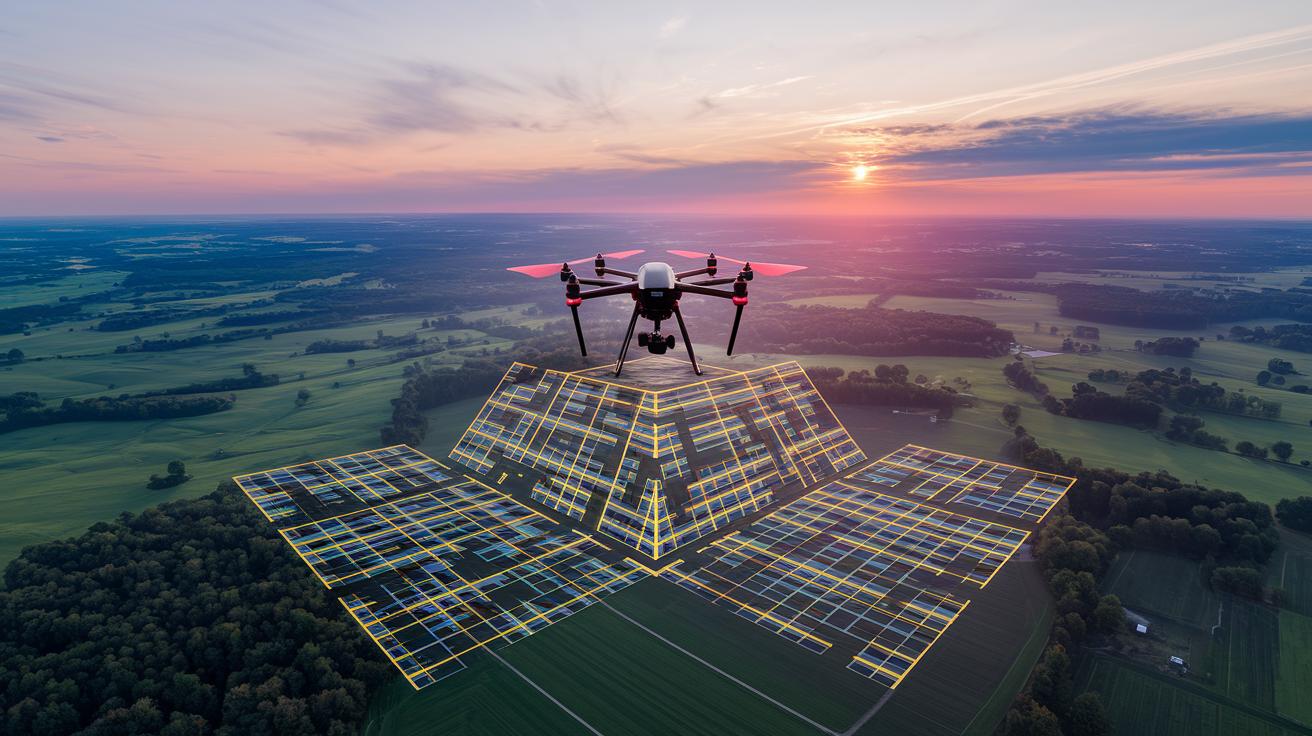
Drones paired with IoT sensors are changing the way we watch over our natural world. The Carnegie Airborne Observatory, for example, uses drones fitted with hyperspectral cameras (cameras that capture many colors, even beyond what our eyes see) and LiDAR sensors (laser tools that measure distance) to build detailed 3D maps of forests. It’s a bit like taking a high-quality photograph where every detail of a familiar face pops out.
Wireless sensor nodes are spread over wide areas and send readings on temperature, humidity, and NO₂ levels every 5 minutes using long-range networks. This means that even hidden or far-off spots can be checked regularly, ensuring we always have fresh, reliable environmental data.
Hybrid systems reduce data lag to nearly real-time, making quick environmental interventions possible. These drone-IoT networks update in under 30 seconds, which is crucial when you need to act fast during wildfires or floods to protect people and nature. Flight paths are carefully planned to cover as much ground as possible, and the sensor networks are designed to send data efficiently, even with low power.
These systems are built to last, giving us a steady pulse of information over long periods and helping scientists monitor ecosystems with new speed and precision.
Real-World Examples: Award-Winning Soil Sensors in Environmental Monitoring
The ALTA® Soil Moisture Sensor snagged the AgTech Breakthrough Water Monitoring Solution of the Year Award in 2025 for the second consecutive year. It quickly measures soil moisture levels from 0% to 100% in just 5 seconds, which helps farmers react fast when the weather suddenly shifts. One farmer shared that when a rainstorm hit unexpectedly, the immediate alerts let them adjust the watering and cut down on waste. The sensor is built to easily connect with gateways, dashboards, and open APIs (simple tools that let different systems work together). Plus, Monnit supports it with on-site training, customized setups, and strong technical help.
The Integrated Photonic Smart Soil Analyser (IPSA) was developed by Jatinkumar Parmar’s team using Photonic Integrated Circuits (tiny chips that use light for precise work). This tool checks soil chemistry right on the spot and can detect nutrient levels with an accuracy of about plus or minus 1 part per million. A technician noted that even gentle shifts in nutrients are picked up quickly, which helps tweak fertilizer use for crops with varying soil types. Its compact design and exact performance earned it top praise at the Global Photonics Engineering Contest in 2024, making it a key asset for precision farming.
Emerging Trends in Sensor Technologies for Environmental Monitoring

Small sensors and low-cost building methods are changing how we keep an eye on our surroundings. New 3D printing methods now let everyday people make their own sensor kits for checking light spectra (different colors of light) and chemical changes. For example, someone in the community may put together a sensor at home using parts from a nearby maker space, which makes high-quality monitoring possible for everyone.
Energy-gathering gadgets like solar panels and devices that capture energy from gentle movements help these sensors last over 5 years, even in far-off places. Think of a sensor in a remote forest that gets its power from the sun and the natural sway of trees. It keeps working year after year without needing a battery change.
A big shift is happening where many sensors join forces in a smart network. When sensors work together, they can warn us about shifts in air, water, and soil quality before problems become serious. This early warning can help communities act quickly, like changing watering schedules during dry spells or sending out alerts when air quality drops.
Looking to the future, do-it-yourself instruments, self-powered networks, and online data systems are opening new doors in environmental monitoring. These new tools let us collect current data with very little power and cost, giving ordinary people an important role in protecting our planet.
Final Words
in the action, we explored sensor tech that brings real-time environmental data into focus. We saw photonic chips that cut sensor size dramatically, AI modules that predict pollution trends, and drone systems that capture forest health in detail.
Each tool transforms raw readings into clear, everyday insights, making science easier for all. With innovative environmental monitoring: breakthrough sensor technologies leading the way, there’s a bright course ahead for understanding our world better every day.
FAQ
Q: What insights are provided by the PDF, reviews, and 2021 reports on innovative environmental monitoring breakthrough sensor technologies?
A: The detailed documents explain how breakthrough sensor designs offer fast, accurate data collection for environmental monitoring. They show how new devices deliver real-time, high-frequency readings that transform data gathering.
Q: How do smart gas sensors’ recent developments and gas sensor research papers contribute to environmental monitoring?
A: The research highlights advanced gas sensors that boost detection speed and precision, using enhanced sensitivity and reduced power use. These improvements help deliver efficient alerts and reliable environmental assessments.