
Have you ever wondered how a tiny machine can take on the tough dust and rocky trails of Mars? NASA’s rovers have totally changed how we see the red planet by checking the weather, studying the surface, and even looking for signs of life. They started out as little walkers with big dreams and grew into powerful machines loaded with smart tools. Each new rover builds on the achievements of the last, getting better and bolder as they unlock more secrets from Mars’ past.
NASA Rovers on Mars: Program Overview
NASA has sent different rovers to Mars that have changed how we see the red planet. These machines have helped us learn about Mars by checking its weather and looking for hints of life. Each rover was built for jobs like watching the environment, collecting samples, and studying the possibility of life, all while dealing with Mars' rough, dusty landscape. It all started with Sojourner, the very first rover to land and work on Mars, setting the stage for those that followed.
Spirit and Opportunity were launched in the early 2000s. They traveled over rough ground and gave us a lot more insight into Mars. Then came Curiosity on November 26, 2011. With its strong design and advanced tools (sensors and instruments that help measure different things), it opened new ways to study Mars rocks and the possibility of life there. More recently, Perseverance landed on February 18, 2021, and with its modern technology, it is hunting for clues of ancient life. Every mission builds on what came before, mixing new technology with practical design to keep pushing our exploration forward. The table below shows some key dates and information about these missions.
Over the years, each rover has learned from earlier missions. The first ones focused on basic exploration and survival, while later rovers brought in more complex science tools and better power systems. This progress shows the creativity of engineers and the passion of scientists to uncover Mars' secrets. From Sojourner's small size to Perseverance's heavy-duty capabilities, the teamwork and spirit of discovery shine through. These rovers still spark excitement and curiosity about space research.
| Rover Name | Launch Date | Landing Date | Mission Status |
|---|---|---|---|
| Sojourner | Dec 4, 1996 | Jul 4, 1997 | Completed |
| Spirit | 2003 | 2004 | Completed |
| Opportunity | 2003 | 2004 | Completed |
| Curiosity | Nov 26, 2011 | Aug 6, 2012 | Active |
| Perseverance | Not specified | Feb 18, 2021 | Active |
Engineering Design and Power Systems for Mars Rovers
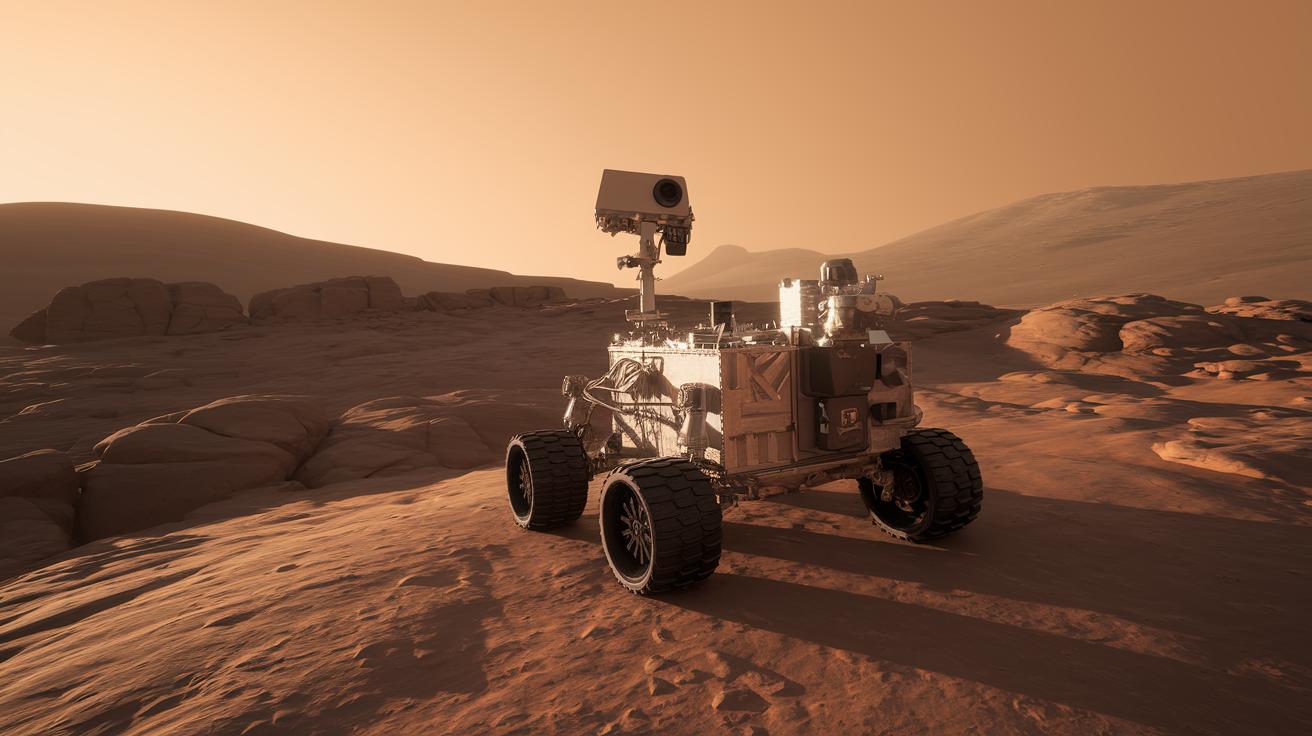
Perseverance has a six-wheel design with a clever rocker-bogie suspension that lets it grip even rocky ground. This setup is a bit like a reliable off-road vehicle, helping the rover roll over rocks as tall as 65 centimeters (about the height of a large soda can). It's pretty amazing to think that it can handle such obstacles with ease.
The rover gets its energy from a Multi-Mission Radioisotope Thermoelectric Generator (MMRTG). In simple terms, this device turns the heat from radioactive decay (a process where unstable atoms give off energy) into electrical power, which keeps Perseverance working day and night. Unlike this system, earlier rovers like Spirit and Opportunity had solar panels that had to tilt to catch sunlight.
Perseverance also comes with built-in features to keep its critical parts at the right temperature. Internal heaters make sure it stays warm even when dust storms drop temperatures to minus 90 degrees Celsius. Sensitive electronics are shielded to protect them from harmful Martian radiation, too. All of these smart design choices work together to help the rover send back important discoveries from a planet that is both harsh and unpredictable.
Scientific Instruments and Imaging Tools on Mars Rovers
Perseverance is a Mars rover packed with cool, high-resolution cameras and other science tools that turn its landing site into a roaming lab. It carries strong cameras and sensors that capture sharp images of Mars’ dusty, rocky surface, helping scientists get a closer look at the planet’s geology and chemical clues. These tools work in harmony to capture panoramic photos, do spectral analysis (which means studying how light interacts with materials), and uncover hidden details about Mars’ atmosphere.
Below is a table showing six important instruments and what they do:
| Instrument | Function |
|---|---|
| SHERLOC | A Raman spectrometer on the robotic arm that checks for organic compounds and minerals by using light vibrations. |
| SuperCam | A Raman spectrometer on the mast that sends out laser pulses to study the chemical makeup of rocks from a distance. |
| Mastcam-Z | Offers stereo panoramic imaging to create clear 3D views of Mars’ terrain. |
| PIXL | Uses X-ray fluorescence to look at the rock composition and measure different elements in Martian samples. |
| RIMFAX | A ground-penetrating radar that sends radio waves into the soil to reveal hidden layers beneath the surface. |
| MEDA | Monitors weather conditions like temperature, dust levels, and radiation on Mars. |
Together, these instruments give us a detailed picture of Mars. They build on the work of earlier rovers by adding more precise analysis and looking at the planet from several angles. Data from these tools help piece together clues about past water, climate changes, and even the planet’s ancient environment. It’s pretty amazing to think how each small measurement helps us understand Mars a little better.
Major Geological Discoveries by Mars Rovers
Perseverance’s journey through Jezero Crater has truly changed how we see Mars. The rover found clues that water once behaved in three very different ways, each leaving its own mark on the red planet.
One striking discovery was that high-temperature acidic water once flowed across Jezero Crater. As the water moved, it changed the rocks and left behind minerals such as greenalite, hisingerite, and ferroaluminoceladonite. Think of it like when boiling water toughens up a piece of meat by altering its texture.
In another phase, the water was much gentler. It had a neutral pH (a measure that tells us how acidic or basic a liquid is), and slowly helped form minerals like minnesotaite and clinoptilolite on and around the crater. This softer touch suggests that there were moments when Mars could have been a friendlier place for life.
Later on, cooler and slightly basic fluids spread out over the area, depositing a mineral called sepiolite. This phase is really exciting for researchers because it hints at conditions that might have supported life. Each different mineral tells us a part of the story, showing how water shaped Mars through various changes.
All these findings build on earlier discoveries by other rovers that confirmed liquid water existed on Mars nearly four billion years ago. With the amazing high-resolution images captured during these missions, scientists are piecing together a clearer picture of how Mars transformed over time.
Autonomous Navigation and Mobility Systems of Mars Rovers
Curiosity and Perseverance are smart Mars explorers that drive themselves across the red planet. They use a mix of self-driving technology with hazard-spotting cameras and Navcam stereo vision (a camera that creates 3D maps) to plan their route as they go.
Think of them like a smart car that wisely adjusts its path when it sees obstacles, just like your phone’s map app quickly finds another route when there's traffic.
They run on computer programs that let them choose their own paths without waiting for help from Earth. With advanced sensors that scan the ground, these rovers pick safe routes even when the Martian terrain feels as unpredictable as a rocky playground.
The team built a unique rocker-bogie suspension system that helps the rovers easily roll over tough surfaces. This setup lets them handle bumps and dips up to 65 centimeters high (about two feet). It’s a brilliant example of designing mobility for a harsh, alien world.
Terrain-relative navigation (a way to use the land’s features to guide landing) fine-tunes where the rovers touch down, making their landing smoother by adapting to unpredictable surfaces. Meanwhile, Ingenuity’s little helicopter soars above to scout for hazards, giving everyone a bird’s-eye view that supports planning on the ground.
Together, these self-driving rovers and their accompanying drones blend sensors, smart software, and clever engineering. They allow us to explore Mars with very little help from Earth, showcasing the exciting teamwork between human design and robotic innovation.
Entry, Descent, and Landing Innovations for Mars Rovers
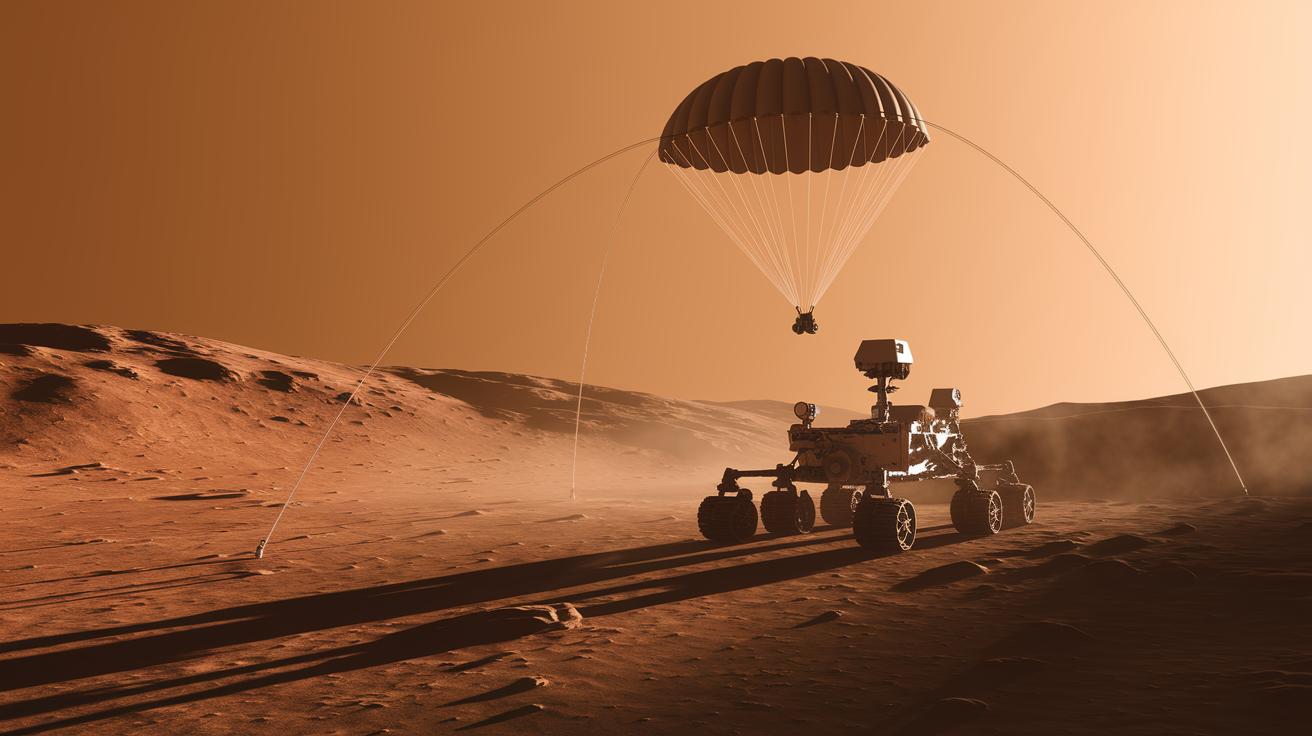
Perseverance went through what many call its "seven minutes of terror." In that brief moment, it used clever techniques to slow down safely. First, a supersonic parachute helped slow the rover as it entered Mars' atmosphere with smart aerodynamic methods. Then, a thruster-powered stage took over to slow it down even more while a set of precise computer instructions guided its path. Finally, nylon cords gently lowered the rover onto the surface, showing off a neat soft-landing trick. This approach was first proven by Curiosity, landing within 7 km of its goal. Imagine a self-parking car that uses sensors to guide every move, that’s how controlled these steps were.
Engineers rely on careful computer controls to handle each part of the landing. They plan every move so that everything from braking to touchdown happens in an orderly way. This strong system protects the rover as it faces Mars' harsh conditions and sets a great example for future missions.
Operational Challenges and Future Prospects for Mars Rover Missions
Recent events remind us that mission planning is still really tough. For example, the next Mars probe launch on Blue Origin's New Glenn got pushed back because of unexpected weather. Think about planning a big outdoor party and suddenly having to change the date because of a surprise storm. NASA now plans to try again on November 12. These kinds of delays show that managing deep-space communication and coordination is challenging, but also really exciting.
A big challenge is keeping a reliable connection between Earth and a mission that's millions of miles away. It’s a lot like trying to have a clear phone call with someone on another planet. When signals drop or get delayed, it can be hard for scientists to get live updates. This issue drives engineers to come up with better systems that make it easier to stay in touch with far-off missions.
Looking forward, new ideas in space research are setting the stage for even more ambitious missions. For instance, NASA's upcoming Dragonfly mission to Titan, planned for the mid-2030s, is taking inspiration from rover technology, mixing old successes with fresh concepts. At the same time, researchers are working on ways to bring Martian soil back to Earth, with tests aiming for the late 2020s. These plans could let us examine Mars up close, adding an exciting chapter to our space exploration story.
Even when plans go off course, every setback is met with creative problem-solving and determination. It really shows how our adventure to learn about other worlds keeps pushing forward, no matter what.
Final Words
In the action, we explored a timeline where each rover, including the nasa mars rover Perseverance, pushed the boundaries of space research. We looked at engineering design, powerful instruments, and smart navigation that make Mars missions so intriguing. Every mission adds a fresh chapter to our story of understanding Mars’ past and present. It’s amazing to think about how these scientific feats bring space closer to everyday life, sparking hope and excitement for the discoveries ahead.
FAQ
What is NASA Mars Rover LEGO?
The reference to NASA Mars Rover LEGO describes a themed LEGO set that replicates iconic Mars rovers, sparking curiosity and creativity while inviting enthusiasts to explore space science through hands-on play.
How can I view NASA Mars rover live?
The concept of NASA Mars rover live means accessing real-time mission updates or live feeds, allowing space fans to follow a rover’s progress and see current activities on Mars through dedicated online platforms.
What are Mars rover last words?
The term Mars rover last words refers to the final communications sent by a rover before its mission concluded, often capturing the end of its operational journey while highlighting its key contributions to Mars exploration.
Where can I find a NASA Mars rover tracker?
The mention of a NASA Mars rover tracker highlights an online tool or website that displays real-time tracking information, showing details like the rover’s location, route, and mission updates as it moves across Mars.
What is the Opportunity rover known for?
The Opportunity rover is recognized for its record-setting mission on Mars, conducting extensive geological research, providing valuable insights into Mars’ past water activity, and leaving a lasting legacy in planetary exploration.
What are 10 facts about the Mars rovers?
The idea behind 10 facts about the Mars rovers covers key points such as launch dates, mission goals, design features, scientific instruments, discoveries, and unique challenges each rover encountered on its mission to Mars.
What are the names of all Mars rovers and their significance?
The names, including Curiosity, Perseverance, Opportunity, and Ingenuity, represent different missions that have explored Mars’ surface and atmosphere, each contributing uniquely to our understanding of the Red Planet.
How many NASA rovers are on Mars and are they still operational?
The question about the number of NASA rovers on Mars means there have been several missions; while some rovers have finished their operations, current missions like Perseverance remain active, continuing to send valuable data from Mars.
Did NASA confirm life on Mars?
The inquiry about NASA confirming life on Mars reflects that, as of now, no direct evidence of living organisms has been confirmed. Researchers continue examining past environmental conditions and chemical signals for hints.
When will NASA send humans to Mars?
The question about the timeline for a human mission to Mars suggests plans for sending astronauts in the coming decades, with projections indicating that human missions might be attempted around the 2030s as technology evolves.