Have you ever wondered if the key to better treatment might be hidden in your DNA?
Rapid genomic sequencing is changing the way doctors plan care by scanning millions of tiny DNA pieces all at once. It’s like reading an entire book in seconds instead of flipping through pages slowly.
This method finds important genetic clues quickly, helping doctors choose the right treatment and cut down on waiting time. With these insights, patients can receive care that’s truly tailored to them, paving the way for healthier outcomes.
Rapid Genomic Sequencing Redefines Personalized Treatment Plans

Rapid genomic sequencing is a modern test that reads millions of DNA pieces all at once (DNA is like the blueprint inside each of us). It cuts study time from months to weeks and helps doctors spot gene markers that show how a patient might react to a medication. Think of it like scanning an entire book in seconds instead of reading it page by page. This quick method gives doctors key clues for fine-tuning care, especially when dealing with rare conditions.
This new approach speeds up whole genome sequencing (WGS, which reads all your genetic code) and whole exome sequencing (WES, which focuses on the gene parts that make proteins). It helps doctors confirm what’s going on and adjust treatments quickly. By shortening the wait, patients can start targeted therapies sooner, and doctors make better choices based on unique genetic details. Rapid genomic sequencing not only finds out which drugs might work best for an individual but also deepens our understanding of the many gene differences that lead to diseases.
- Accelerated rare-disease diagnosis
- Optimized drug selection
- Deeper variant detection
- More affordable full genome scans
- Improved patient outcomes
These advances power personalized treatment by mixing speed with detailed genetic insight. The method reduces wait times, making it easier for doctors to step in promptly and adjust treatments precisely. In the end, this technology transforms genetic information into a practical tool for better, tailor-made healthcare.
Key Technological Advancements in Rapid Genomic Sequencing

Next-generation sequencing machines have gotten a big boost in how much they can handle and how long the DNA reads are. Machines like Illumina NovaSeq, PacBio Sequel II, and Oxford Nanopore now take in huge amounts of genetic material (the building blocks of life) all at once. It’s like swapping out a handheld magnifying glass for a high-powered telescope when you examine genetic details.
Next-Generation Sequencing Platforms
Thanks to better hardware, the newest sequencing systems work much faster and with fewer mistakes. They capture longer pieces of DNA, giving scientists a clearer picture, imagine reading a whole book instead of just bits and pieces from different pages. And with the cost per gigabase (a billion DNA letters) dropping, high-quality genetic data is now easier on the budget.
Workflow Automation & Logistics
It’s not just the machines that are improving. Software like 3billion’s GEBRA brings in smart automation and AI (artificial intelligence, meaning computer systems that can learn) to handle data in smart ways. With automated steps for sample preparation and custom data pipelines, the whole process, from collecting a sample to analyzing it, runs smoother than ever. Better sample transport means even less waiting time for results.
- Ultra-fast flow cells
- Real-time base calling
- Integrated robotics
- End-to-end tracking
- AI QC checks
All these innovations work together to turn raw samples into useful information quickly. Because of these improvements, personalized treatment decisions can be made faster and more efficiently, which is a big win for both scientists and patients.
Clinical Benefits of Accelerated DNA Profiling for Targeted Therapy Innovation

3billion offers full genome sequencing at the same price as a simpler exam that only looks at the protein-coding parts. Imagine a lab where you get in-depth genetic information without having to pay extra, this means doctors have access to detailed insights about patients without breaking the bank.
They deliver fast confirmation of rare diseases, so patients start getting the right treatment sooner. Plus, they adjust drug doses based on genetic markers (tiny pieces of DNA that help guide how medicines work in your body), which cuts down on unwanted side effects. And when it comes to cancer care, genomic insights help match patients with the best treatment options, supporting new gene therapy techniques for fighting the disease.
Together, these smart approaches mean patients receive treatments that are quicker, safer, and better suited to their unique genetic makeup.
Role of AI and Bioinformatics in Rapid Genomic Sequencing Workflows

Rapid genomic sequencing uses smart computer tools and clever data tricks to turn raw genetic code into clear, useful information in a flash. AI tools like DeepVariant learn from huge amounts of genetic data to pick out the important changes. This smart process filters out the noise and focuses on the gene variations that really matter for health. It’s a bit like the breakthrough we’re seeing in AI-powered drug discovery in medicine.
Machine Learning for Variant Prioritization
Machine learning models study big piles of genetic information to sort and rank gene changes by how likely they are to cause health issues. Developers keep fine-tuning these models by checking and updating their filters. This means that only the most problematic gene changes get flagged for closer study. It’s a huge time-saver, letting doctors zoom in on the few changes that matter most.
Cloud-Based Scalable Analysis
Secure cloud platforms, built to meet rules like HIPAA and GDPR, store vast amounts of genetic data safely, even when it reaches several terabytes. These cloud systems offer extra computer power on demand and ensure that sensitive information stays secure. They help speed up data transfer and analysis, keeping the whole sequencing process smooth and efficient. Then, CRISPR-based tests jump in to check key gene changes with great accuracy, helping scientists design targeted treatments based on reliable genetic insights.
Integrating Genomic and Multi-Omics Data for Personalized Treatment Strategy
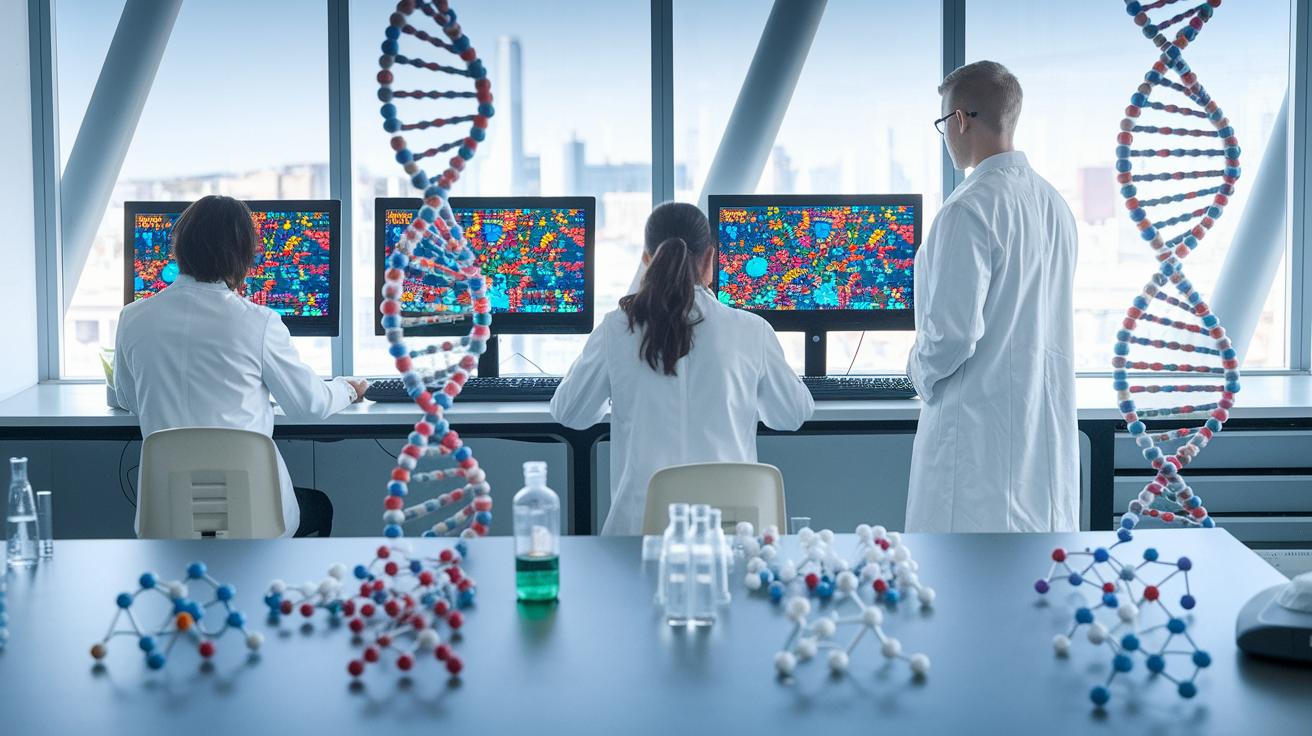
When we mix gene information with other kinds of cell data, we get a much clearer picture of tough diseases. It’s like assembling a puzzle where each piece, genes, RNA messages (transcriptomics), proteins (proteomics), and small cell chemicals (metabolomics), shows us a bit more about what’s happening inside. This approach lets researchers see tiny differences in tumors or other conditions so they can tell which cell pathways are working or out of sync.
- Transcriptomics: This method highlights changes in gene messages to show which cell pathways are active and might serve as targets for treatment.
- Proteomics: By measuring protein amounts and changes, it helps pinpoint proteins that play big roles in causing disease.
- Metabolomics: This technique surveys small molecules inside cells to spot shifts in the cell’s energy and chemical balance that could be useful for targeted treatment.
Bringing these methods together with quick gene sequencing gives doctors a detailed look at a person’s unique disease profile. The blend of all these different data layers lets clinicians see genetic changes alongside other molecular clues. In truth, this full picture not only makes it easier to pick the right treatment targets but also streamlines the whole process of planning therapies. The end result is a more personalized treatment plan that can really make a difference in patient care.
Case Study: 3billion’s 5-Week Rapid Whole Genome Sequencing in Personalized Medicine

3billion recently achieved something really impressive by shortening the time it takes to complete whole genome and whole exome sequencing to just 5 weeks. They accomplished this by completely overhauling their lab methods, logistics, and how they analyze data. This means that instead of spending months on full genome sequencing, doctors can now get the full picture as fast as simpler tests that only look at protein-making parts of our DNA. Have you ever wondered how much quicker treating rare diseases could be with faster results?
| Metric | Standard Sequencing | 3billion Rapid WGS |
|---|---|---|
| Turnaround Time (weeks) | Several weeks to months | 5 |
| Cost | Higher for full genome | Comparable to WES |
| Coverage Depth (×) | Standard levels | Enhanced depth |
| Variant Accuracy (%) | Conventional accuracy | Improved outcomes |
| Primary Use Case | Routine testing | Rare disease & urgent evaluations |
Because this new method provides critical genetic information so much faster, doctors can kick off personalized treatment plans almost immediately. Whether it's confirming a rare disease or planning specific therapies, getting quick data can make all the difference. Plus, making full genome sequencing just as affordable as simpler tests opens up more opportunities for precision healthcare. It’s a big win for both clinicians and patients, especially when it comes to handling complex cases and guiding treatment decisions with the latest genetic insights.
Future Prospects for Rapid Genomic Sequencing in Patient-Specific Treatment Development

New tech in fast whole genome sequencing (WGS, which is a way to read all your genes) is changing how quickly doctors can learn about your unique genetic code. Before long, getting a full analysis in just one day might be the norm, meaning doctors could decide the best treatment for you almost immediately. This change comes from smart new devices that can run tests right on site without losing accuracy.
At the same time, updated rules for keeping your genetic details private and ethical guidelines are creating a safe space for handling this sensitive data. With advanced imaging methods like single-cell studies (looking very closely at one cell at a time) and spatial omics (seeing where cells are in relation to each other), scientists can now spot even tiny differences in cells. Overall, these fresh tools and careful checks promise a future where treatments are made just for you.
• Day-scale whole genome sequencing for urgent checks
• Portable sequencers for on-site gene tests
• AI-driven therapy ideas that keep getting better
Final Words
In the action, we explored how rapid genomic sequencing speeds up analyzing millions of DNA fragments while trimming down time and cost. We looked at tech advancements, clinical outcomes, AI boosts, and multi-omics integration with real-world examples.
Every section brought out clear benefits, showing how science moves from lab work to improving patient care. The progress shines a hopeful light on healthcare, driven by breakthrough rapid genomic sequencing for personalized treatment plans.
FAQ
Q: What do reviews say about breakthrough rapid genomic sequencing for personalized treatment plans?
A: Reviews of breakthrough rapid genomic sequencing for personalized treatment plans indicate that the method simplifies and speeds up treatments by reducing turnaround times and improving targeted therapies based on an individual’s genetic markers.
Q: What is available in PDF form related to breakthrough rapid genomic sequencing for personalized treatment plans?
A: The PDF form details the technology’s methods and clinical benefits, explaining how rapid genomic sequencing cuts down costs and time while delivering precise genetic insights to tailor treatment plans.
Q: Are there any free resources on breakthrough rapid genomic sequencing for personalized treatment plans?
A: Free resources on breakthrough rapid genomic sequencing for personalized treatment plans generally provide accessible overviews and case studies that explain how the technology advances personalized care while lowering costs.
Q: What advances in breakthrough rapid genomic sequencing for personalized treatment plans were seen in 2022?
A: Advancements in 2022 focused on improving sequencing speed and integrating AI tools, which sharpened the precision and accuracy of personalized treatment decisions based on rapid genomic sequencing.
Q: What does the Genomics and Personalized Medicine PPT cover?
A: The Genomics and Personalized Medicine PPT outlines key concepts such as rapid sequencing technologies, clinical applications, and how genomic insights can guide individualized treatment strategies.
Q: How do multi omics and precision medicine work together in treatment strategies?
A: Multi omics and precision medicine work together by merging genetic data with other molecular information, which allows clinicians to better target therapies and optimize outcomes for individual patients.
Q: How do genomics and multiomics support precision medicine?
A: Genomics and multiomics support precision medicine by integrating data on genes, proteins, and metabolites to create comprehensive profiles, thereby guiding treatment plans tailored to each patient’s unique biology.
Q: What insights does the narrative review on genomic medicine and personalized treatment provide?
A: The narrative review on genomic medicine and personalized treatment provides a clear explanation of how rapid sequencing transforms diagnoses and therapies, making treatments more effective and safer for patients.