
Have you ever noticed how a small, flickering flame or a gently turning wheel can change everything? In our look at famous science breakthroughs, we explore those spark moments that led to new ways of living.
Long ago, people learned to control fire for warmth and cooking, and they even figured out how to shape metal by hand. Then came the surprising use of gunpowder (a mix of chemicals that makes things go boom) to change the game. Each of these simple ideas has gently guided the course of our modern lives.
This timeline reminds us that even the smallest idea can leave an impact that lasts. Read on to see how these bright periods of innovation still help light the way for today’s science.
Key Discoveries in Ancient to Medieval Eras
Fire was a game-changer for early humans. Learning to control it meant they could keep warm, cook food, and fend off wild animals. This breakthrough led to safer camps, a better diet, and a whole new way of living. Before long, people started domesticating animals, dogs in particular, to help with hunting and guarding, and they began cultivating wild plants to enjoy a steady food supply that allowed their settlements to grow.
Metallurgy, the art of working with metals (like turning ore into tools), brought its own set of advances. With stronger tools and weapons, early societies could build and protect themselves more effectively. And the invention of the wheel further boosted life by making transportation and basic machinery easier, imagine early farmers rolling heavy loads on wooden wheels they crafted from local materials.
As communities developed, they needed ways to communicate, keep records, and plan. Written systems such as cuneiform and hieroglyphs came to life, helping people form laws and manage trade. Basic number systems also emerged to support activities like astronomy (the study of stars) and engineering. Early ideas in medicine, influenced by Hippocratic principles (observing and caring for patients), laid the ethical groundwork for treating illnesses. Simple machines powered by water gears started to do the heavy lifting in various tasks, and in some regions, early algebra (basic mathematical problem-solving) helped solve practical problems.
Around 900 CE, gunpowder arrived on the scene and completely changed the way people fought wars and built things. It’s amazing to see how one simple invention could have such a lasting impact on the shape of civilizations.
Innovations of the Renaissance and Enlightenment
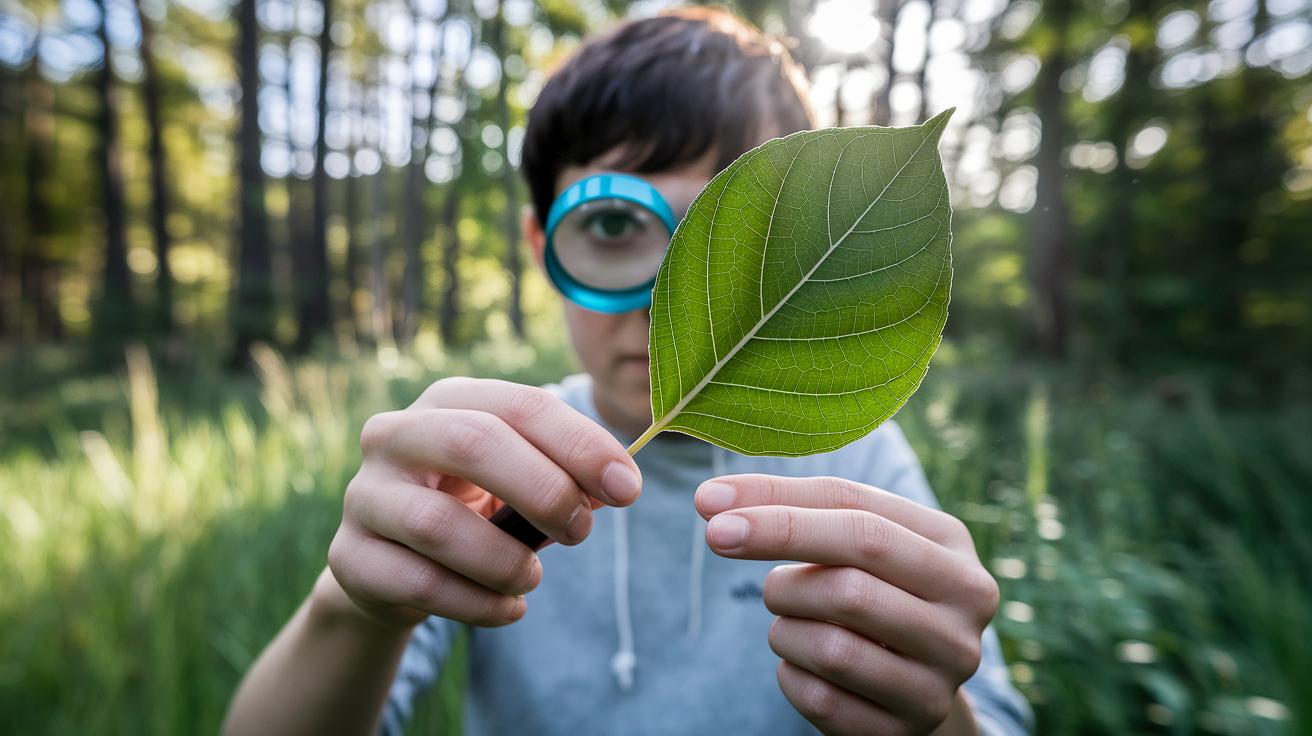
This was a time when people started to watch nature more carefully, asking fresh questions and testing old beliefs. Curiosity led the way, and even simple machines could spark big insights. Have you ever wondered how something everyday could completely change our understanding of the world?
The printing press in 1450 kicked off a fast spread of knowledge, letting more curious minds read and learn. Then in 1543, Copernicus showed that our planet wasn’t the center of the universe, pushing us to rethink our place in the cosmos. Soon after, the microscope in the 1590s let us explore a miniature world, and in 1600, De Magnete introduced early ideas about electricity and magnetism. With a patented telescope in 1608 and Galileo’s Sidereus Nuncius in 1610, people began to look at the stars with fresh awe.
Medical science took a leap forward in 1628 when Harvey’s model showed that blood moves through our body. Experiments with vacuums in 1643 and the pendulum clock invented in 1656 deepened our grasp of the laws of physics and time. In 1662, Boyle’s Law stirred up more discussions, and by 1665 Hooke’s study of cells kept the debates lively. The reflecting telescope of 1668 even sharpened our view of the far-off skies.
Newton’s Principia in 1687 set the natural laws we still use today, while later advances like Jenner’s vaccination in 1796 opened brand-new doors in both nature and medicine. It's fascinating how these breakthroughs reshaped society and continue to inspire us.
Breakthroughs during the Industrial Revolution and 19th Century
At the end of the 1700s, inventors created the battery (a device that stores electricity) in 1799. This breakthrough opened the door to careful electrical experiments that moved science forward. Then in 1804, Dalton explained his Atomic Theory, which said that atoms (tiny building blocks of everything) make up all matter.
Next, in 1820, scientists connected electricity with magnetism through electromagnetism. This new idea changed how people viewed energy. Just four years later in 1824, the Carnot cycle gave us key ideas about thermodynamics (the study of heat and energy), making complex concepts more accessible. Around 1830, new geological ideas told us that Earth’s features slowly formed over time, which completely changed how we thought about our planet. In 1834, the invention of the electric motor turned electrical energy into motion. This blend of theory and practical use showed how science could power industry.
After 1848, exciting discoveries continued. Researchers found absolute zero, the lowest temperature possible. In the 1850s, scientists brought together energy ideas under the laws of thermodynamics. In 1859, Darwin’s Origin of Species introduced natural selection, a revolutionary way to understand how life changes over time. During the 1860s, advances in germ theory (the idea that tiny organisms cause disease) and spectral analysis (using light to study materials) transformed medicine and optics. In 1866, Mendel’s work laid the groundwork for genetics (the study of inheritance), and by 1869, Mendeleev’s periodic table had even predicted elements that no one had discovered yet. Then in 1876, the telephone patent sparked a new age in voice communication. Finally, in 1897, the discovery of the electron confirmed that atoms have even smaller parts inside them.
Milestones from the 20th Century to Today

The 20th century was a time of amazing discoveries that changed how we see the world. Labs everywhere were buzzing with experiments that tackled big questions about matter, energy, and life. This burst of creativity set the stage for the digital devices, space travel, and advanced medicines we use today.
| Year | Discovery | Lead Scientist(s) | Significance |
|---|---|---|---|
| 1903 | First Airplane | The Wright Brothers | Started the era of powered flight |
| 1905 | Special Relativity | Albert Einstein | Changed how we understand space and time |
| 1911 | Atomic Nucleus | Ernest Rutherford | Deepened our understanding of atoms |
| 1927 | Big Bang Theory | Georges Lemaître | Offered a model for the universe’s birth |
| 1947 | Transistor | Bell Labs Team | Launched the electronics age |
| 1953 | DNA Double Helix | Watson and Crick | Founded modern molecular biology |
| 1960s | Plate Tectonics | Geological Researchers | Unified our view of Earth’s structure |
| 1977 | Voyager Probes | NASA Teams | Expanded our look into the solar system |
The innovations of the past still drive today’s technology and research. Quantum mechanics (a field studying very tiny particles you can’t see with your eyes) not only changed our view of the smallest scales but also laid the foundation for many modern computing methods. Discoveries like the atomic nucleus and DNA’s double helix opened up new fields in energy and medicine. Every breakthrough, whether a pioneering airplane or a tiny transistor in your smartphone, adds to a lasting story of scientific progress. The hard work and curiosity of those early scientists inspire us all to keep exploring and learning every day.
Legacy and Influence of These Discoveries
Every new discovery in science builds on ideas from the past. Early breakthroughs in medicine, engineering, and communications set the stage for what we see today. These steps forward, born from careful study and shared insights, still guide our progress.
It’s amazing to think that friendly competition and teamwork pushed scientists to test new ideas and learn from one another. Working side by side, they not only improved existing fields but also opened up completely new areas of study. Whether in astronomy, biology, or cutting-edge medical techniques, this spirit of shared discovery keeps our research lively and full of promise.
Even now, the work of past scientists inspires modern research. Every fresh finding adds a new link in science’s never-ending chain, lighting the way for future generations to explore and create.
Final Words
In the action, our exploration of early breakthroughs, from fire control and animal domestication to modern inventions, has shown how each step helped shape our daily lives. We broke down how ancient, renaissance, and industrial periods fueled advances in medicine, technology, and space research. Every milestone adds a piece to a larger, ever-growing picture of human achievement. Stay curious and keep watching the famous science discoveries timeline as it lights our path to future insights.
FAQ
Q: What does a famous science discoveries timeline show for students?
A: A famous science discoveries timeline shows key events and breakthroughs by scientists, guiding students through how discoveries built on each other to shape our understanding of the world.
Q: What are the most significant scientific discoveries of all time?
A: Significant scientific discoveries include moments that changed our world, such as the discovery of fire control, the development of the DNA double helix, and groundbreaking ideas that redefined physics and medicine.
Q: How does a timeline of scientific discoveries highlight progress over time?
A: A timeline of scientific discoveries lays out key events from ancient innovations to 21st-century breakthroughs, showing how each discovery set the stage for subsequent advances in technology, biology, and other fields.
Q: Where can I find a downloadable History of Science timeline PDF?
A: A downloadable History of Science timeline PDF provides a detailed chronology of scientific breakthroughs. It offers a neat resource for educators and curious readers looking to review science milestones.
Q: What historical discoveries have shaped the field of science?
A: Historical discoveries such as animal and plant domestication, inventing writing systems, and early medical practices have laid the groundwork for modern science by forming the basis for organized research and experimentation.
Q: What is viewed as the most important discovery in the last 100 years?
A: The most important discovery in the last century is often considered the DNA double helix, which transformed biology by revealing the structure of life’s building blocks and guiding advances in medicine and genetic research.
Q: Who are some of the 10 famous scientists and what inventions are they known for?
A: Renowned scientists like Isaac Newton, Charles Darwin, and Albert Einstein are known for ideas that changed physics, biology, and more. Their work on gravity, natural selection, and relativity underpins many modern inventions.