
Have you ever thought about how fast our world might change? In 2025, tech trends are set to transform business as we know it. We’re talking about major advances in AI (smart computer programs), IoT (gadgets that connect and share data), blockchain (a secure way to handle information), and quantum computing (super-powerful computers solving tough problems).
Experts say we’ll soon see huge increases in data, pushing companies to completely rethink their strategies. It’s already stirring up fresh ways to make decisions and keep our planet green. Innovation is coming at us faster than we ever expected, blending everyday technology with exciting new ideas.
So, are you ready to see how these breakthroughs can spark new growth and inspire creative thinking in every industry?
Global Market Forecasts and Key Drivers for Emerging Digital Technologies
We’re on the brink of a digital explosion. Experts say world data could reach 182 zettabytes (that’s a mind-blowingly huge number) by 2025 and double by 2028. Think about it – not long ago businesses worked with gigabytes of data, and now they’re handling zettabytes that change everything they do.
Some key tech drivers are behind this shift:
- AI: Even though artificial intelligence is everywhere, only about 13 percent of companies feel fully prepared for it. Engineers now have to balance AI tasks with their usual work, mixing roles in new ways.
- IoT: The Internet of Things (devices connected online) is spreading fast, giving companies real-time insights for quicker decision-making.
- Blockchain: Known for keeping digital payments safe and supply chains transparent, blockchain has become a go-to tool for reliable operations.
- Quantum Computing: With early commercial examples expected by 2025, quantum computing (which harnesses tiny particles for advanced problem-solving) is set to open new doors.
| Technology | Impact |
|---|---|
| AI | Boosts smart, data-based decisions |
| IoT | Enables live monitoring and quick responses |
| Blockchain | Keeps transactions secure and transparent |
| Quantum Computing | Offers new ways to tackle big problems |
At the same time, the growing digital world means we need more energy and new solutions for sustainability. Experts and companies are exploring creative ways to use resources wisely while keeping up with shifting workforce trends. It’s a fascinating time where technology isn’t just changing business – it’s also reshaping how we care for our planet.
Tech Trends 2025: Breakthrough AI Applications and Machine Learning Evolution

Imagine AI as more than a tool, picture it as a partner that learns and grows with you. By 2025, we expect AI to step up its game by becoming more proactive, picking up on your habits and past actions to offer smart suggestions on the fly. It’s like having a digital friend who constantly tunes into your needs.
Generative AI is powerful, but it comes with a catch. These models might use up to ten times the electricity of a simple Google search. That’s why designers are racing to create energy-smart systems. We want our cool tech to work hand in hand with our planet, ensuring progress doesn't come at too high an energy cost.
On another exciting front, ethical AI is taking shape with new rules and platforms that tackle disinformation and bias. These efforts help make sure that AI benefits everyone fairly. In healthcare, for example, advanced machine learning (computers learning from data) is transforming how we diagnose and treat conditions, opening up fresh paths for medical breakthroughs.
Mixing innovative AI applications with deep machine learning insights is set to reshape our daily interactions and drive smarter, greener, and fairer systems across industries. The future is coming fast, and it promises technology that truly works for us all.
Tech Trends 2025: Connectivity Evolution with IoT, 5G, and Edge Computing
Imagine a world where smart sensors, connected devices, and even humanoid systems chat with each other instantly. By 2025, more IoT devices (gadgets that share data automatically) will mean we need quicker processing speeds, a job only low-latency 5G networks (super fast wireless technology) can do. Did you know that network issues from simple setup mistakes already cause over 40% of service interruptions and can shave off nearly 9% of a company's yearly revenue? AI-driven automation is stepping in to nearly erase these troubles, keeping systems running smoothly.
Low-latency 5G does more than just back IoT; it helps healthcare tools and smart factories run smoothly together. And then there’s edge computing, which means computers are placed right near where the data is made. This close-up data crunching cuts down wait times and gives a nice performance boost in busy settings.
By syncing up IoT plans, grabbing the benefits of 5G, and using edge computing ideas, companies are changing how they process information. The future looks like a place where good connectivity makes systems more reliable and businesses run more efficiently, so everyday tasks and complex operations get done faster and work better.
Tech Trends 2025: Blockchain Adoption and Cybersecurity Advancements

Blockchain is quickly turning into a key tool for safe transactions and clear supply chains. Companies are now using it to record transactions in unchangeable ledgers, which builds trust and makes global business easier. Imagine a digital vault where each payment is securely locked in time so that every transaction is safeguarded against tampering. This clever method helps businesses stay ahead in a cutthroat market.
At the same time, AI-based threats, like prompt injection attacks (tricks that fool AI systems), are on the rise and demand stronger defenses. Post-quantum cryptography brings in new advanced codes (designed to fight off attacks from quantum computers) that are crucial for protecting sensitive data. Surprisingly, only 30 percent of companies have the proper tools to combat these risks, showing a big gap in digital security.
Business leaders are responding by putting money into smart governance platforms and automated threat monitoring systems. These tools not only protect digital assets but also allow for quick and flexible reactions to new cybersecurity challenges. As we look toward 2025, mixing blockchain adoption with forward-thinking cybersecurity strategies may be the secret to building a stronger, more resilient digital infrastructure.
Consider this fun snippet: "Cyber threats change so fast that one tiny flaw can put millions in danger overnight."
Tech Trends 2025: Next-Gen Cloud, Data Analytics, and Computing Paradigms
Data volumes are exploding, and companies are turning to new cloud technologies to manage nearly 182 zettabytes of information. They’re mixing regular computer processors, graphics processors (the chips that help with images), and even early quantum systems (advanced computers that use the principles of tiny particles) to handle tough jobs. In fact, by 2025, we expect to see real-world uses of quantum systems as cloud providers build strong, mixed computing setups.
New tools like predictive analytics are also making a big splash. Imagine it as a smart navigator for your business, giving you up-to-date insights in real time, it's almost like getting a weather report that helps you decide your next move in a fast-paced market.
Then, modern cloud designs and flexible data pipelines are coming into play to tackle the huge data demand. These systems not only process massive amounts of data quickly but also support operations that are ready for the future. By combining traditional computing with cutting-edge quantum methods, companies can stay ahead of changes and turn all that data into clear, useful insights.
| Technology | Benefit |
|---|---|
| Hybrid Computing | Manages complex workloads |
| Quantum Systems | Drives early commercial use cases |
| Predictive Analytics | Enables real-time insights |
Tech Trends 2025: Strategic Challenges in Infrastructure, Ethics, and Sustainability
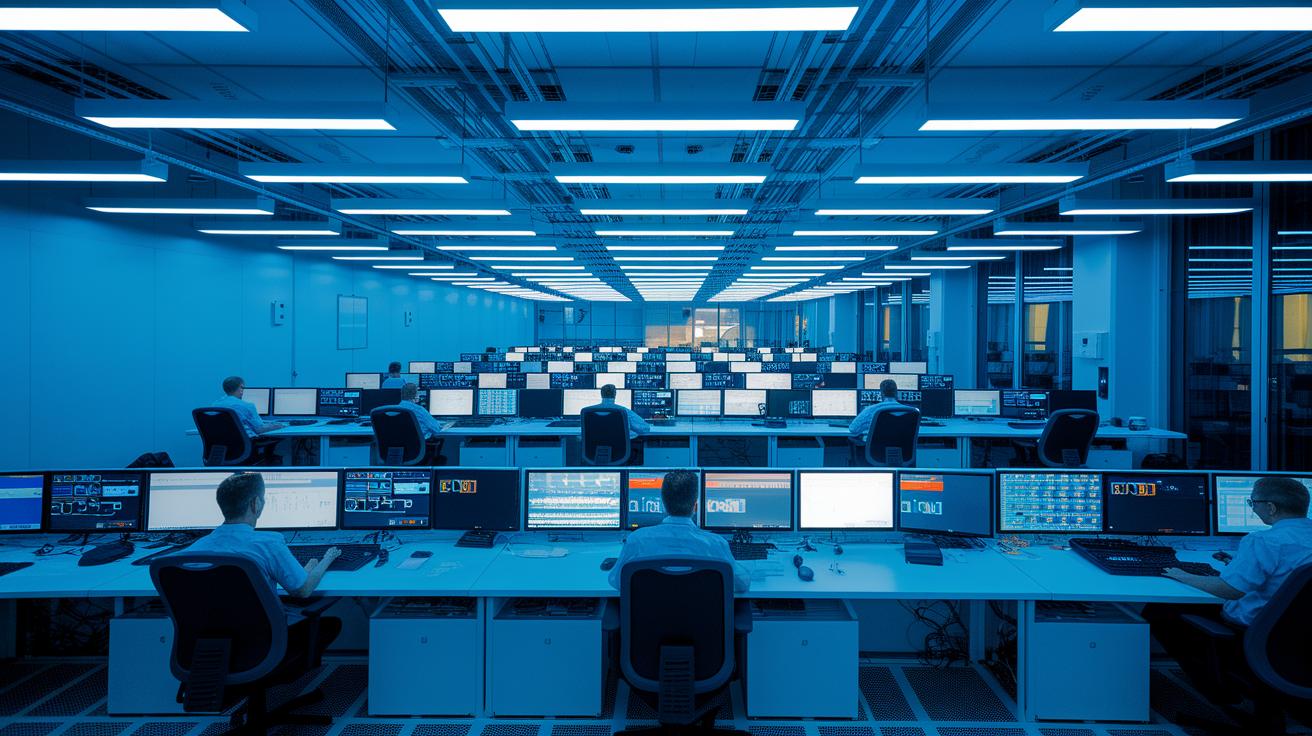
Updating IT setups to support advanced AI is a challenge that many overlook. Lots of companies are stuck with old servers and networks, making it hard to run systems that act on their own (automated systems) without messing up how things usually work.
Imagine a busy control room full of sensors and gadgets all talking to each other, a bit like a control tower keeping flights on schedule where even a tiny mistake can cause big delays. Modern AI data centers need state-of-the-art cooling, dependable power, and smooth data sharing between devices. One real-world example showed that by switching to a micro-grid system (a smaller, self-sufficient power network), a data center cut its downtime by 15%.
| Aspect | Traditional Systems | AI-Optimized Infrastructure |
|---|---|---|
| Cooling | Standard air conditioning | Modern, real-time temperature control |
| Power Supply | Basic backup generators | Integrated micro-grid systems |
| Data Flow | Fixed, slower networks | Dynamic, real-time communication protocols |
| Downtime | Frequent service interruptions | Reduced downtime by 15% |
These infrastructure challenges push companies to rethink how their systems are built. By upgrading, they not only get more efficient but also meet the unique needs of systems that learn continuously and work in real time.
Final Words
In the action, we explored global market forecasts and core drivers shaping our digital future. We looked into breakthrough AI, evolving connectivity, secure blockchain, and forward-thinking cloud computing. Each section showed how these elements interconnect and impact our daily lives. The discussion also touched on ethical challenges and sustainability needs, offering clear insights into tech trends 2025. It's exciting to see how these advances will make science and technology even more engaging and accessible for every curious mind.
FAQ
Tech trends 2026
The tech trends in 2026 point to rising global data volumes, digital transformation through AI, IoT, blockchain, and quantum computing, and a focus on energy and sustainability challenges in emerging digital infrastructures.
Top tech trends 2025
The top tech trends for 2025 highlight breakthrough AI applications, evolving machine learning, expanded IoT connectivity with 5G support, blockchain security, and the next generation of cloud and data analytics shaping business operations.
Tech trends 2025 pdf
The tech trends 2025 pdf offers a curated guide that outlines global market forecasts, AI readiness, expanding IoT deployments, blockchain adoption, and emerging cybersecurity and quantum use cases for a clear snapshot of the digital landscape.
Top 10 tech trends 2025
The top 10 tech trends for 2025 include proactive, learning-driven AI, energy-efficient machine learning, enhanced 5G and edge computing, blockchain for secure transactions, and next-gen cloud systems that signal major shifts in the industry.
Deloitte Tech Trends 2026
The Deloitte Tech Trends in 2026 emphasize innovations across digital markets with strong insights on AI, IoT, and cybersecurity, complemented by forecasts on data growth and transformations in job functions and infrastructure design.
Deloitte Tech Trends 2025
The Deloitte Tech Trends for 2025 outline how breakthrough AI applications, increased IoT connectivity, secure blockchain integrations, and advanced cloud analytics are transforming industries while addressing challenges such as energy demand and ethical considerations.
Deloitte Tech Trends 2026 pdf
The Deloitte Tech Trends 2026 pdf provides a comprehensive overview of emerging digital shifts, detailing innovations in AI, IoT, blockchain, and quantum computing, alongside key market forecasts and sustainability challenges shaping the future.
McKinsey technology Trends Outlook 2026
The McKinsey Technology Trends Outlook for 2026 examines upcoming market directions, forecasting accelerated data growth, AI-driven job evolution, IoT expansion, and advanced cybersecurity measures that offer practical insights for business adaptation.