
Have you ever wondered if airplanes could actually fly as quietly as a whisper? New ways to cut down noise are changing the way we think about flight. Imagine a jet soaring through the sky with a soft hum instead of a loud roar. Engineers are making smart changes to engine parts and wing shapes (wings: the parts that keep the airplane in the air) to reduce noise during takeoff and landing. This clever design makes flying more enjoyable and gives people on the ground a break from the loud sounds. In this post, we're taking a closer look at how these new ideas are turning noisy air travel into a much softer sound experience.
Core Strategies for Noise Reduction Design in Aircraft
Engine noise comes mainly from the big bursts of combustion when an airplane takes off. At the same time, wind blowing over the wings and flaps during landing creates extra sound. Together, these noises form the overall sound around an aircraft. Engineers use basic ideas from aerospace engineering, like the study of how things move (mechanics) and how air flows over surfaces (fluid dynamics), to come up with ways to lower these sounds during both busy flight times and regular operations.
Over the past 30 years, designers have made engines and aircraft bodies much quieter. For instance, high-bypass engines push more air around the engine core, which cuts down the loud combustion noise. New designs that improve the shape of the airplane also help reduce sound. Today, many single-aisle jets only hit about 75 to 80 decibels when landing. Airplanes like the Airbus A350 and Boeing 787 mix quiet engines with sleek wing and body designs to lower the noise, making flights more pleasant for passengers and neighbors.
Some European projects, like INVENTOR and DJINN, are taking noise reduction to the next level. INVENTOR looks at small physical changes, such as adding a porous structure near the landing gear along with a blowing system that creates an "air curtain" (a directed stream of air that blocks sound). Meanwhile, DJINN uses powerful computer simulations to predict how air and sound will move even before a prototype is built. These efforts show how combining hands-on tweaks with smart computer tools can really make aircraft quieter.
Aerodynamic Noise Abatement Techniques in Aircraft

When a plane lands, air moving over its body can make extra noise. Designers use smart tweaks to both the wings and landing gear to lower this noise. By shaping the wings and smoothing the landing gear surfaces, the air flows more steadily, which cuts down on unwanted sounds.
INVENTOR’s approach uses physical changes to reduce turbulence during landing. For example, a porous structure placed in front of the landing gear helps the air move smoothly. Plus, an active air-blowing system creates an "air curtain" that pushes the sound away. Designers also fine-tune wing flaps and slats with small edge serrations and slight shape adjustments. In fact, retrofitting wing edges can reduce approach noise by nearly 4 dB, making each landing noticeably quieter.
DJINN supports these physical changes using computer simulations. High-performance computer models predict airflow and noise, so engineers can adjust modifications before any hardware is built. This blend of direct changes and digital predictions helps achieve clear, measurable noise reductions.
| Modification | Noise Abatement Principle | Estimated dB Reduction |
|---|---|---|
| Landing gear porous structure | Helps air move smoothly to ease turbulence | About 5 dB |
| Wing flap/slat redesign | Serrated edges lower aerodynamic noise | About 4 dB |
Engine Noise Suppression and Acoustic Design Improvements
High-bypass turbofan engines have been around for over 30 years and they're brilliant at softening the noise from combustion. They work by pushing a lot more air around the engine core, which means the loud bursts from burning fuel are much quieter. In simple terms, these engines keep the noise down by controlling how the air flows.
Some Boeing models use a clever trick with serrated nozzles. These small, saw-toothed edges break up the sound waves as they exit the engine, lowering the noise by several decibels. Chevron covers, another neat design feature, also help reduce sound, even though not every manufacturer opts for them. Research in aerospace engineering shows that tiny adjustments like these can really make a noticeable difference in jet noise.
Acoustic liners in the engine nacelles play a key role too. They work a bit like a sponge, absorbing sound energy in important frequency ranges before it escapes. This design helps keep noise levels low in nearby communities during takeoff and landing.
Of course, noise suppression features often come with trade-offs. While serrated nozzles, chevron covers, and acoustic liners all help reduce noise, designers must also consider changes in weight, production challenges, and certification hurdles. Every tweak needs to meet strict standards while ensuring the engine still performs at its best.
Airframe Soundproofing Techniques and Structural Acoustic Integration
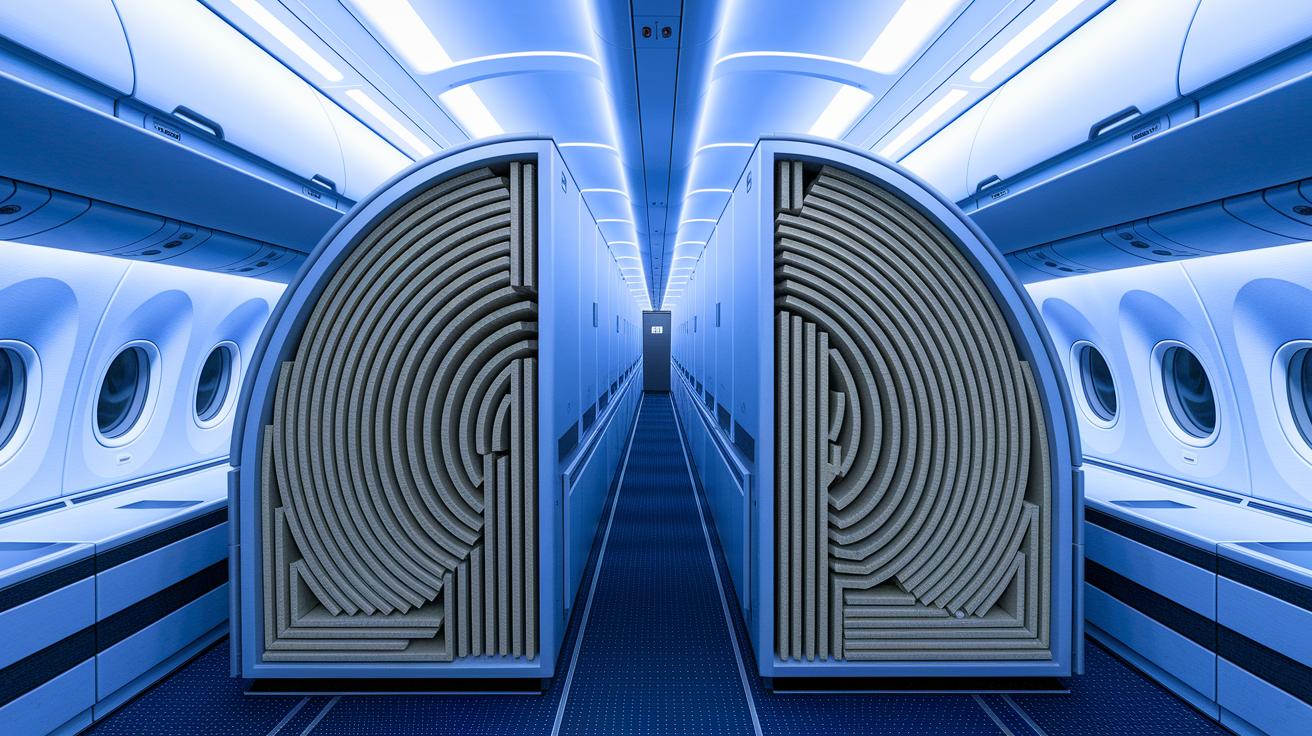
Today’s airplane designs use advanced insulation materials that soak up sound while staying tough between -80 °F and +140 °F. These materials work with sound curtains, airflow smoothers, and mufflers to lower the noise from the air control system, all making the cabin a more comfortable and quiet space without cutting corners on safety or performance.
Smart engineering also uses special damping techniques (methods that reduce vibrations) and vibration isolators to quiet down sounds traveling through the airframe. By cutting out engine and system vibrations, these methods help create a calm, steady ride. In simple terms, engineers blend sound comfort and temperature stability so every flight feels smoother.
Engineers follow a few key steps:
- They team up with interior designers to mix good looks with clever noise reduction.
- They check every system to find and fix the loudest noise sources.
- They create combined heat and sound insulation that fits each airplane perfectly.
In the final design stage, extra care is taken to monitor weight and double-check every part during installation. Every item is tested to meet strict safety and regulatory rules. With these careful checks and tests, manufacturers make sure each tweak adds to a safe and quieter flight experience.
Simulation and Modeling for Aeroacoustic Optimization in Aircraft
When designing quieter airplanes, simulation tools have become real lifesavers. Engineers now use numerical simulation tools to see how changes in an aircraft’s design affect both airflow and noise before building anything in real life. Projects like DJINN (from June 2020 to November 2023) used computational aeroacoustics analysis (a study of how air movement creates sound) to predict fluid flows and noise patterns ahead of time.
By testing different wing, slat, and fuselage shapes in a computer, designers quickly learn how small tweaks change how air moves and how sound is produced. This digital approach cuts down on expensive trial-and-error in real-life experiments. Plus, high-performance computing (really powerful computers working at high speeds) makes these simulations both fast and precise, so the virtual predictions are spot on with what happens in the real world.
Here are some key simulation techniques used in aircraft design:
| Technique | What It Means |
|---|---|
| CFD-based noise modeling | Uses computer simulations (called computational fluid dynamics) to estimate noise from air flows |
| Digital twin frameworks | Creates exact digital replicas of aircraft parts for testing and refinement |
| Modal analysis acoustics | Examines vibrations and sound behavior in different components |
| High-performance computing | Employs powerful computers to run these complex simulations quickly |
| Digital noise simulation | Predicts how the aircraft will sound in a real-world setting using digital models |
Using these techniques together, engineers can fine-tune several design elements at once, which makes the process more efficient and cost-effective. With simulation-based planning, manufacturers can make improvements well before the first prototype ever hits the sky, ensuring that every design tweak brings us closer to quieter flights.
Regulatory Guidelines and Noise Certification Protocols in Aircraft Design

When it comes to keeping airports friendly to local communities, international rules like ICAO Annex 16 and nearby airport guidelines set fixed limits for both ground noise and the sounds from planes flying overhead. In the U.S., FAA requirements make sure companies share detailed data for noise during takeoff, landing, and approach. This strict system helps ensure that aircraft designs meet important public health and environmental rules while making sure each noise-control step hits clear performance targets in sound and overall flight.
Measuring noise is a key part of the process. Experts gather data on noise levels during each phase of a flight. Real-time checks at airports show that these procedures work well in everyday situations. Regular monitoring and data collection help improve these noise control methods and ensure that all rules are met consistently during both the design and operation of aircraft.
Case Studies: INVENTOR and DJINN Projects in Noise Reduction Design
We’ve combined details from both projects to keep things clear. The INVENTOR project’s updates to its landing gear and wings now sit alongside the DJINN project’s computer-simulated design work under sections about lowering noise and simulation models.
In these sections, you’ll also see important performance numbers and design tweaks. For example, noise levels during landing have dropped from about 90 dB down to between 75 and 80 dB. The simulation work shows just how precise these noise cuts are, making the presentation focused and easy to follow.
Final Words
In the action, the article explored how engine and aerodynamic sources create aircraft noise and presented design strategies to cut these sound levels. It reviewed airflow modifications, engine innovations, detailed case studies like the INVENTOR and DJINN projects, and discussed regulatory measures.
This overview shows practical steps toward quieter, more comfortable flights. Focusing on noise reduction design in aircraft offers hope for a future where scientific ingenuity makes travel more pleasant every day.
FAQ
What does noise reduction design in aircraft projects involve?
Noise reduction design in aircraft projects involves improvements in both engine noise suppression and aerodynamic tweaks. These projects use advanced simulation tools, detailed PDFs, and PPTs to share design strategies.
What does aircraft noise reduction technology include?
Aircraft noise reduction technology includes refined engine casings, aerodynamic modifications, and sound-absorbing liners. These technologies work together to lower noise in various flight phases.
How does Airbus approach noise reduction?
Airbus noise reduction focuses on quieter models like the A350, which benefit from enhanced engine designs and aerodynamic improvements. This leads to a quieter cabin environment and better passenger comfort.
What is meant by new airplane safety design?
New airplane safety design merges noise reduction with passenger safety enhancements. It integrates refined engine covers and updated simulation methods, ensuring reduced in-flight noise alongside robust safety measures.
What is the best way to reduce aircraft noise?
The best way to reduce aircraft noise is by combining engine suppression techniques with aerodynamic refinements. Using modern noise-absorbing materials and simulation-guided design tweaks helps lower overall decibel levels.
What are NADP 1 and 2 in aircraft noise reduction?
NADP 1 and 2 refer to specific phases in noise abatement design. They focus on assessing noise sources and implementing integrated measures to cut engine and aerodynamic noise.
What does ICAO noise reduction involve?
ICAO noise reduction involves guidelines from ICAO Annex 16, which set noise limits and testing procedures. These standards help reduce noise levels during takeoff, approach, and flyover.
What is the new method for reducing jet noise in turbofan engines?
The new method for reducing jet noise in turbofan engines includes using serrated nozzles and acoustic liners within engine nacelles. These innovations significantly lower exhaust noise through targeted design improvements.