
Ever wonder if computers could start solving problems we once thought were unsolvable? Thanks to quantum breakthroughs, qubits (tiny bits of quantum data) are working better than ever. With simple fixes and smart designs, these machines aren’t just science fiction, they’re real tools sparking new ideas. Imagine a computer that can capture the detailed dance of atoms interacting. In truth, fresh ideas in quantum science are setting the stage for surprises that might just reshape our future.
Quantum Computing Breakthroughs: A Comprehensive Overview
Quantum computing is moving fast from a neat idea to a real tool that could change how we solve big problems. Researchers are building new quantum processors and clever qubit designs (qubits are the building blocks of quantum data) that make these computers more powerful. For example, on October 22, 2025, the Quantum Echoes algorithm performed far better than the best classical computers could. This breakthrough proves that smart improvements in computer programs are not just ideas, they’re creating real, measurable changes in science.
- Scientists have developed improved error correction techniques (ways to fix mistakes in calculations) that help quantum systems work at a larger scale.
- A universal converter now connects different types of qubits, whether they’re made from light particles, ions, superconductors, or semiconductors.
- Error correction is even being used in astronomical imaging, where multiple telescopes work together like pieces of a jigsaw to capture the night sky.
- A high-speed random number generator uses tiny vacuum fluctuations (small, random energy changes in empty space) to improve cryptography.
- IBM’s 127-qubit 2D Ising-model processor shows quantum advantages, even without using error correction.
These successes, reported on November 7, 2023, mark big steps forward in many areas. New designs for qubits, combined with better cooling systems, help keep the quantum states clear and stable, something many thought was nearly impossible. Measuring superposition states (when qubits hold more than one value at the same time) is also getting more reliable because of these improvements, which means we can trust quantum computers to do tough calculations.
With advancements that tweak everything from algorithms to hardware, quantum computers are moving closer to everyday use. Soon, they might help us model how atoms and molecules interact in great detail, which could change simulation methods in chemistry, materials science, and even spark new ideas in biology and nuclear fusion. It’s an exciting time, and the blend of innovative software and next-generation hardware hints at a future where quantum computers work alongside classical systems to solve problems once seen as impossible.
Breakthrough Qubit Design and Coherence Control
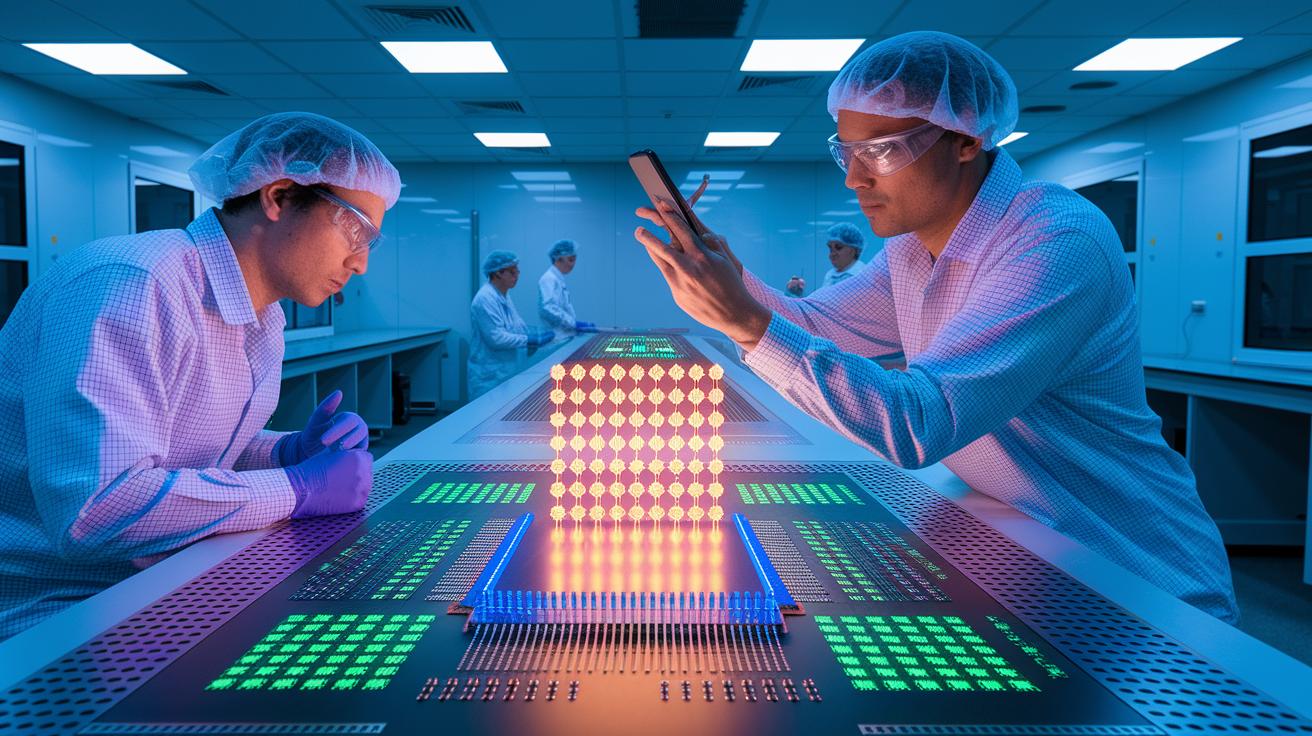
Scientists are making big strides in designing qubits that can hold their quantum secrets longer and more clearly. IBM’s 127-qubit processor, which studied material magnetization using a 2D Ising model (a simple way to look at how tiny magnets interact), proved that well-made qubits can work together even under tough conditions. These advances go hand in hand with new materials science tricks that help qubits keep their special state (the ability to be in several conditions at once).
Researchers have also made impressive progress in stopping decoherence (the process where qubits lose their unique properties). For example, one study featured in Nature found that improving a special logical qubit (a build designed to fix errors) reduced mistakes by a whole tenfold. This means quantum systems can do calculations more steadily, which is a key step toward real-world use. At the same time, experiments using trapped-ion arrays (ions held in place by electric fields) and photonic processors (chips that use light) can manage superposition states (when particles are in many states at once) in less than a microsecond. Pretty amazing, right?
Plus, new cryogenic systems with smart cooling methods keep superconducting circuits super cold. This allows them to stay in a stable state for over 300 microseconds. All these improvements in qubit design and ultra-cold tech are lighting the way to even stronger quantum computers, setting up more exciting breakthroughs down the road.
Quantum Error Correction and Algorithmic Innovations
Researchers are making exciting progress in fixing issues in quantum computers (machines that use the rules of quantum physics to compute). New techniques called surface-code protocols (methods that protect information by grouping many tiny qubits to form one logical unit) now fix errors in up to 1,000 physical qubits for every logical qubit. This improvement means that quantum devices can get bigger and stumble less when solving complex problems. Recent work on algorithms has also cut down the number of steps needed for calculations by 30% using adaptive error-mitigation sequences (strategies that adjust on the fly to reduce errors). It’s a bit like clearing a winding road so traffic can move more smoothly.
- Improved surface-code protocols now fix errors in up to 1,000 physical qubits per logical qubit.
- Adaptive error-mitigation methods chop the number of steps in calculations by 30%.
- Advanced error correction boosted the resolution of optical-interferometer astronomical imaging by 40% on November 7, 2023.
- New iterative compilation techniques lowered the rate of logical errors to less than one in 10,000 per cycle.
These breakthroughs work together to make quantum computers both more reliable and more precise. By reducing mistakes, scientists can try out larger experiments that might one day solve challenges current computers can’t handle. Every improvement, whether it’s streamlining the algorithms or polishing error correction, adds up. This combined approach opens the door for quantum computers to help in vital areas like materials research and secure communications, where even a tiny error can lead to big problems.
Next-Generation Quantum Architectures and Platforms

New breakthroughs in quantum computing hardware are shifting lab experiments into real-world circuits that could truly change how we compute. The Genesis Mission, for instance, is working on quantum-GPU supercomputers. These systems mix traditional high-powered computing with special quantum cores (the parts that handle quantum tasks), bringing scalable designs that promise to reshape our computing future. Scientists are now creating components that soon will let us run complex quantum programs outside the lab.
Photonic converters are getting a lot of attention because they help move data easily between devices based on neutral atoms and those using superconductors (materials that conduct electricity without resistance). Think of them as smooth bridges connecting different types of quantum tech. Plus, cool innovations like 3D-printed microwave waveguides have sped up the connection between chips by five times, which is a big deal for bringing different quantum systems together.
Hybrid systems that blend trapped ions (ions held in place with electromagnetic fields) with superconducting qubits (basic units of quantum data) are also showing great promise. These designs can support networks of up to 1,000 qubits, creating a solid mix of stability and scalability. With projects like these, the industry is steadily moving toward the goal of deploying integrated quantum systems by 2028.
| Platform Type | Key Feature | Target Year |
|---|---|---|
| Quantum-GPU | Combines classical HPC with quantum cores | 2028 |
| Superconducting array | Advances in chip design and coherence | 2028 |
| Photonic processor | Seamless data routing via converters | 2028 |
| Trapped-ion network | Scalable qubit arrays with robust interconnect | 2028 |
| Hybrid circuit | Integration of trapped ions and superconducting qubits | 2028 |
Real-World Applications and Future Potentials of Quantum Computing
Quantum computing is no longer confined to labs, it’s stepping into everyday use. For example, the Quantum Echoes algorithm, verified on October 22, 2025, can mimic how molecules dance and interact (think of it as a super detailed microscope). This clever trick speeds up new drug discoveries and helps develop innovative materials by revealing tiny details of a molecule’s behavior.
Another breakthrough comes from quantum RNG devices that use tiny energy shifts in empty space, known as vacuum fluctuations. In plain terms, these random and minuscule movements create ultra-secure keys, much like a digital padlock protecting your sensitive data. They work smoothly with existing security systems, keeping our online transactions safe and sound.
There’s also a neat project backed by the AI for Science fund, where experts mix quantum computing with machine learning to predict better battery materials while cutting the number of experiments by half. Imagine combining the best parts of two recipes to make an even tastier dish, this blend of technologies is already helping lower research costs and speed up discoveries.
Then, the XPRIZE Quantum Applications finalists are showing off cloud-based quantum simulations for fluid dynamics. These cutting-edge simulations let researchers quickly test and improve solutions, hinting at a future where industries use similar smart technologies to solve everyday challenges.
Final Words
In the action, we explored cutting-edge research that is moving quantum computing forward. Highlights included enhanced error correction, novel qubit designs, improved algorithms, next-generation architectures, and promising real-world applications.
These advances are not only paving the way for smarter technologies but also making science breakthroughs in quantum computing more accessible. The progress leaves us optimistic about the future, inviting us all to keep learning and embrace the wonders of science every day.
FAQ
Q: What are the major breakthroughs in quantum computing from recent years?
A: The major breakthroughs include enhanced error correction methods, innovative qubit designs, and improved algorithm techniques. Advances from 2021 and 2023 have boosted qubit reliability and system integration to push the field forward.
Q: What is quantum computing with an example?
A: Quantum computing uses qubits that can hold “0” and “1” at once. For example, it can simulate complex molecular interactions, speeding up tasks like drug discovery and material research.
Q: How do quantum computing breakthroughs work at room temperature?
A: Some breakthroughs let qubits run in warmer conditions. By refining materials and designs, these systems maintain stability without extreme cooling, opening the door for more practical quantum solutions.
Q: What does the future of quantum computing look like, especially for 2025?
A: The future points to more integrated systems with stronger error correction and hybrid architectures. By 2025, we expect quantum computers to deliver improved performance in cryptography, simulation, and real-world problem solving.