
Have you ever wondered what it's like to watch a rocket blast off into space? The exciting rush that came from racing rivals set off one of history’s boldest adventures. Every launch, with its mix of wins and setbacks, shows the true courage and big dreams of the people behind them. In this article, we look back at the key moments that pushed science to its limits and sparked our dreams of exploring beyond our blue sky.
Key Milestones in the Cold War Space Race
The Cold War space race was more than just a contest. It was a high-stakes battle between two superpowers that sparked daring achievements in space. Every rocket launch felt like a race against time, filled with excitement and uncertainty. Scientists often felt both awe and a bit of nervousness, as if each mission carried the hopes of millions. These events became more than technical milestones; they stood as symbols of national promise and fierce international rivalry.
The story runs from the launch of Sputnik 1 all the way to the unforgettable moment when Neil Armstrong set foot on the moon. Each breakthrough was not only a leap in science but also a smart, high-risk move in a tense battle of ambition. The space race shifted our focus from basic survival to dreaming big. In those fast-paced times, innovation turned wild ideas into real achievements that changed our view of the future.
| Date | Event | Significance |
|---|---|---|
| Oct 4, 1957 | Sputnik 1 | Launched the first object to orbit Earth and kick off the race |
| Apr 12, 1961 | Vostok 1/Gagarin | Sent the first human into space |
| Mar 18, 1965 | Voskhod 2/Leonov | Marked the first time a person floated in space |
| Jan 27, 1967 | Apollo 1 | A tragic flash fire that took the lives of three astronauts |
| Jul 16, 1969 | Apollo 11 Launch | Set the stage for the first manned lunar mission |
| Jul 20, 1969 | Moonwalk | Neil Armstrong made his historic first step on the moon |
All these milestones remind us of a time when progress moved at lightning speed. Each achievement blended scientific discovery with national pride, marking a truly pivotal moment in our journey beyond Earth.
Origins and Political Drivers of the Space Race
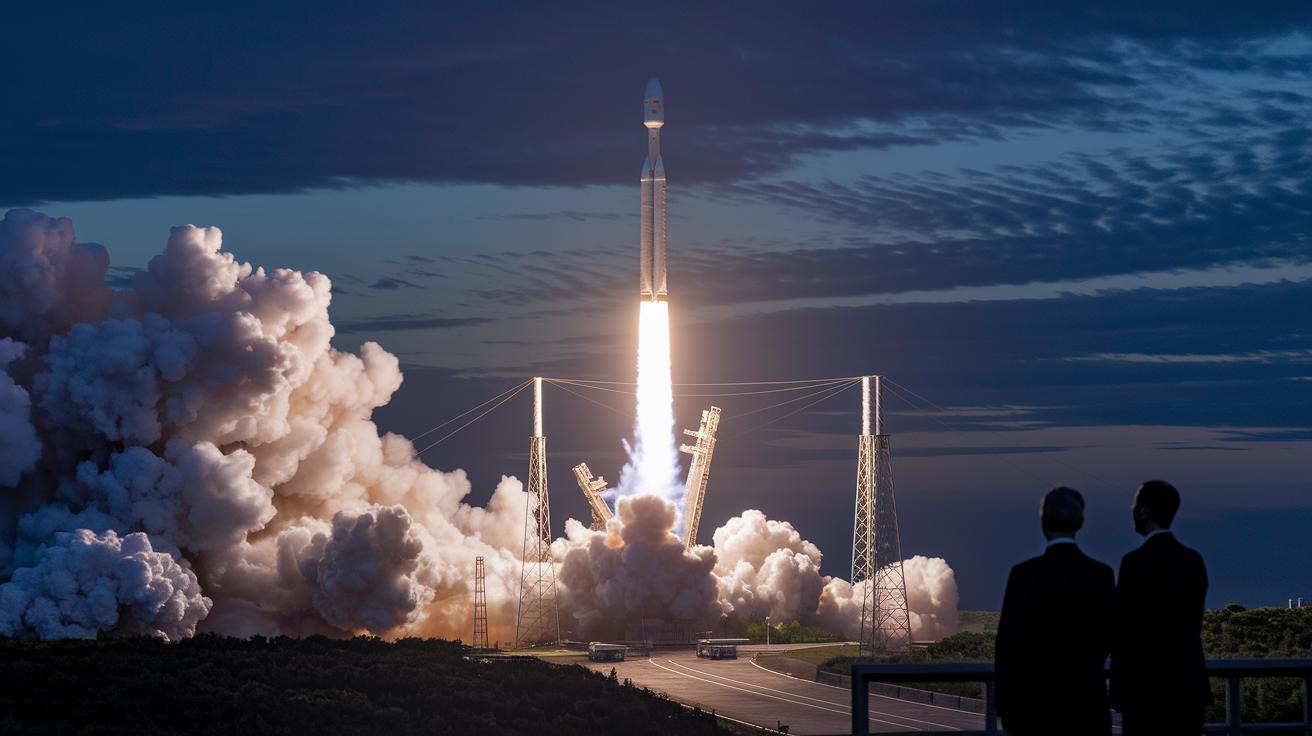
After World War II, many countries started reusing rocket technology that was first developed in Nazi Germany. This technology helped in building intercontinental ballistic missiles (ICBMs – long-range missiles that carry explosives over huge distances). Both the United States and the Soviet Union took these ideas and turned them into a way to show off their military strength worldwide.
But the competition wasn’t just about building weapons. It was also a show of technical skill and deep national pride. Leaders saw space exploration as a big stage for their beliefs, where every rocket launch was a statement of their country’s power. It’s a bit like a daring race, with every test proving a country could change the future of space and maybe even the future of humanity.
By 1958, the United States took a bold step and created NASA through the National Aeronautics and Space Act. Meanwhile, the Soviets set up OKB-1 under the guidance of Sergei Korolev. Both nations pumped a lot of money into research and development, all hoping that each advancement in space technology would tip the scales of global power in their favor.
Soviet Innovations: Sputnik, Gagarin, and First Spacewalks
The Soviet space program changed how people around the world thought about science and power. Their achievements went beyond just setting records; they filled the nation with pride and sparked lively cultural conversations. Many ordinary folks saw every launch as a clear sign of skill and ambition. You might be surprised to learn that even great figures like Isaac Newton once noticed how a simple falling apple could change the way we understand nature.
These milestones also made people talk about trust in technology and leadership. From the first satellites circling the Earth to the daring human flights, Soviet feats brought both admiration and healthy debate. Their rivals watched with keen interest as each success paved the way for a new chapter in space exploration.
- Sputnik 1 – The first satellite to orbit the Earth
- Yuri Gagarin – The first person in space
- Valentina Tereshkova – The first woman to venture into space
- Aleksei Leonov – The first to complete a spacewalk
However, the USSR’s push for a lunar program hit a rough patch with the Soyuz 1 crash. This tragedy led to major changes in strategy and left many people rethinking the bold steps in exploring space.
United States Response: Apollo Program Achievements and Lunar Landing Milestones
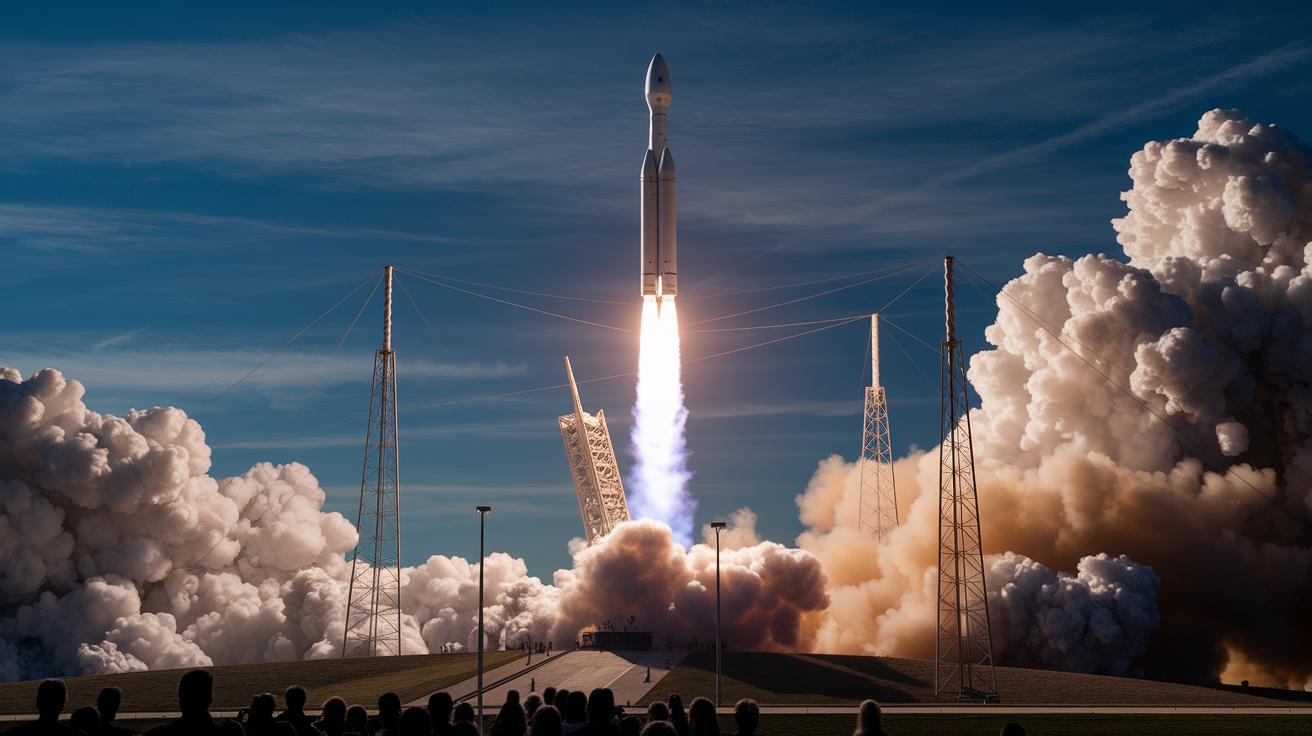
On May 25, 1961, President Kennedy made a brave promise that the U.S. would land a man on the Moon before the end of the decade. This was a bold goal, especially when our astronauts had only clocked about 15 minutes of orbit time. Early space missions like Mercury and Gemini got us started with short, exciting trips that made everyone feel like anything was possible. Imagine a time when even a minute in space was met with wide-eyed wonder.
The creation of the Saturn V rocket changed everything. This huge, powerful rocket is still the strongest one ever built and played a key role in all the Apollo missions. Its clever design helped us reach big milestones on the way to landing on the Moon. Each Apollo mission pushed our limits, turning ideas on paper into real achievements, and sparking even more creativity and hard work all across the country.
But not everything went perfectly. On January 27, 1967, a tragic fire during a ground test of Apollo 1 took the lives of three brave astronauts. This heartbreaking event led to major changes in how the missions were planned and built. Engineers and planners carefully improved designs and upgraded systems to keep the crews safer in the future. What we learned from this loss made later spaceflights even more secure and dependable.
Then, on July 20, 1969, the world held its breath as Neil Armstrong and Buzz Aldrin walked on the Moon. Millions watched this historic moment on live TV. In that moment, a national dream was achieved, and it showed us all the incredible power of human creativity and hard work.
Rocket Propulsion Advancements and Orbital Mechanics Progress
Engines played a huge role in powering those early space missions. The Soviet R-7 ICBM variants eventually became the Vostok launcher, setting a strong example for later designs. Across the ocean, American F-1 engines powered the Saturn V’s first stage with unmatched force. These engines delivered a ton of thrust while juggling some pretty tough engineering challenges. Breakthroughs in materials (the substances used to build the engine) and combustion control (managing the fuel burn) allowed engineers to boost power without sacrificing safety. For instance, they tweaked nozzle shapes and fuel mixtures to get every bit of extra performance out of the rockets.
Next, smart staging designs made rockets even more efficient. Using multi-stage rockets, engineers could ditch old, spent parts to lighten the load as the flight progressed. Even though failures like those of the N1 moon rocket in 1969 revealed some limits, each setback pushed the team to improve designs. With lots of testing and redesigning, they created reliable vehicle architectures that nicely married strong engines with new structural ideas, paving the way for longer and more challenging missions.
Finally, big strides were made in guidance technology. Upgraded computers, new rendezvous techniques, and inertial guidance systems (which help the rocket know its own direction) all contributed to improved orbital insertion. These advancements meant that aligning with lunar trajectories was more accurate and safe, greatly boosting mission success.
Unmanned Ventures: Satellite Deployment Evolution and Early Interstellar Efforts
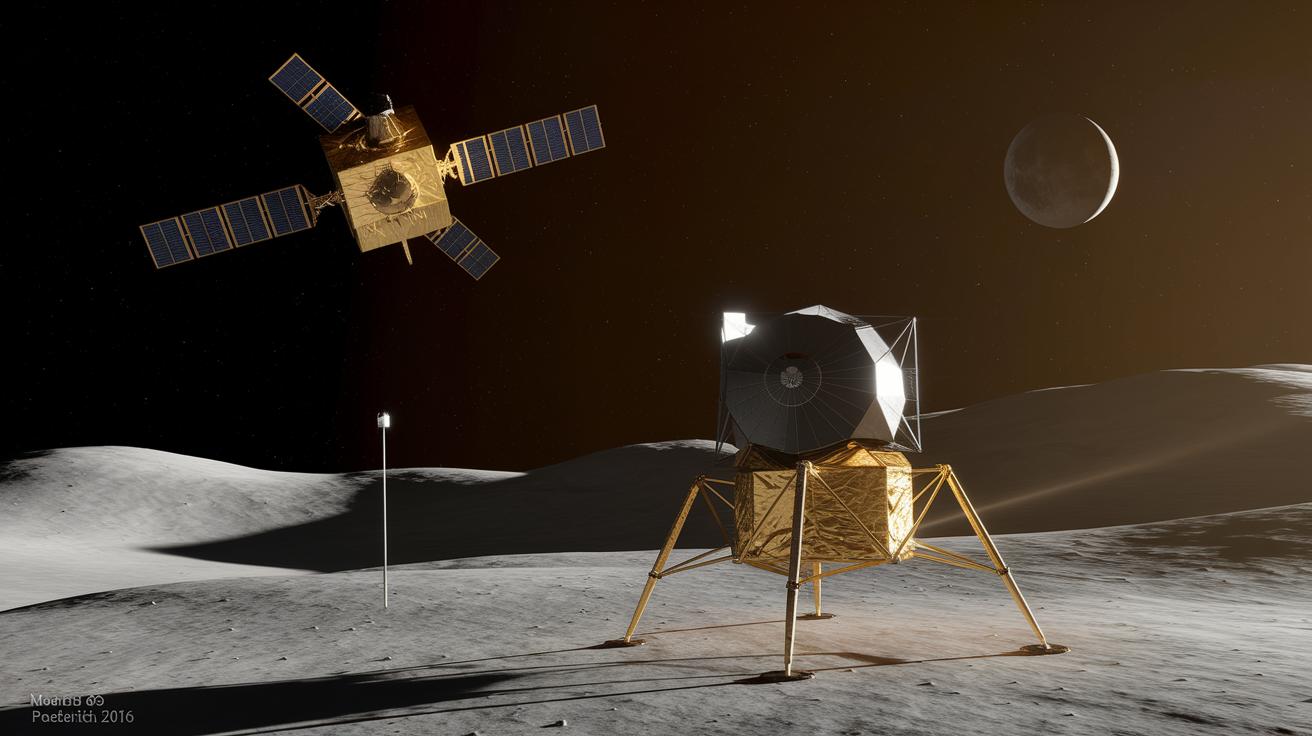
At the very start, unmanned missions turned our quest for knowledge on its head. Sputnik 1 kicked things off by sending signals that let us know space was not just empty darkness but a place we could study from far away. Soon after, Luna 2 became the first man-made object to hit the Moon back in 1959. It was like sending a brave scout out to explore unknown lands, gathering little clues that slowly built our picture of the universe.
Then came the interplanetary probes, which really broadened our view. In the mid-1960s, missions like Mariner flew past Venus and Mars, sending back pictures and measurements that told us more about their skies and surfaces. And in 1972, Pioneer 10 took an even bigger leap, it not only studied Jupiter but eventually left our solar system, collecting data on things like the solar wind (the stream of particles from the sun) and the asteroid belt along the way. These missions opened up whole new chapters in space exploration and set us up for even more exciting adventures.
All this data from unmanned missions reshaped how we see our solar neighborhood. Each new piece of information helped us ask better questions, drawing us into a deeper understanding of the cosmos. Isn't it amazing how each little probe can turn our wonder into real discovery?
Legacy and Modern Impact of the 1960s Space Race
Museum exhibits today let you feel the pulse of early space adventures. When you wander through places like the Smithsonian’s Udvar-Hazy Center or the National Air and Space Museum in Chantilly, VA, you come face-to-face with treasures from Sputnik to Apollo. Every piece, whether it's a shiny bit of a rocket or a worn mission patch, tells a story of bold dreams and hard work. It’s like holding a piece of history in your hands and imagining the thrill of those daring days.
The spark of the 1960s space race still lights up our culture today. It nudges artists, writers, and even the gadgets we use every day, inspiring them with the spirit of discovery. Exhibits don’t just show technical achievements; they capture the wonder and hope that pushed nations to reach for the stars. Even modern feats, like the International Space Station built in 1998, remind us how competitors have become partners, and how companies like SpaceX and Boeing are teaming up to explore further. This lasting legacy helps shape our plans for the future, encouraging us to dream bigger and explore deeper into space.
Final Words
In the action of recounting key moments, from Sputnik’s orbit to Apollo's Moon landing, we saw how early science and bold policy set the stage for modern exploration. The article touched on milestones in unmanned missions and manned feats, reminding us how these events connect past efforts to today's advances.
Every achievement in this space race inspires us to look ahead with hope and excitement, sparking our curiosity for the next breakthrough in science.
FAQ
Q: What is a Space Race book?
A: The Space Race book refers to literature that explains key events and milestones of space exploration during a time of intense global competition, making history accessible and engaging.
Q: What is a Space Race game?
A: The Space Race game describes interactive board or video games that let players simulate historic missions, using strategy and quick thinking to emulate the challenges of Cold War space competition.
Q: What is a Space Race timeline?
A: The Space Race timeline maps out crucial milestones—from Sputnik’s 1957 launch to Apollo 11’s lunar landing—that mark the rapid progress and historic achievements during this competitive era.
Q: What does the term ‘Space Race Cold War’ mean?
A: The term Space Race Cold War connects the drive for space exploration to the political rivalry of two superpowers, reflecting how space achievements were used to show national strength and innovation.
Q: Who won the Space Race?
A: The answer to who won the Space Race is viewed as the United States, marked by Apollo 11’s successful Moon landing, which became a landmark symbol of national achievement and technical prowess.
Q: What is the Space Race movie?
A: The Space Race movie is a dramatized film that portrays the historic competition between nations in space exploration, blending real events with cinematic storytelling to highlight major achievements.
Q: When did the Space Race end?
A: The Space Race ended in the early 1970s when competitive space efforts shifted toward international cooperation, setting the stage for collaborative projects that continue to shape space exploration.
Q: Why was the Space Race important?
A: The Space Race was important because it inspired major technological breakthroughs, stirred public imagination, and served as a battleground for national pride and political influence during a time of global rivalry.
Q: What was the Space Race in 1957?
A: The Space Race in 1957 began when the Soviet Union launched Sputnik 1, the first artificial satellite, which changed global perspectives on space technology and ignited the competitive quest for space.
Q: What happened in the Space Race in 1964?
A: In 1964, the Space Race reached new heights with expanding missions and improved spaceflight techniques that advanced scientific understanding and kept the competitive momentum during the Cold War.
Q: How do the Space Age, Apollo 11, Cold War, Cuban Missile Crisis, Korean War, and Vietnam War relate to the Space Race?
A: These events are linked through their impact on technological priorities and national strategies. Cold War tension pushed space innovation, while Apollo 11 symbolizes space achievements amidst global conflicts.

