
Ever wonder why space can feel like a burning oven on one side and a frozen desert on the other? Out there, energy moves in such surprising ways that temperature seems to have its own set of rules. Imagine standing near a warm fire; one side wraps you in comforting heat while the other reminds you of a crisp, chilly night. Stars heat up the space around them like giant heaters, yet the vast emptiness stays nearly at absolute zero (the coldest possible temperature). It’s a mix of hot and cold that makes space both fascinating and a little mysterious.
How Temperature Behaves in the Vacuum of Space
When you think about temperature in space, it might seem a bit weird at first. Out there in the near-vacuum beyond Earth, there isn’t much stuff for heat to bump into, so heat can’t travel by touching things (we call this conduction) or by mixing fluids (that’s convection). In space, heat moves almost all by itself through radiative heat transfer, which means energy leaves in the form of electromagnetic waves (like light and infrared signals).
Imagine sitting by a campfire on a clear night. You feel the warmth not because the heat is directly touching you but because light and infrared energy travel through the air to reach your skin. In space, where there is no air, this radiation is the only way heat moves around.
All of space is filled with a very faint glow called the cosmic microwave background heat. This glow, which comes from the early days of the universe, sets a baseline temperature of about 2.7 K. However, this is just one part of the picture. Near stars, temperatures can skyrocket to millions of degrees Kelvin because of nuclear fusion energy (that's the process where atoms combine to produce energy). Yet, in the deep emptiness between stars, it stays extremely cold.
Picture a thermometer floating in space. One side of it might face a blazing star, picking up intense heat, while the other side feels the deep, quiet chill of space. Because there’s no conduction in a vacuum, these huge differences in temperature stick around without quickly balancing out.
Cosmic Temperature Extremremes: Coldest and Hottest Regions of the Universe
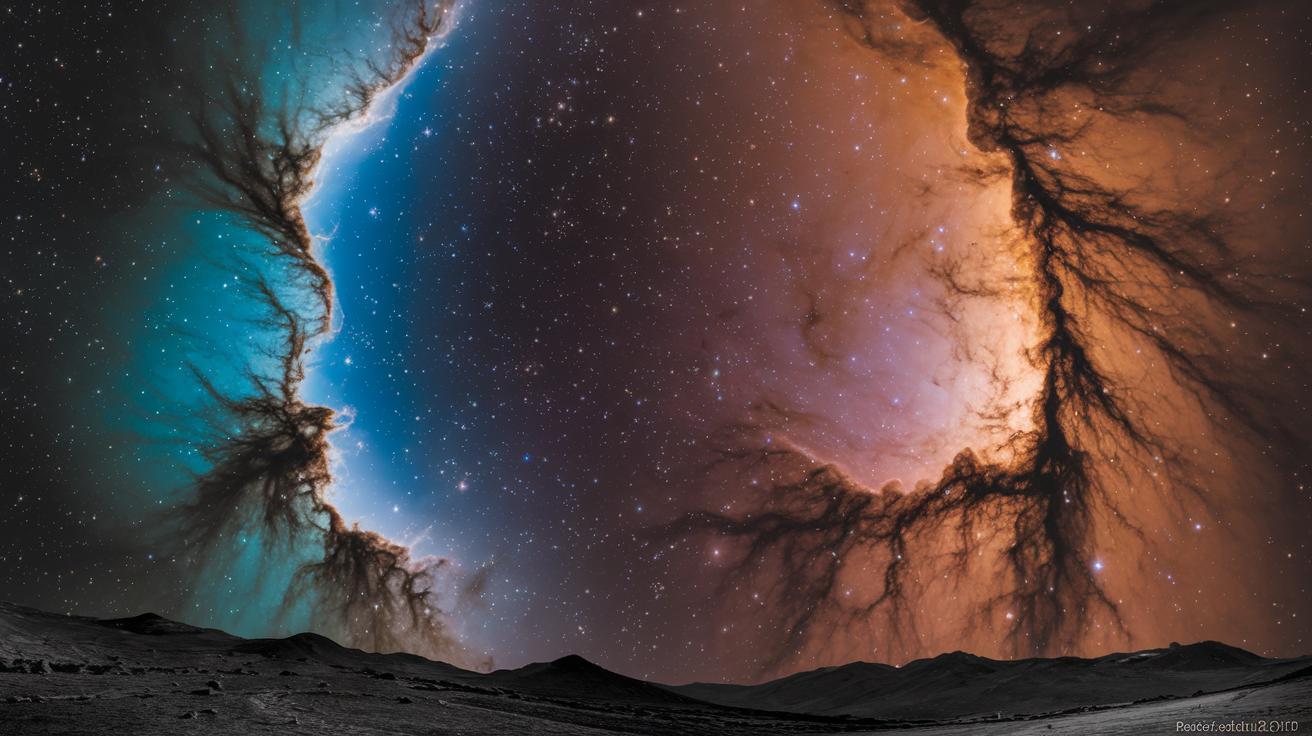
Have you ever wondered how wildly different temperatures can be in our universe? Out among the stars, you’ll find spots so cold they seem almost unreal. Take the Boomerang Nebula, for example – it sinks down to about 1 K (that’s one degree above absolute zero, the coldest point possible). Then, flip the coin and you'll see regions where newborn stars form and supernovas explode, heating up the space to millions of Kelvin. It's like traveling from the chilliest ice rink to a blazing bonfire in one giant cosmic neighborhood.
Scientists have even managed to mimic these extremes right here on Earth. At the University of Bremen, researchers cooled atoms to an astonishing 38 trillionths of a degree above absolute zero. Imagine that, a lab experiment that almost touches the universe’s frosty limit. This incredible achievement shows just how far our measurements can go, capturing the full spectrum from near-absolute cold to the searing heat of stellar events.
| Region | Temperature |
|---|---|
| Boomerang Nebula | About 1 K |
| Lab Record | 38 trillionths above absolute zero |
| Star-forming Cores / Supernova Remnants | Millions of Kelvin |
| Cosmic Microwave Background | About 2.7 K |
Most of space, especially in those vast, empty areas between galaxies, hovers around the cosmic microwave background temperature, a gentle reminder of the early universe. Moments like these spark our curiosity and make us smile, thinking about how the cosmos covers such a breathtaking range of temperatures. Isn't it amazing that one experiment could almost reach absolute zero? It’s a real testament to the wonders of science and space.
Solar Influence: Orbital Temperature Variations and Near-Earth Heat Fluctuations
Did you know that during a solar flare, temperatures above Earth can jump by up to 930 °F? It’s wild to think that a burst of energy from the sun can turn space around us into a mini heat wave for a short time.
When the sun sends out these strong bursts of energy, like solar flares or eruptions, it really shakes up the temperature in the space near our planet. This area, called the thermosphere (a very thin part of our atmosphere), sees big changes because there aren’t many air particles to spread out the heat evenly.
Above about 100 km, the air is so rare that even small amounts of extra energy can create hot spots that vary a lot. That means one part of space could be hit by a strong burst of sunlight while a nearby spot stays cooler in the shadow.
Satellites orbiting Earth act like weather stations in space. They record the temperatures and show just how unpredictable space heat can be. These measurements help scientists understand how the sun’s energy quickly changes the heat around Earth’s orbit.
It’s fascinating to see how our sun makes space feel so lively and ever-changing with its bursts of energy.
Thermal Management in Spacecraft and Extravehicular Environments
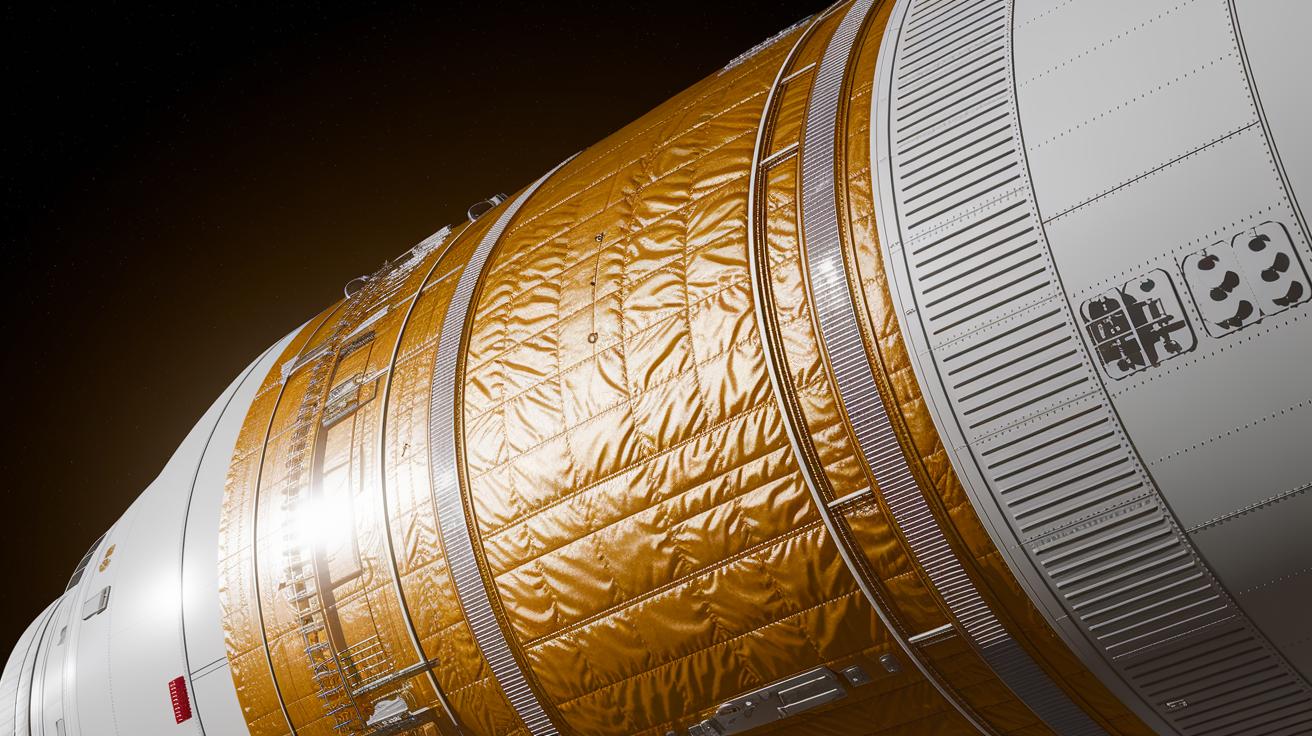
Spacecraft have to deal with wild temperature changes out in space. When one side basks in the sun, it can get hotter than 250 °F, but the shaded areas might drop to less than -250 °F. To manage these extremes, engineers bundle together several tools, like multi-layer insulation, radiators, thermal coatings, and heat pipes (devices that move heat around). Imagine it like a high-tech winter coat with layers that gently reflect or release heat.
It might seem surprising, but during a spacewalk in bright sunlight, one spot on a spacecraft can be sizzling while a neighboring spot feels like a freezer. Because space is almost a perfect vacuum, processes like conduction and convection (methods of heat movement by touch or fluid motion) hardly work. Instead, engineers make the most of radiative cooling, which sends heat off into space.
Astronauts' suits are a marvel on their own. They have reflective layers on the outside and built-in heaters to handle the huge differences in temperature. Even though we might picture space as an endless freeze- or burn-zone, the design of these suits ensures that astronauts stay at a comfortable temperature while working outside their spacecraft.
NASA has taken all these ideas and turned them into reliable technology. Their advanced systems make sure that both the spacecraft and the suits can perform well, even when different parts face extreme conditions just a short distance apart.
Techniques for Measuring Temperature in Space
Scientists use a range of clever tools to find out how hot or cold space is. One key device is the cryogenically cooled radiometer (a tool that cools itself to very low temperatures for extra accuracy). Think of it like a space detective that picks up the faint heat left over from the early universe, spotting a tiny glow at about 2.7 K. Satellites such as COBE and Planck carry these radiometers to help reveal the secrets of our universe’s beginnings.
Infrared sensors on space probes are also really important. They check temperatures on planets and asteroids that can range from around 30 K to over 700 K. Imagine using a digital thermometer to read the heat from a faraway asteroid, much like you’d test if your hands are warm on a cool day.
Back on Earth, ground laboratories take temperature measurements even further. In these controlled settings, researchers can reach temperatures as low as 38 trillionths of a degree above absolute zero (the coldest possible temperature where almost no thermal movement happens). They carefully fine-tune their sensors so that the measurements taken in space remain trustworthy.
Lastly, scientists use passive radiators and active cooling loops to keep instrument temperatures stable. These systems work by releasing extra heat through radiation, similar to how a hot object cools as it emits energy. This mix of smart devices and cooling techniques gives researchers reliable data on space temperatures and deepens our understanding of the cosmic environment.
Final Words
In the action, the article showed how temperature in space shifts dramatically across cosmic environments. We looked at radiative heat transfer in vacuum and how the Cosmic Microwave Background sets our temperature baseline. We also explored how spacecraft manage vast differences in heat with clever engineering solutions. Every detail paints a clear picture of space's extreme conditions. These insights remind us that the universe always has exciting surprises in store, sparking new ways to see our daily world with wonder.
FAQ
What is the temperature in space in Celsius?
The temperature in space in Celsius varies widely—from near -270°C (around 2.7 K set by cosmic background radiation) in deep space to extreme heat near stars, where temperatures can reach millions of degrees.
What is the temperature in space in sunlight?
The temperature in space in sunlight is extremely high because surfaces directly hit by the sun can exceed 250°F, while areas in shadow remain very cold.
What is the temperature in space around Earth?
The temperature in space around Earth fluctuates greatly. In low Earth orbit, sunlit areas can get very hot while shaded regions drop to extreme cold, often below -250°F.
What is the temperature in space in Fahrenheit?
The temperature in space in Fahrenheit ranges from about -450°F in the deep cosmos to millions of degrees near active stars, highlighting the vast thermal differences across space.
What is the temperature in space when an astronaut spacewalks?
The temperature in space during a spacewalk can range dramatically. Sunlit surfaces may climb above 250°F, and areas in shade may fall below -250°F, so astronauts depend on specialized, heated suits for safety.
What is the temperature inside a space station?
The temperature inside a space station is carefully controlled using insulation, radiators, and heat pipes, maintaining a stable and comfortable environment for the crew, regardless of the extreme conditions outside.
What is the coldest temperature in space?
The coldest temperature in space is about 2.7 K, determined by the cosmic microwave background radiation. Some regions, like parts of the Boomerang Nebula, can drop even lower.
What is the highest temperature in space?
The highest temperature in space happens near active stars, where nuclear reactions cause heat to spike to millions of Kelvin, creating some of the most extreme conditions in the universe.
How cold is it out in space?
It is very cold in much of space, with deep interstellar areas hovering near 2.7 K (almost absolute zero), although pockets near stars can be extremely hot.
How do astronauts survive the cold in space?
Astronauts survive the cold in space by wearing specially designed suits that incorporate heaters and reflective layers, protecting them from the rapid loss of heat through radiation in the vacuum.
How can space be cold if the sun is hot?
Space is cold because its near-vacuum environment prevents heat transfer by conduction or convection. Energy moves primarily through radiation, leading to drastic temperature differences across regions.
How does one hour in space equal seven years on Earth?
The claim that one hour in space equals seven years on Earth refers to time dilation effects predicted by relativity. Such extreme differences occur only at speeds near light speed or under intense gravity, which astronauts do not experience.